Choose a fish that fits your pan
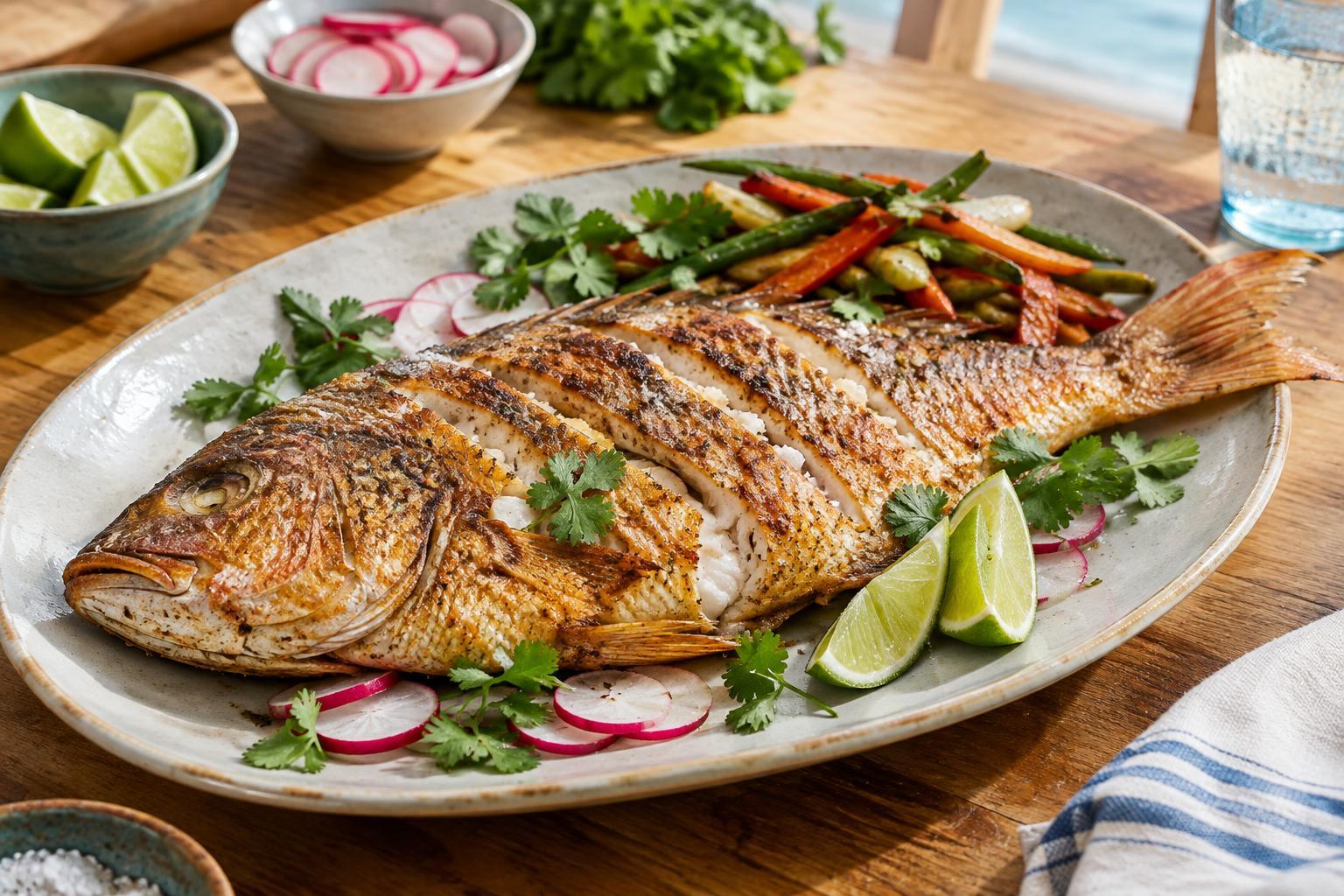
Whole fried fish is an inviting centerpiece for a coastal-style meal. A squeeze of lime, a spoonful of salsa and a few vegetable sides can complete the plate, but the fish itself benefits from a straightforward approach: prepare it well, keep the oil steady and check that the flesh has cooked through. Choose a fish that will lie flat in your pan without its head or tail pressing against the sides. If it does not fit comfortably, use a larger pan rather than forcing it in.
Ask for the fish to be scaled and gutted, with the gills removed. At home, check the cavity for any remaining innards and remove loose scales. Keep the fish refrigerated until you are ready to prepare it. Thaw a frozen fish in the refrigerator, not on the counter. Use a clean board and utensils, wash your hands after handling raw fish, and keep it away from foods that will be served without further cooking.
Score the flesh without cutting to the bone
Scoring creates openings where seasoning can reach the flesh and gives you a way to see how the fish is cooking. With a sharp knife, make two or three diagonal cuts on each side, spaced apart along the thickest area. Cut through the skin and partway into the flesh, but avoid deep slashes that cause pieces to separate during frying. The exact depth depends on the size of the fish; aim for cuts that open slightly while leaving the fish intact.
Season the cavity and both sides with salt, including inside the scores. You can add a little ground chile, cumin or garlic if you like, but keep any coating light. A thin dusting of flour or cornstarch can help create a delicate crust; shake off the excess so loose powder does not collect in the oil. Save fresh herbs, juicy salsa and lime wedges for serving, when they can add flavor without introducing moisture to the pan.
Dry thoroughly before frying
Surface moisture works against crisp skin and can cause hot oil to spit. Pat the fish dry with paper towels, paying attention to the cavity, fins and scoring cuts. If salting has drawn moisture to the surface while you prepare the pan, pat it again just before frying. Set the fish on a dry plate or rack while you heat the oil, and keep wet utensils away from the stove.
Choose a sturdy, deep-sided pan with room around the fish. Add enough neutral frying oil to reach partway up its sides, but leave generous space above the oil to limit the risk of overflow. Heat it over medium to medium-high heat; around 350°F (175°C) is a useful starting point if you have a thermometer. Without one, a small pinch of flour should sizzle promptly rather than sink quietly or darken at once. Lower the fish into the oil carefully, angled away from you, and do not drop it.
Let the crust form, then check the center
Fry without moving the fish for the first few minutes so the skin has a chance to release from the pan. Adjust the heat if the oil smokes or the coating browns before the thickest flesh has time to cook. When the first side is firm and golden, turn the fish gently with two spatulas or a spatula and tongs. Cooking time varies with thickness, pan and oil temperature, so use appearance as a guide rather than a fixed timer.
To check doneness, insert an instant-read thermometer into the thickest flesh, away from the backbone, and look for 145°F (63°C). Check another thick area if the fish is uneven in size. The flesh should also appear opaque and separate readily from the bone. If the outside is browned but the center is not done, lower the heat and continue cooking, turning as needed. Transfer the fish to a rack or paper-towel-lined platter and let excess oil drain briefly.
Serve the citrus at the table
Bring the fish to the table with lime wedges, a crisp cabbage salad, sliced avocado or a tomato-and-onion salsa. Spoon juicy toppings alongside or add them just before eating to preserve the crust. Watch for bones as you lift portions from either side of the backbone, especially when serving children.
Lime brightens cooked fish, but it is not a substitute for frying it thoroughly. Citrus can change the texture and appearance of raw seafood; citrus curing does not make raw seafood equivalent to cooked seafood. For this dish, rely on heat and a doneness check, then use the lime for its fresh flavor.