Start with clean, cold squid
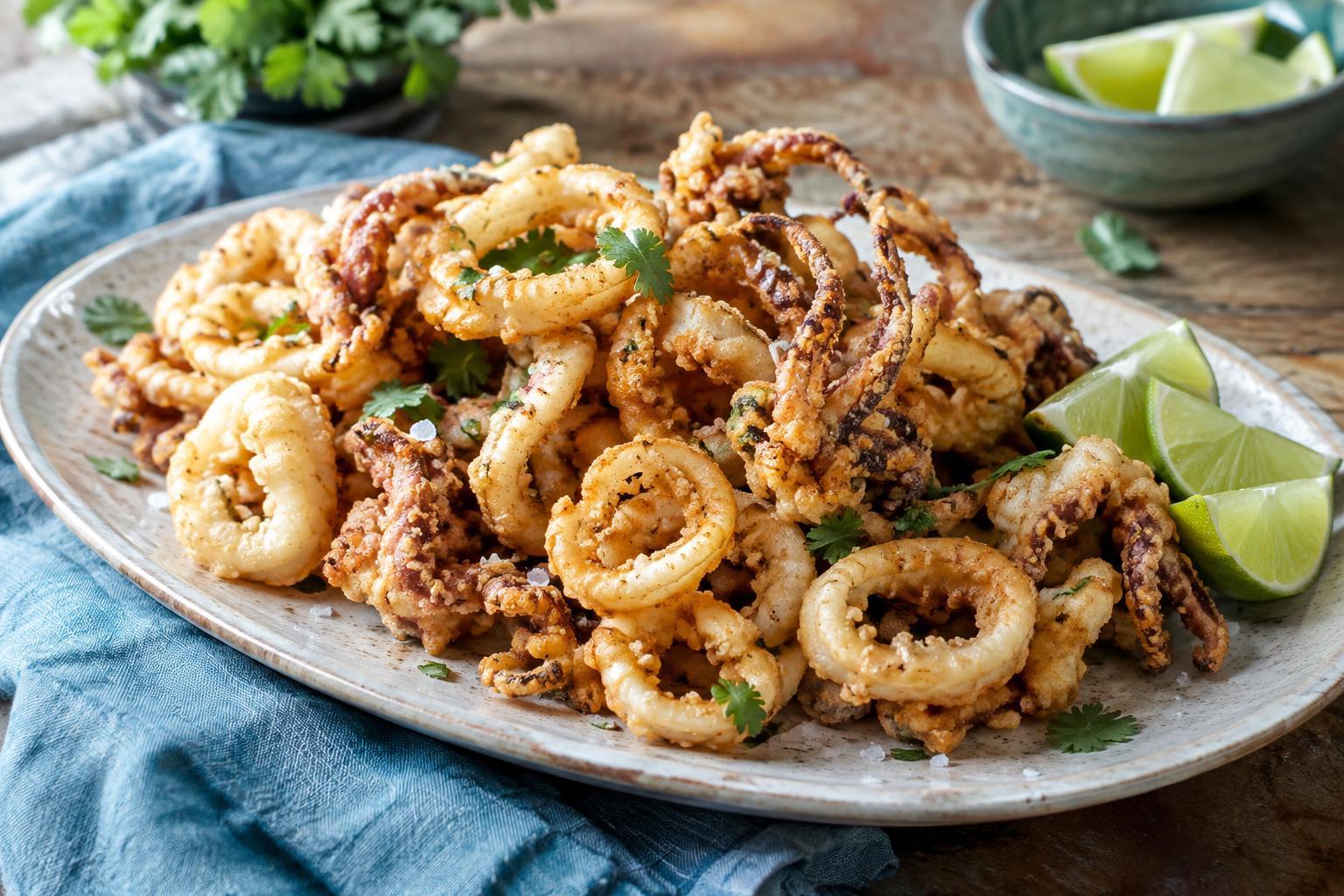
Fried calamari is at its best when a delicate, crisp coating gives way to tender squid. The method is straightforward, but small choices matter: how thoroughly you dry the squid, how lightly you coat it and how steadily you keep the oil hot. Lime brings a bright finish to this coastal-style dish, but save most of the juice for the table so the crust stays crisp.
Use cleaned squid bodies sliced into rings, tentacles, or a mixture of both. If the squid is frozen, thaw it in the refrigerator rather than on the counter. Keep it chilled until you are ready to prepare it, and use a separate cutting board or wash surfaces and utensils thoroughly after they touch raw seafood. Squid can vary in thickness, so aim for fairly even pieces that will cook at a similar pace.
Dry first, then build a light coating
Moisture is the enemy of a crisp crust. Drain the squid well and pat it dry with clean paper towels, paying attention to the inside of the rings. Set up the coating before you take the squid out of the refrigerator for frying. A simple mixture of all-purpose flour and cornstarch gives the pieces a thin shell; try roughly two parts flour to one part cornstarch as a starting point. Season it with salt and, if you like, a little ground chile, paprika or black pepper.
Toss a small portion of squid in the flour mixture, then shake off the excess. The pieces should look lightly dusted, not buried in flour. A heavy coating can turn pasty where it meets the squid, while loose flour may fall into the oil and burn. For extra texture, you can dip the squid briefly in beaten egg before coating it, but keep that layer thin and fry it promptly. Prepare only as much as you can cook in the next batch.
Fry hot, in small batches
Choose a deep, heavy pot with plenty of space above the oil, and add enough neutral frying oil for the squid to float freely. Heat the oil to about 350–375°F (175–190°C), using a thermometer if you have one. Add a modest batch carefully, lowering the pieces away from you to reduce splashing. The oil temperature will fall when the squid goes in; crowding the pot makes that drop larger and leaves the coating greasy rather than crisp.
Fry until the coating is lightly golden and the squid is cooked through, usually a brief cook for thin rings and longer for thicker pieces. Lift one piece to check if you are unsure: the squid should be opaque throughout, without a translucent center. Avoid relying on a rigid frying time, since the thickness of the squid and the oil temperature both affect the result. Transfer each batch to a wire rack set over a tray, where air can circulate underneath, and let the oil recover its heat before adding more.
Keep the squid tender and the kitchen safe
Squid has a narrow sweet spot when it is fried quickly. Once it is cooked through and the crust is crisp, remove it from the oil rather than waiting for a deep brown color. Working with even pieces makes that moment easier to judge. If the coating browns before the center cooks, the oil may be too hot or the pieces may be too thick; reduce the heat slightly or cut the next batch smaller.
Keep raw squid and its juices away from ready-to-eat garnishes. Wash your hands after handling it, and never put cooked calamari back on a plate that held raw squid unless the plate has been washed. Turn pot handles inward, keep water away from hot oil and allow the oil to cool before moving or disposing of it. Lime juice adds flavor, but citrus curing does not make raw seafood equivalent to cooked seafood; fry the squid fully before serving.
Finish with lime at the table
Sprinkle the hot calamari with a little salt as soon as it leaves the oil. Serve it with lime wedges rather than soaking the whole platter: guests can squeeze juice over each portion just before eating. For a simple accompaniment, stir lime zest and a small squeeze of juice into mayonnaise with a pinch of chile, keeping the dip separate from the crisp squid.
A platter of calamari pairs well with a crunchy cabbage salad, sliced radishes or a bowl of beans. If you are frying for a group, offer the first batches while they are hot instead of stacking them under a cover, where steam will soften the crust. The goal is a quick path from oil to rack to plate, with the lime providing its fresh contrast at the last moment.