Start with shrimp that will stay on the skewers
For four servings, use about 1½ pounds of large shrimp, peeled and deveined. Large shrimp are easier to thread and give you a little more time to turn them before they overcook. Tails can stay on for presentation, but removing them makes the skewers simpler to eat. If using frozen shrimp, thaw them in the refrigerator, then pat them dry with paper towels. Removing surface moisture helps the shrimp make contact with the grill rather than steam.
Use flat metal skewers if you have them; they help keep shrimp from spinning when you turn them. If using wooden skewers, soak them in water for at least 30 minutes and keep any exposed ends away from the hottest part of the fire. Thread each shrimp through two points, near the thick end and the tail end, so it sits in a loose curve. Leave a little space between shrimp for heat to circulate.
Give the chile-lime mixture a short turn
For the marinade, mix 2 tablespoons of neutral oil, 2 tablespoons of lime juice, the zest of one lime, one finely grated garlic clove, 1 teaspoon of ground ancho chile or mild chile powder, and ½ teaspoon of salt. Toss with the shrimp and refrigerate for 10 to 20 minutes while the grill heats. The oil helps coat the shrimp; the zest supplies lime aroma without adding more acid. Adjust the chile to taste, especially if your powder blend contains salt or hotter peppers.
Avoid a long soak in lime juice. Acid can change the texture of shrimp, making the outside seem firm before heat has cooked it. Citrus curing does not make raw seafood equivalent to cooked seafood. If you want lime flavor for serving, set aside a separate, clean lime wedge or dressing before the marinade touches the raw shrimp. Discard used marinade rather than brushing it onto cooked skewers.
Prepare the grill to prevent sticking
Heat the grill to medium-high. Once hot, brush the grates clean, then lightly oil them with a folded paper towel held in tongs. Keep the towel away from flames and use only enough oil for a thin coating. Lift the shrimp from the marinade, letting excess drip off, and thread them just before grilling. A heavy coating of wet marinade can drip, flare up and make the shrimp harder to brown.
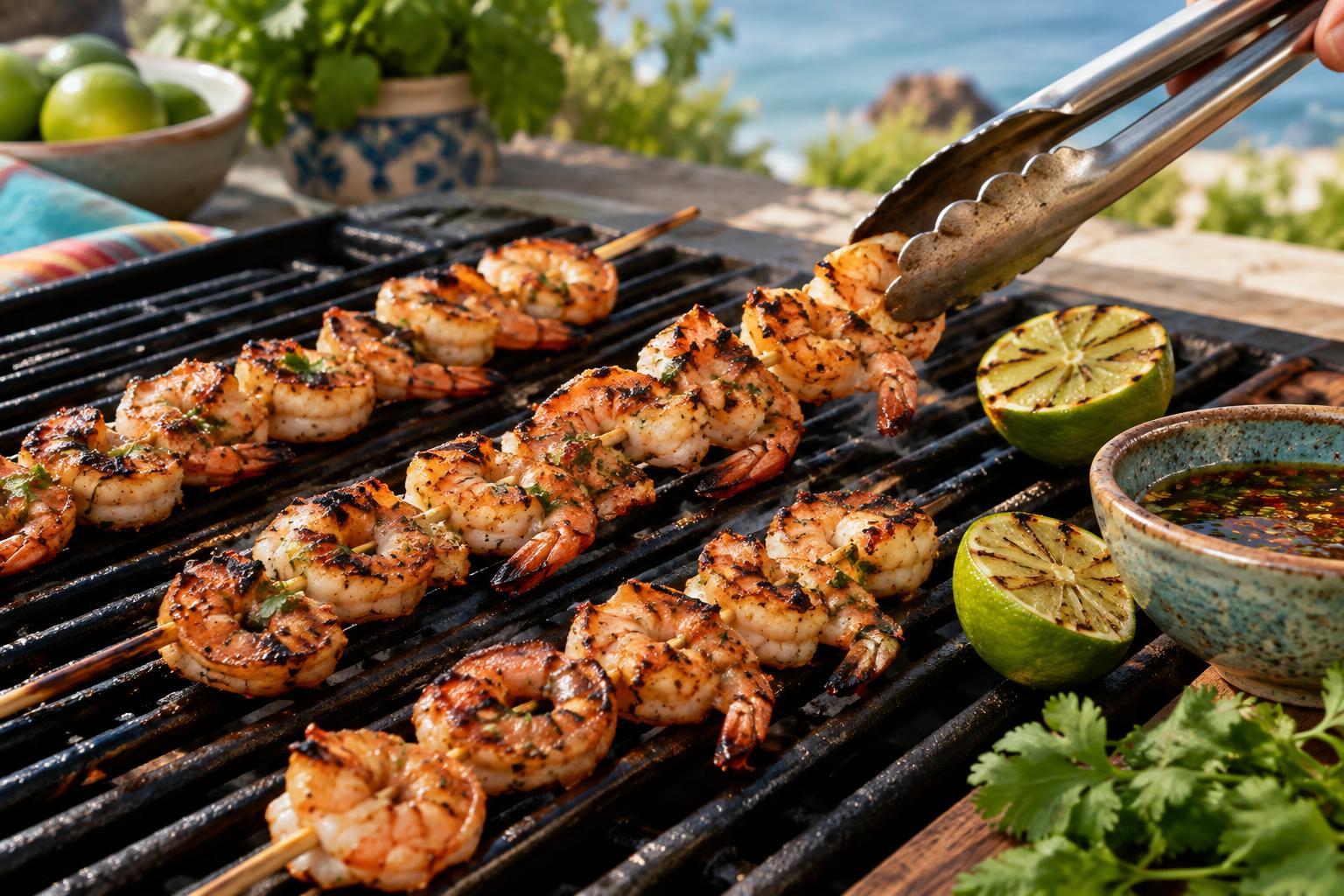
Lay the skewers across the grates rather than parallel to them. Give each skewer room, and resist tugging at a shrimp the moment it touches the grill. As the surface cooks, it will usually release more easily. If a skewer resists, wait briefly and try lifting it with a thin spatula or tongs. For a grill with wide grate openings, a lightly oiled grill basket or grill-safe perforated pan can make small shrimp easier to manage.
Turn once and watch for doneness
Grill the shrimp for roughly 2 to 3 minutes per side, adjusting for their size and your grill’s heat. Turn the skewers when the underside has color and releases without force. Shrimp cook quickly, so start checking early: the flesh should be opaque and firm throughout, with no translucent center. Remove each skewer as it finishes rather than leaving it over the heat while slower ones catch up.
A tightly curled shrimp can be a sign that it has cooked too long, but shape alone is not a reliable doneness test. If the grill is running hot and the exterior colors before the center is done, move the skewers to a cooler area to finish. For more even cooking, group similarly sized shrimp on the same skewer and avoid placing some directly over flames while others sit at the edge.
Serve promptly and keep seafood handling simple
Finish the hot skewers with fresh lime juice and, if you like, chopped cilantro. They pair well with rice, grilled corn, sliced avocado or a crisp cabbage salad. Offer extra chile at the table so guests can adjust the heat without making the entire batch spicier.
Keep raw shrimp refrigerated until you are ready to prepare it, and use separate or thoroughly washed utensils and surfaces for raw and cooked seafood. Wash your hands after handling raw shrimp. Serve the skewers soon after grilling, and refrigerate leftovers promptly in a covered container. A little planning at the grill—clean grates, a short marinade and close attention during cooking—does more for juicy shrimp than leaving them over the heat to develop a deeper char.