A simple coastal-style meal
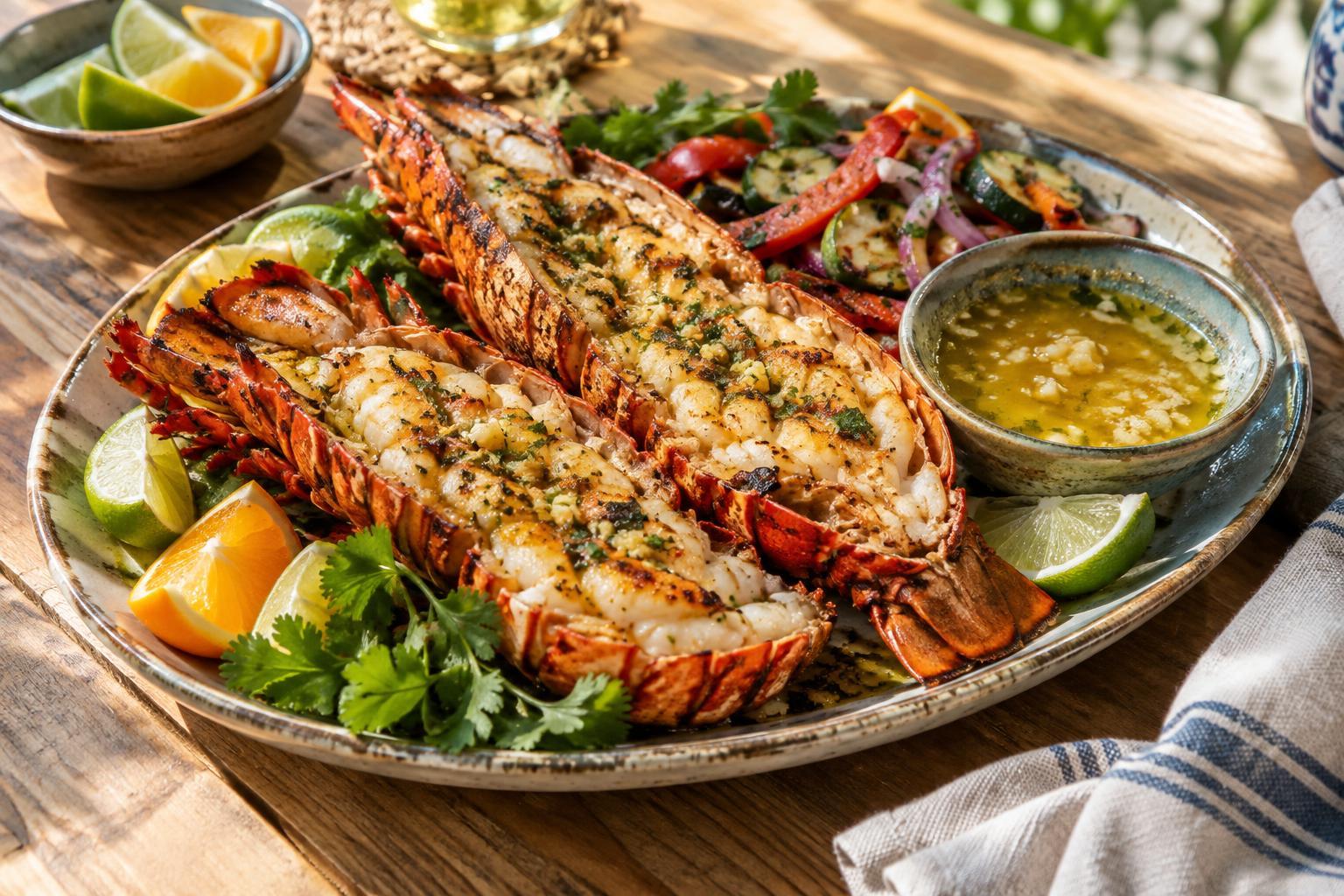
Lobster needs little help to feel special. A hot grill gives the exposed meat light browning, while lime, orange and garlic add brightness and richness without covering its delicate flavor. Serve the tails with grilled corn, a crisp cabbage salad or warm tortillas for a relaxed coastal-inspired dinner.
Plan on one tail per person as a main course, depending on its size and what else you are serving. You will also need butter, garlic, a lime, an orange, salt and, if you like, chopped cilantro or a little minced chile. Keep the citrus separate from the raw lobster: its juice is for finishing the dish, not for making the seafood safe to eat.
Thaw, handle and split the tails
If the tails are frozen, thaw them in the refrigerator in a covered container that will catch any drips. For a quicker thaw, keep them in a leakproof bag submerged in cold water, changing the water regularly, and cook them promptly afterward. Do not leave raw seafood on the counter to thaw. Keep it chilled until you are ready to prepare it, and wash your hands, knife, board and work surfaces after handling it.
For straightforward grilling, split each tail lengthwise into two halves. Set it shell-side down on a stable cutting board. With a sturdy, sharp knife, cut carefully down the center through the meat and shell; turn the tail over and finish any shell that remains connected. Keep your free hand clear of the blade and use kitchen shears if the shell is difficult to cut. Two flat halves are easier to place on the grate and let you see the meat as it cooks.
Pat the cut surfaces dry with paper towels, then season lightly with salt. Avoid rinsing the tails, which can splash raw seafood juices around the sink. If you prepare them ahead, return them to the refrigerator on a covered tray rather than leaving them beside the grill.
Make garlic-citrus butter and prepare the grill
For four tails, melt about 6 tablespoons of butter in a small saucepan over low heat. Add 2 finely chopped garlic cloves and cook gently for a minute or two, until fragrant but not browned. Remove the pan from the heat and stir in about 1 tablespoon each of lime juice and orange juice, plus a little finely grated zest if desired. Taste and add salt as needed. Cilantro or chile can go in at the end. Keep the butter warm, not boiling, so the garlic does not scorch and the citrus stays lively.
Preheat a clean grill to medium-high heat and lightly oil the grates. Set out clean tongs, a plate for the cooked tails and an instant-read thermometer before cooking. Divide the butter: use one portion for brushing during grilling and reserve an untouched portion for serving. Never dip a serving brush or spoon back into butter that has touched raw lobster.
Grill and check for doneness
Place the tails cut-side down on the grill. Cook until the meat releases reasonably easily and has light grill marks, often about 2 to 3 minutes. Turn them shell-side down and brush the exposed meat with the butter reserved for cooking. Continue grilling for roughly 3 to 5 minutes more for modest-size tails; thick tails may need longer. These times are only guides because tail thickness and grill heat vary. Move the tails away from flare-ups, especially after adding butter.
The meat should turn opaque and firm rather than remain translucent. For a more dependable check, insert an instant-read thermometer into the thickest part of the meat without touching the shell; cook until it reads 145°F (63°C). Check each tail, since sizes may differ. Transfer the cooked lobster to the clean plate and spoon over the untouched garlic-citrus butter. Serve immediately with lime wedges.
Citrus juice can change the appearance and texture of raw seafood, but citrus curing does not make it equivalent to cooked seafood. For this dish, rely on grilling and a doneness check—not the lime in the butter—to prepare the lobster.