A home-oven take on a coastal dish
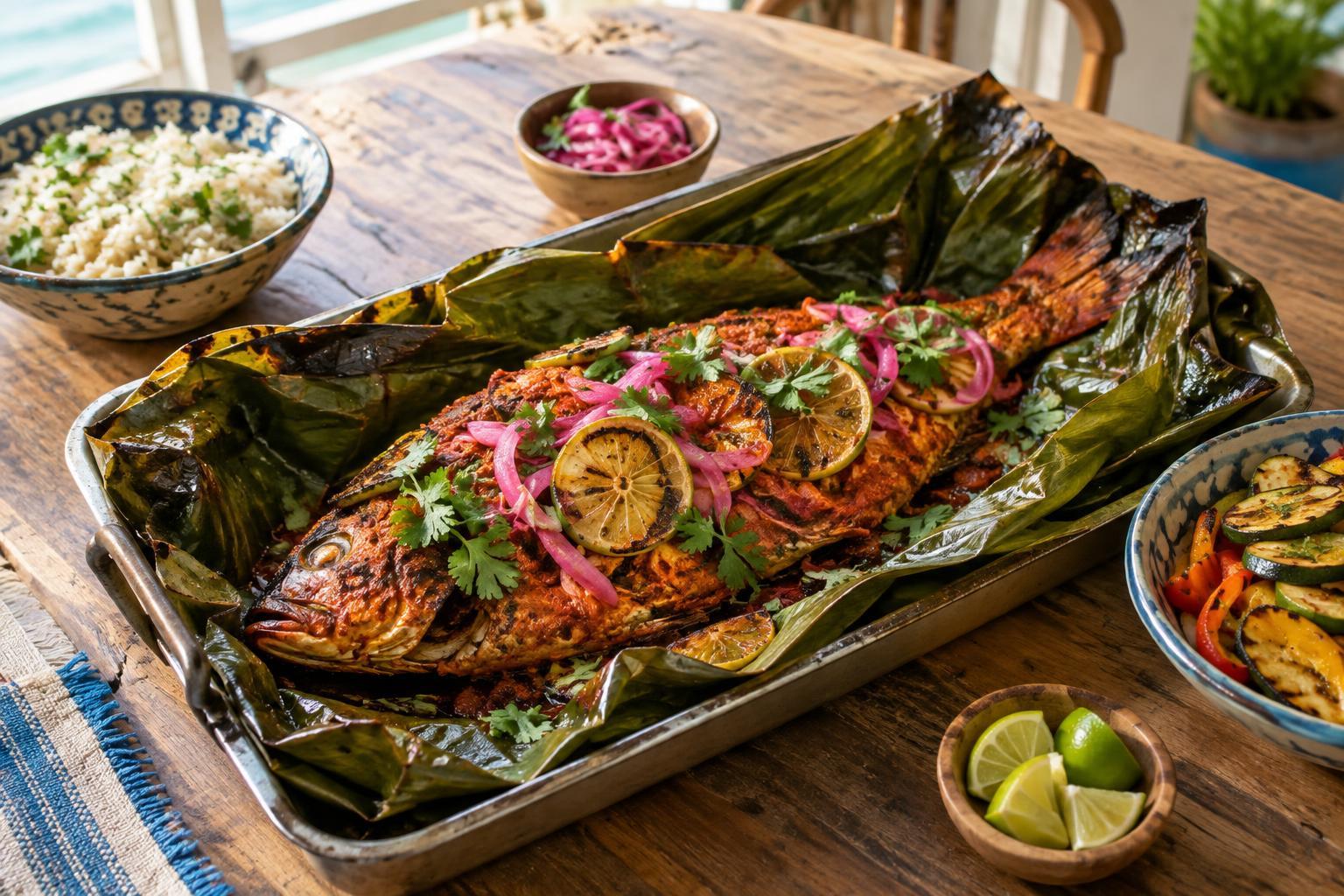
Tikin xic is associated with the Yucatán Peninsula and is often prepared with fish seasoned in achiote and sour orange, wrapped or laid in banana leaf, and cooked over fire. This version uses an oven rather than a grill. It keeps the earthy, citrus-forward seasoning and the option of a fragrant banana-leaf lining, while making the method manageable for a weeknight or a relaxed meal with guests.
Choose about 1½ to 2 pounds of firm fish fillets, such as snapper, grouper or another locally available fish that holds together during baking. Pieces of similar thickness will finish at roughly the same time. If the fish has skin, it can stay on; set the fillets skin-side down in the pan. Ask the fishmonger to remove pin bones, or check for them yourself before seasoning.
Build the achiote and sour orange marinade
For the marinade, whisk together 3 tablespoons achiote paste, ⅓ cup sour orange juice, 1 tablespoon neutral oil and 1 grated or finely minced garlic clove. Add a pinch of salt only after tasting: achiote pastes vary in their seasoning. The mixture should be brushable, with enough liquid to spread over every piece of fish. Achiote gives the dish its deep red-orange color and savory, gently earthy flavor.
Sour orange has a tartness that ordinary sweet orange juice cannot provide on its own. If it is unavailable, try a mixture of roughly equal parts sweet orange and lime juice. This is a practical substitute, not an exact match; taste it before adding it to the paste and adjust with a little more lime if it seems too sweet. You can also add a small pinch of dried oregano or a little black pepper, but keep the seasoning restrained so the fish remains central.
Wrap and bake the fish
Heat the oven to 400°F (205°C). If using banana leaf, wipe it clean and briefly warm it in a dry skillet or carefully over low heat until it bends without tearing. Line a baking dish with the leaf, leaving enough overhang to fold loosely over the fish. Without banana leaf, use a lightly oiled baking dish and cover it loosely with foil. The two methods will not smell quite the same, but both help keep the fish moist.
Pat the fish dry with paper towels and place it in the dish. Brush the marinade over both sides, then arrange the fillets in a single layer. If you like, scatter thinly sliced onion and tomato around them; leave space between pieces of fish for even cooking. Fold the leaf over the top, or cover the dish with foil. Let the fish stand in the refrigerator while the oven finishes heating, rather than leaving it on the counter to marinate.
Bake for about 15 to 25 minutes, depending on the thickness of the fillets. Begin checking at the early end of that range. Carefully open the covering, keeping your hands clear of escaping steam, and check the thickest part with a food thermometer. The fish is ready when it reaches 145°F (63°C). It should also separate easily into flakes. A thicker piece may need a few more minutes; return the covering to the dish and check again.
Serve simply, and handle seafood with care
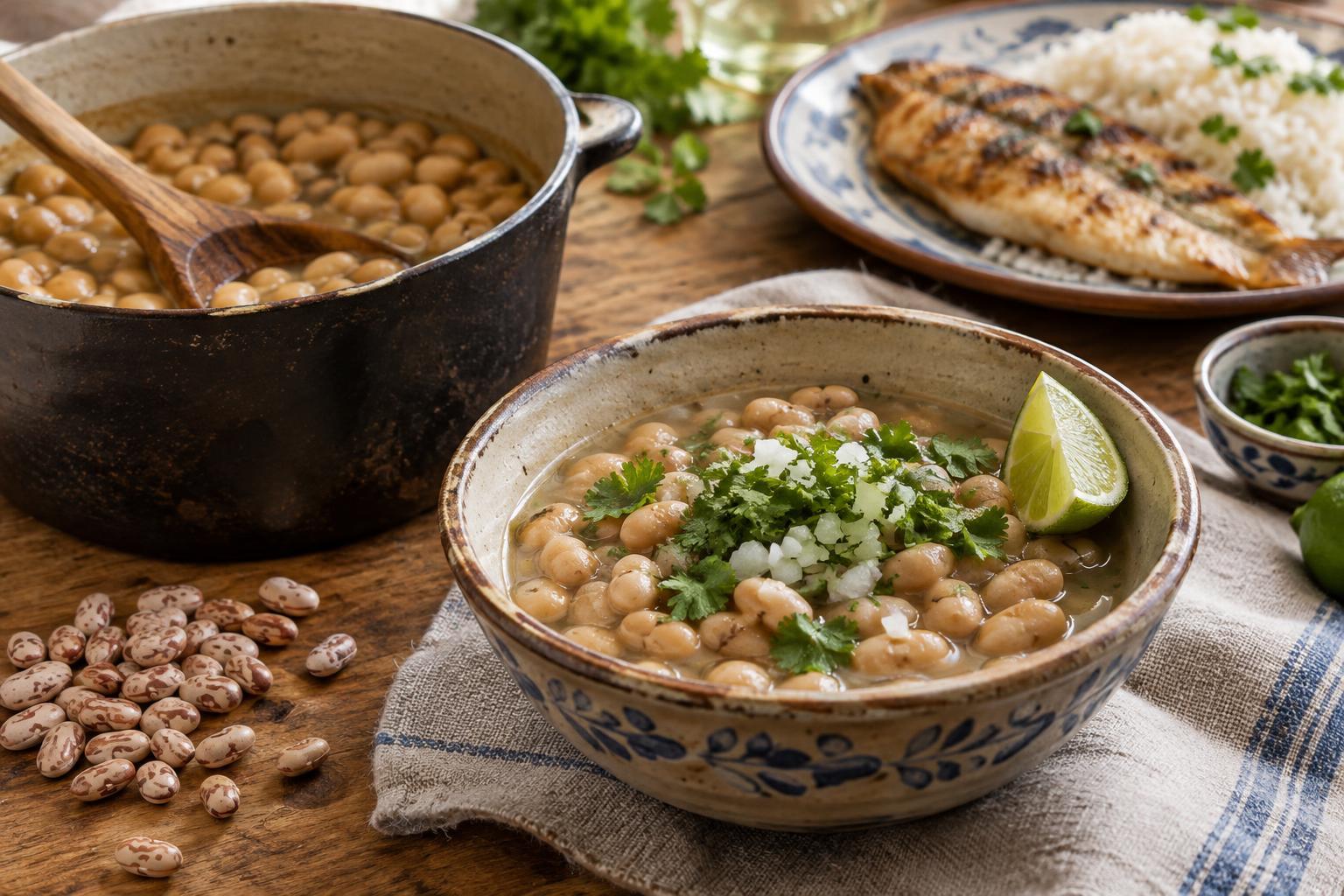
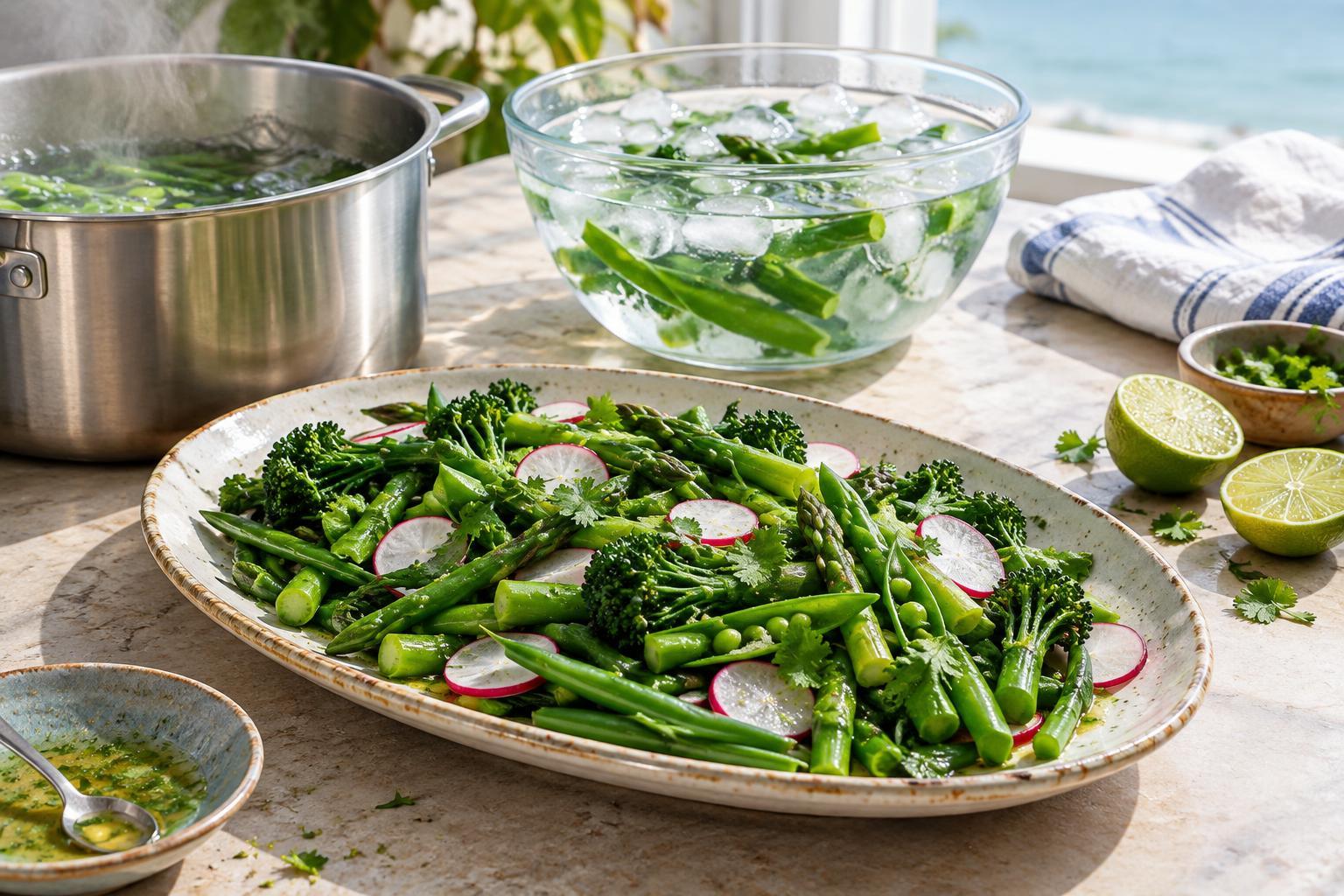
Bring the baking dish to the table or transfer the fish to a platter with its softened onion and tomato. Warm tortillas, rice or black beans make useful companions, while sliced cucumber, cabbage or a lightly dressed salad adds crunch. Offer lime wedges for anyone who wants a brighter finish. If the achiote paste is strongly seasoned, taste the cooked fish before adding more salt or a sauce.
Keep raw fish refrigerated at 40°F (4°C) or colder until you are ready to prepare it. Use clean utensils and a separate cutting surface for ready-to-eat sides, and wash anything that touched the raw fish before using it again. Discard marinade that has been in contact with raw fish rather than spooning it over the finished dish. Sour orange adds flavor, but its acidity does not reliably eliminate foodborne hazards: citrus curing does not make raw seafood equivalent to cooked seafood. Refrigerate leftovers promptly, within two hours of serving.