Why blanch vegetables for a salad?
Blanching means cooking food briefly in boiling water. For green vegetables, it softens a raw edge while leaving enough structure for a satisfying crunch. A prompt chill stops the cooking before tender-crisp turns limp. The method is useful when you want a salad that feels fresh but includes vegetables, such as green beans or asparagus, that can be tough or starchy when served raw.
The contrast suits a coastal-style table: cool greens alongside cooked fish, grilled shrimp, beans or a platter of rice. Citrus, chile and herbs can supply brightness without asking the vegetables to sit in dressing for hours. Blanching also lets you do the hot work early, leaving only drying, slicing and tossing before the meal.
Prepare the pot, the chill and the vegetables
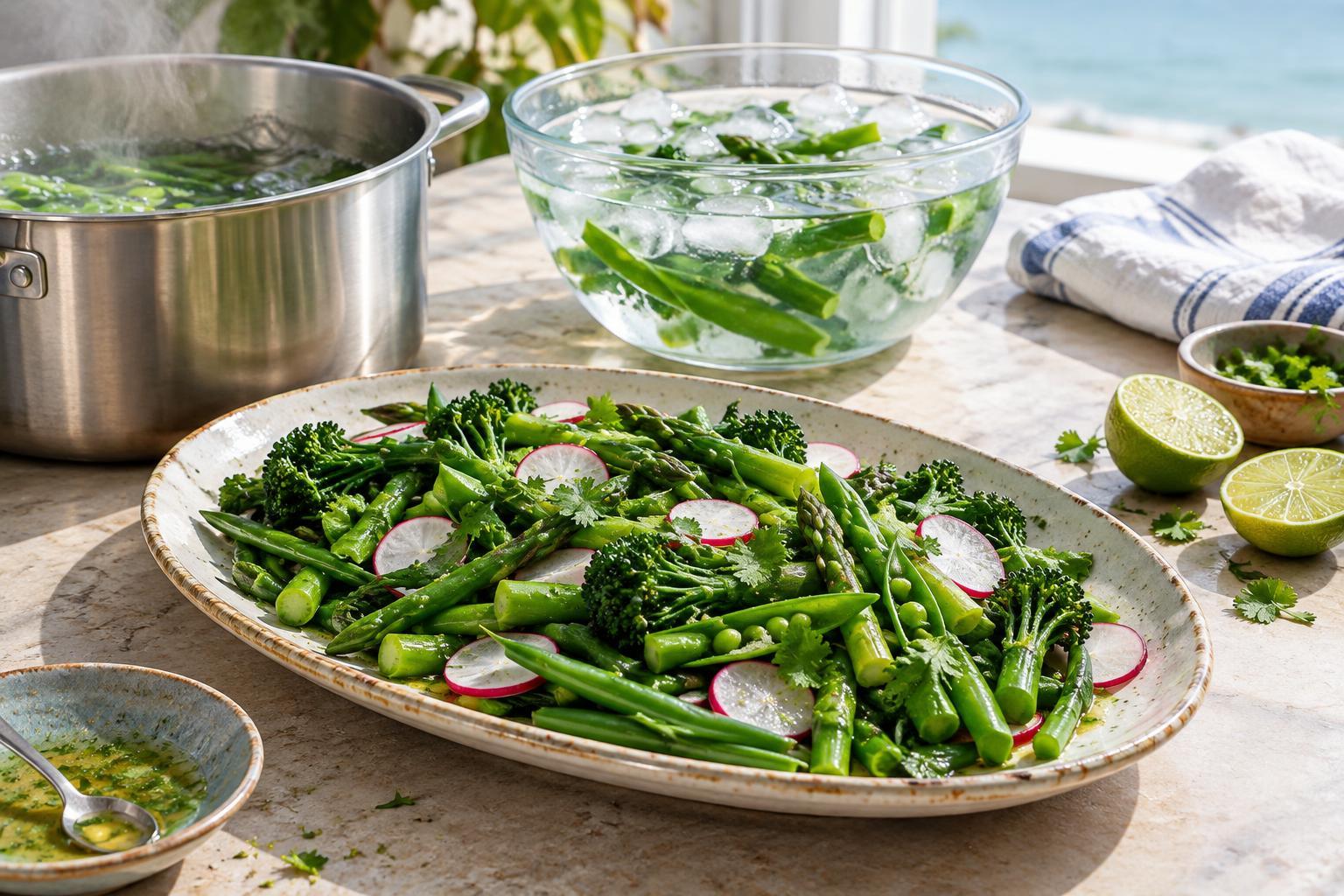
Fill a large pot with water and bring it to a full boil. Salt the water if you like; it should season the vegetables lightly, not make them taste briny. Nearby, set out a large bowl of cold water with plenty of ice, plus a colander and a clean towel. Having the chill ready before the vegetables enter the pot matters more than chasing an exact cooking time.
Wash produce under running water and trim it before cooking. Cut pieces to similar sizes so they finish together. Green beans can stay whole or be cut in half; asparagus benefits from having its woody ends removed; broccoli can be divided into small florets. Work in batches rather than crowding the pot. If the water loses its boil and takes a long time to recover, the vegetables may cook unevenly.
Cook just until tender-crisp, then cool quickly
Lower one batch into the boiling water and begin checking early. Thin asparagus and snow peas may need only a short dip, while thick beans and broccoli stems generally need longer. Lift out a piece, cool it briefly and bite it: it should be easy to chew but still have some snap. Color can be a helpful cue, but texture is the better test. If you plan to serve the vegetables straight from the refrigerator, remember that chilling will make them feel firmer.
Transfer the batch directly to the ice water and stir so every piece cools. Once cold, drain it rather than leaving it submerged. Repeat with the remaining vegetables, allowing the pot to return to a boil between batches. Different vegetables are easier to control when blanched separately; delicate peas should not have to wait for thick broccoli stems to finish.
Dry well and dress close to serving
Water clinging to chilled vegetables is the enemy of a lively salad: it dilutes citrus juice and prevents oil-based dressings from coating the greens. Spread the drained vegetables on a clean towel and pat them dry, or spin sturdy pieces gently in a salad spinner. Store them covered in the refrigerator if you are preparing ahead. Keep the dressing separate until shortly before serving for the best texture.
For a simple coastal-inspired combination, toss green beans and asparagus with sliced radishes, cilantro or parsley, a little finely cut chile, citrus juice, olive oil and salt. Add avocado at the end so it keeps its shape. Taste after tossing: cold vegetables often need a final adjustment of salt or acidity. If the salad tastes sharp rather than balanced, add a little more oil instead of more citrus.
Serve safely and adapt the method
Keep washed, cooked vegetables away from utensils and surfaces used for raw seafood. Refrigerate the finished components promptly, and use clean tools when assembling the salad. If serving it with seafood, fully cooked and properly chilled seafood is a straightforward choice. Citrus juice changes the texture and appearance of raw seafood, but citrus curing does not make it equivalent to cooking for food safety.
Once you know the sequence—boil, test, chill, drain and dry—you can adapt it to the vegetables on hand. Try snap peas with herbs, broccoli with a citrus-chile dressing, or green beans with tomato and a squeeze of lime. The goal is not to cook every vegetable for the same number of minutes; it is to give each one just enough heat to become pleasant to eat, then preserve that texture until it reaches the table.