Start with masa that feels right
A warm corn tortilla is a useful companion to beans, grilled vegetables, fish and bright salsas. For this method, start with prepared masa: corn dough that is already mixed and ready to shape, whether bought fresh or made by mixing masa harina with water according to its package directions. Masa harina is not the same as ordinary cornmeal, so cornmeal is not a direct substitute.
Before portioning, knead the dough briefly with clean hands. It should feel soft and pliable, like modeling clay, without coating your fingers in wet paste. Press a small piece between your palms to check it: if the edges crack deeply, work in a little water, a teaspoon or two at a time. If it sticks heavily to your hands, let it rest for a few minutes or work in a small amount of masa harina. Keep the dough covered with a damp towel while you work; exposed portions can dry out quickly.
Set up the press and portion the dough
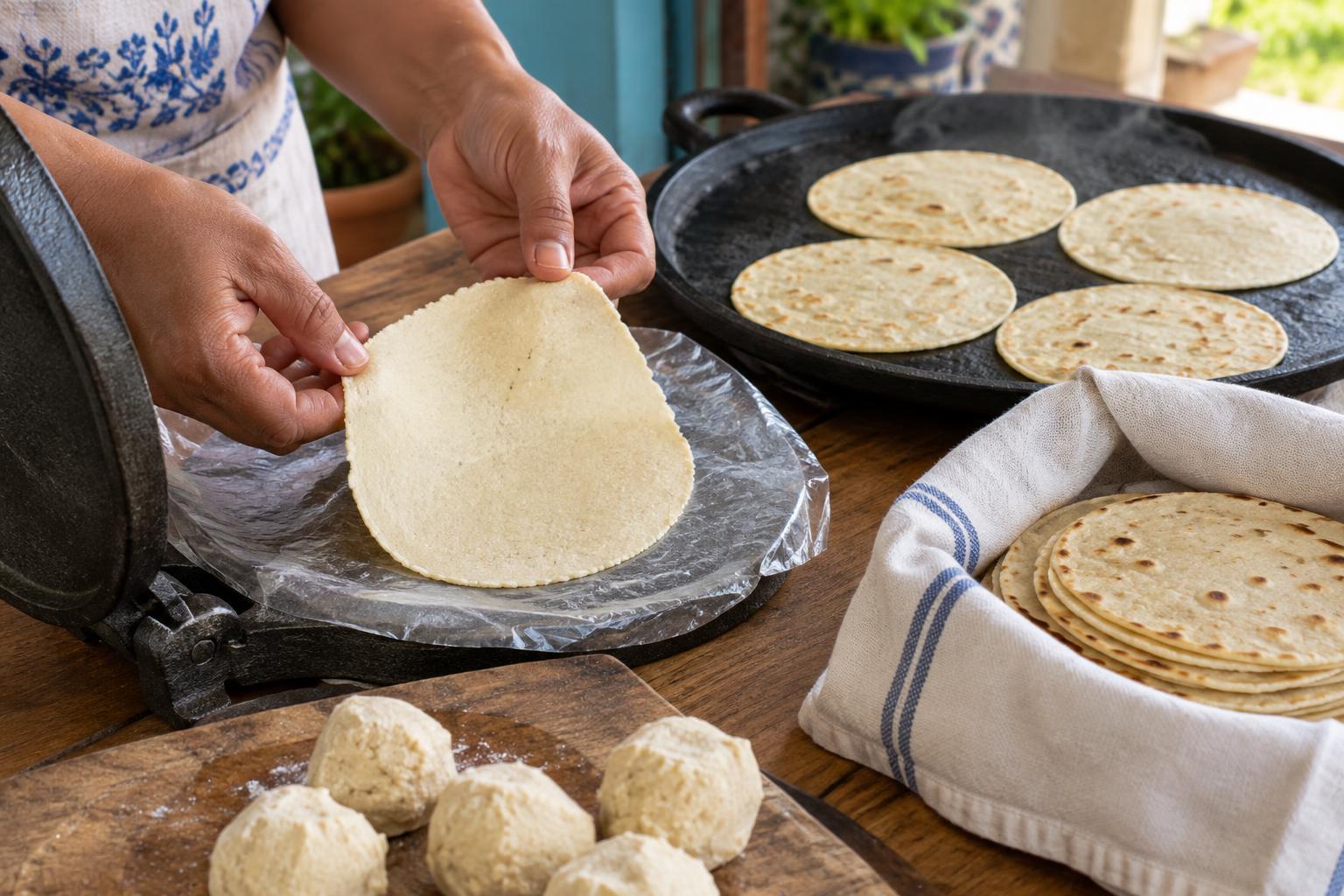
A tortilla press makes even rounds, but a heavy flat-bottomed pan can do the job. Cut a clean, food-safe plastic bag into two smooth sheets, or use two pieces of suitable reusable liner, to keep the masa from sticking to the press. Put one sheet on the lower plate, center a ball of dough on it, and cover it with the second sheet. If using a pan, place the covered dough on a sturdy, level counter before pressing.
For a small tortilla, start with a dough ball about the size of a golf ball. Close the press with steady pressure rather than forcing it down in one sharp movement. Open it, rotate the lined tortilla if needed, and press once more for a fairly even round. Aim for a tortilla that is thin enough to fold easily but thick enough to lift without tearing. Exact thickness matters less than consistency across the batch: uneven spots cook at different speeds.
Peel back the top liner, turn the tortilla onto your open palm, then gently remove the second liner. If the dough resists peeling or folds onto itself, it may be too wet or pressed too thin. Gather it back into a ball and try again. Keep the portions you have not pressed covered rather than stacking uncooked tortillas, which can stick together.
Cook on a hot, dry surface
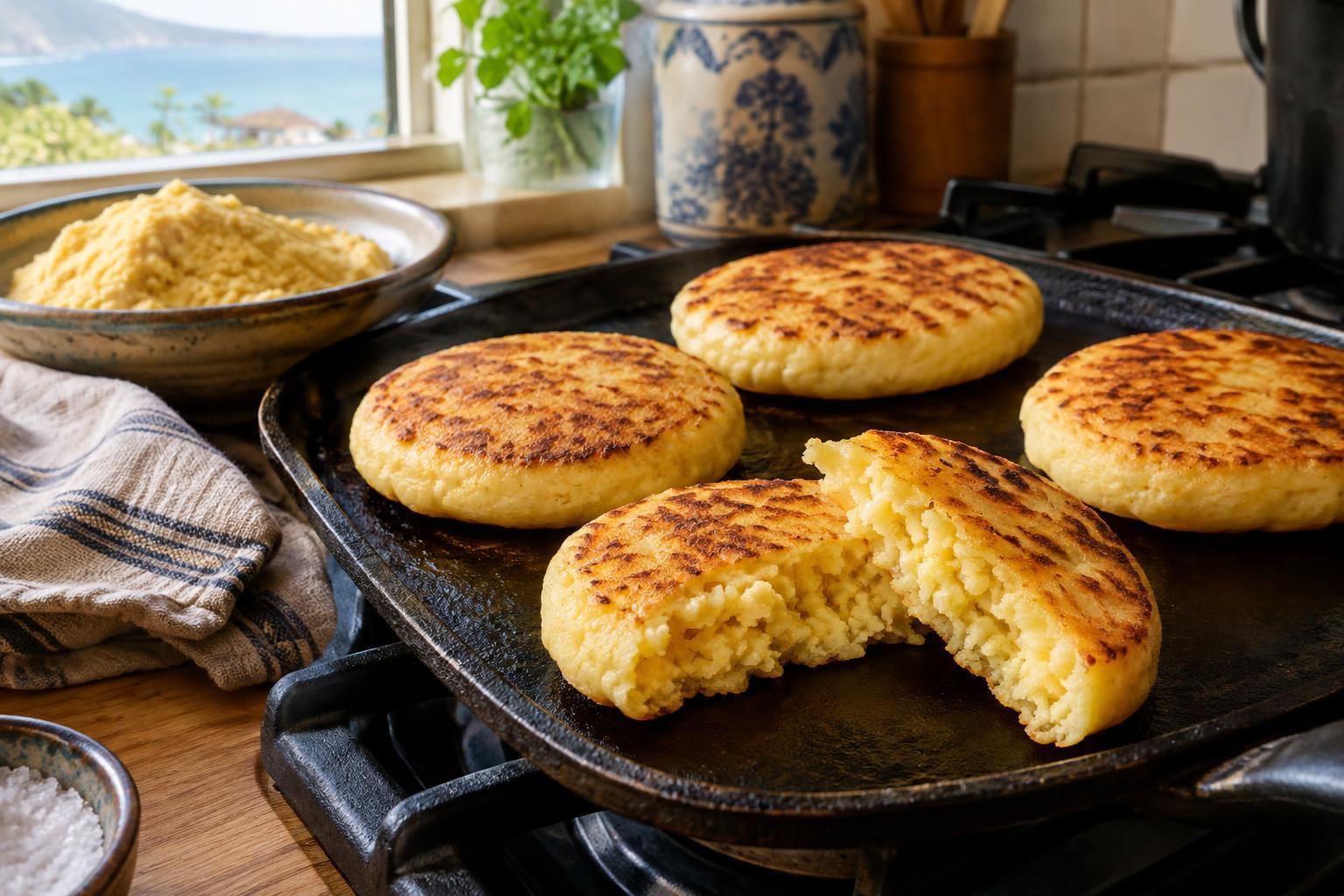
Heat a comal, cast-iron skillet or other sturdy pan over medium-high heat. Give it time to heat evenly, then cook one test tortilla before committing to a full batch. You generally do not need oil: the goal is a dry, lightly spotted surface, not a fried tortilla. A tortilla placed on the pan should begin to set without scorching immediately.
Lay a pressed tortilla flat on the pan. Cook until its underside releases easily and the top begins to look less glossy, roughly 30 to 60 seconds. Flip it and cook until the second side develops some brown spots, then flip once more briefly if the center still looks damp or the tortilla benefits from a little more time. Times vary with thickness and pan heat. Some tortillas puff as steam separates their layers; puffing is satisfying, but it is not the only sign of a good tortilla. Look for a cooked surface and a flexible texture.
If tortillas turn brittle before the centers cook, lower the heat slightly or press them a little thinner. If they remain pale and stiff, the pan may be too cool. Adjust one thing at a time and use the next tortilla to test the change.
Keep them warm and serve them safely
Transfer each cooked tortilla to a clean towel-lined basket or covered plate and fold the towel over the stack. A short rest lets steam soften the tortillas, making them easier to fold around fillings. Serve them warm with sautéed vegetables, beans, or fully cooked seafood and a squeeze of lime. If offering a raw seafood dish alongside them, keep its utensils and work area separate from those used for ready-to-eat toppings.
Let leftover tortillas cool, then refrigerate them in a covered container and reheat on a dry pan until warm and pliable. Keep prepared masa refrigerated according to its packaging or supplier guidance, and avoid leaving it out for extended periods while you work. Citrus juice can add brightness to seafood fillings, but citrus curing does not make raw seafood equivalent to cooked seafood; handle and serve raw seafood with appropriate care.