Choose and prepare the beans
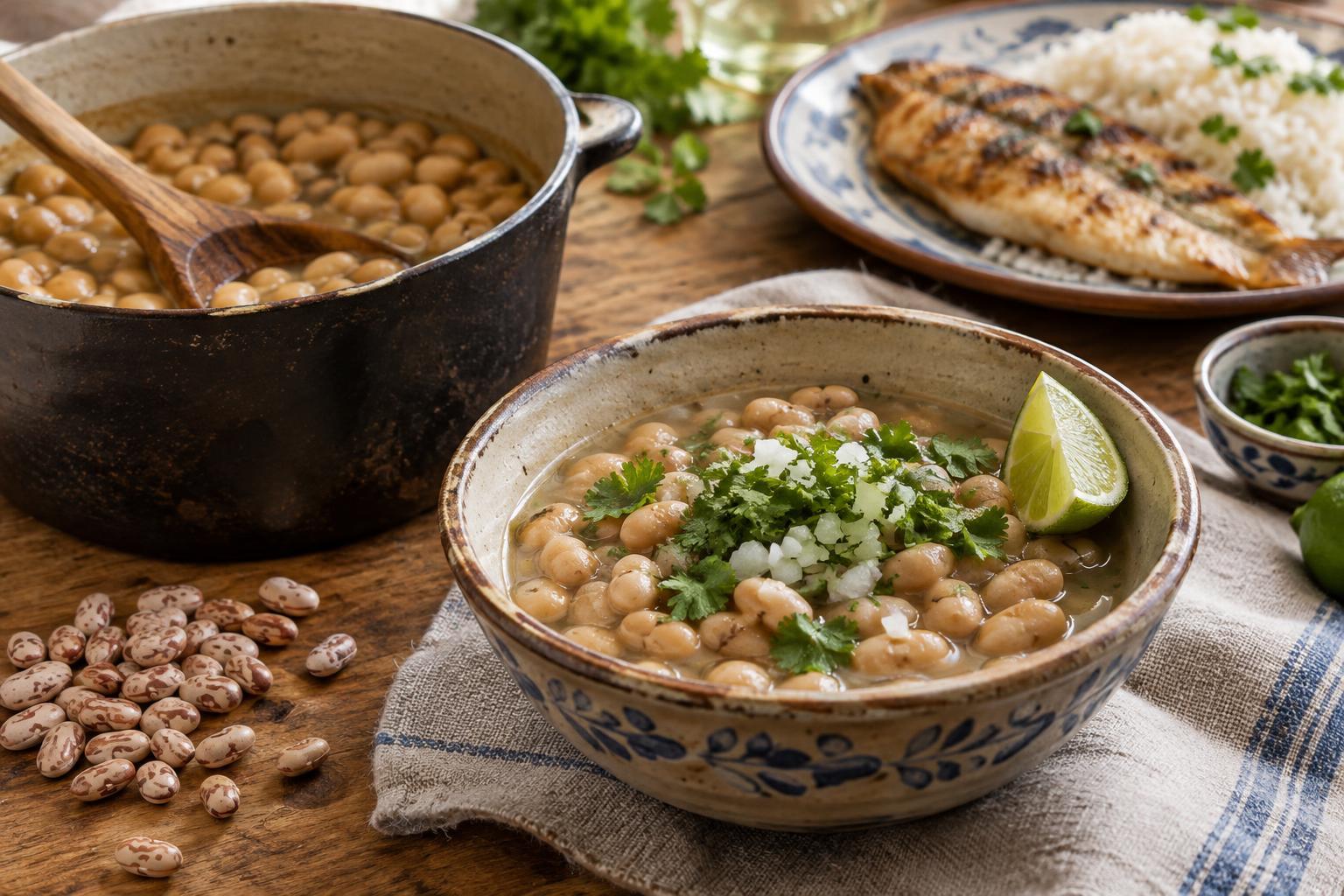
A pot of beans can anchor a coastal meal without competing with seafood, vegetables or a lively sauce. Black beans, pinto beans and small white beans all work well beside rice, grilled fish or a crunchy salad. Choose one type for each pot: mixing varieties makes it harder to judge when everything is done. Before cooking, spread the dried beans on a tray and remove any small stones or damaged beans, then rinse them in a colander.
Dried beans do not follow an exact clock. Their size, age and storage conditions can affect how quickly they soften, so plan to check them rather than rely only on a stated cooking time. If you are serving a crowd, cook them ahead: beans hold their shape well in their cooking liquid and can be seasoned for different dishes later.
Soak when it helps, but know what it does
Soaking gives beans a head start on absorbing water and can make cooking more predictable. For an overnight soak, cover them generously with water because they will expand. If the kitchen is warm or you plan to soak them for a long stretch, put the bowl in the refrigerator. Drain and rinse the beans before cooking.
For a quicker soak, cover the beans with water, bring it to a boil for a couple of minutes, turn off the heat and let the pot stand, covered, for about an hour. Drain and rinse as you would after an overnight soak. If you skip soaking, add extra water and expect a longer simmer. Either approach can produce good beans; the more important step is cooking them until the centers are tender. Do not taste beans that are still raw or undercooked.
Build flavor during a steady simmer
Put the drained beans in a roomy pot and add fresh water to cover them by several inches. Bring the water to a boil, then reduce the heat to a gentle simmer. Add a halved onion, a garlic clove or a bay leaf if you like. A little salt in the cooking water helps season the beans throughout; you can adjust the final dish later. Keep the beans submerged, adding hot water if the level falls too low.
A gentle simmer helps beans cook evenly without knocking their skins apart. Stir occasionally and check the water level, especially near the end. Save lemon or lime juice, vinegar and tomato-heavy sauces for after the beans soften: acidic ingredients can make it harder for beans to become tender. The cooking liquid is useful, too. It can loosen a bean-and-rice side or give a spoonable serving of beans more body.
Dried kidney beans need extra care because improperly cooked ones can cause illness. If you use them, bring them to a vigorous boil for at least 30 minutes before reducing the heat to simmer; do not cook dried kidney beans only in a slow cooker. This precaution is not replaced by soaking.
Check tenderness and finish for the table
Start testing when the beans look plump, then sample several from different parts of the pot. Each should mash easily between your fingers or with a fork, with no firm or chalky center. If some are ready and others are not, keep simmering and check again. Letting fully cooked beans rest briefly in their warm liquid can help them absorb more seasoning.
For a simple coastal-style side, drain the beans lightly and toss them with olive oil, chopped cilantro or parsley, finely diced onion and lime juice. Add the citrus only after the beans are tender. Serve warm beside rice and cooked fish, or cool the beans for a salad with cucumber and peppers. Keep any seafood separate during preparation to avoid cross-contamination. If serving raw or citrus-cured seafood alongside the beans, remember that citrus curing does not make raw seafood equivalent to cooked seafood.
Refrigerate leftover beans and their liquid promptly in shallow containers, within two hours of cooking. Use refrigerated beans within three to four days, or freeze them for a later meal. Reheat them thoroughly, adding a splash of water if the liquid has thickened.