The simple rule: separate sauce before seafood goes in
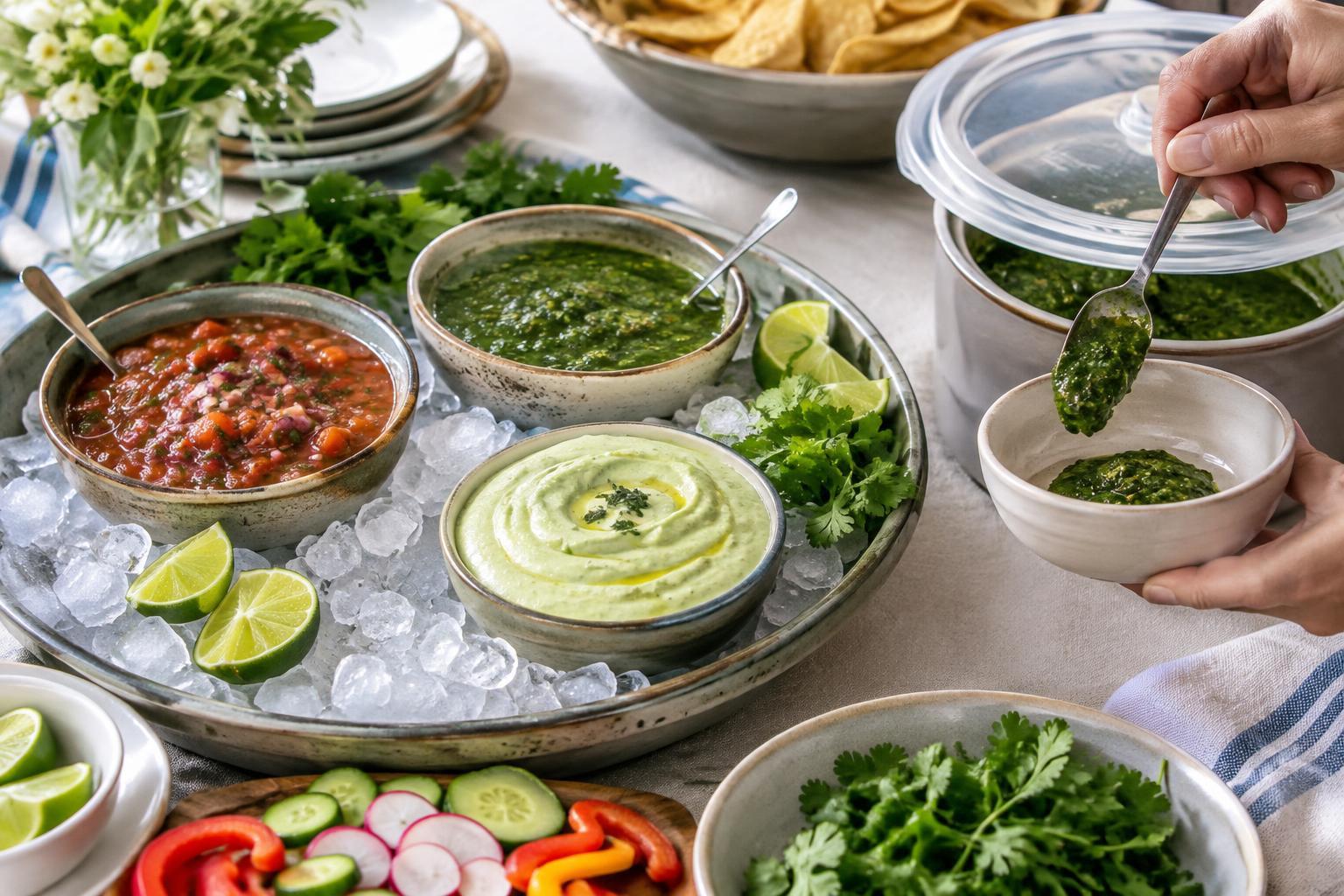
If you want a lime-and-chile sauce for both marinating and serving, make enough for both jobs at the start. Pour the serving portion into a clean container before adding raw fish or shellfish to the rest. Cover it and refrigerate it until you are ready to eat. Use a clean spoon each time you handle the reserved sauce.
Once marinade has touched raw seafood, treat it like raw seafood juices—not like a ready-to-eat dressing. Raw seafood can introduce harmful microorganisms into the liquid, even when the marinade contains plenty of citrus, salt or chile. The simplest plan is to discard the used marinade after removing the seafood. Do not pour it over a finished dish or return it to the bowl of reserved sauce.
Build a bright sauce you can use two ways
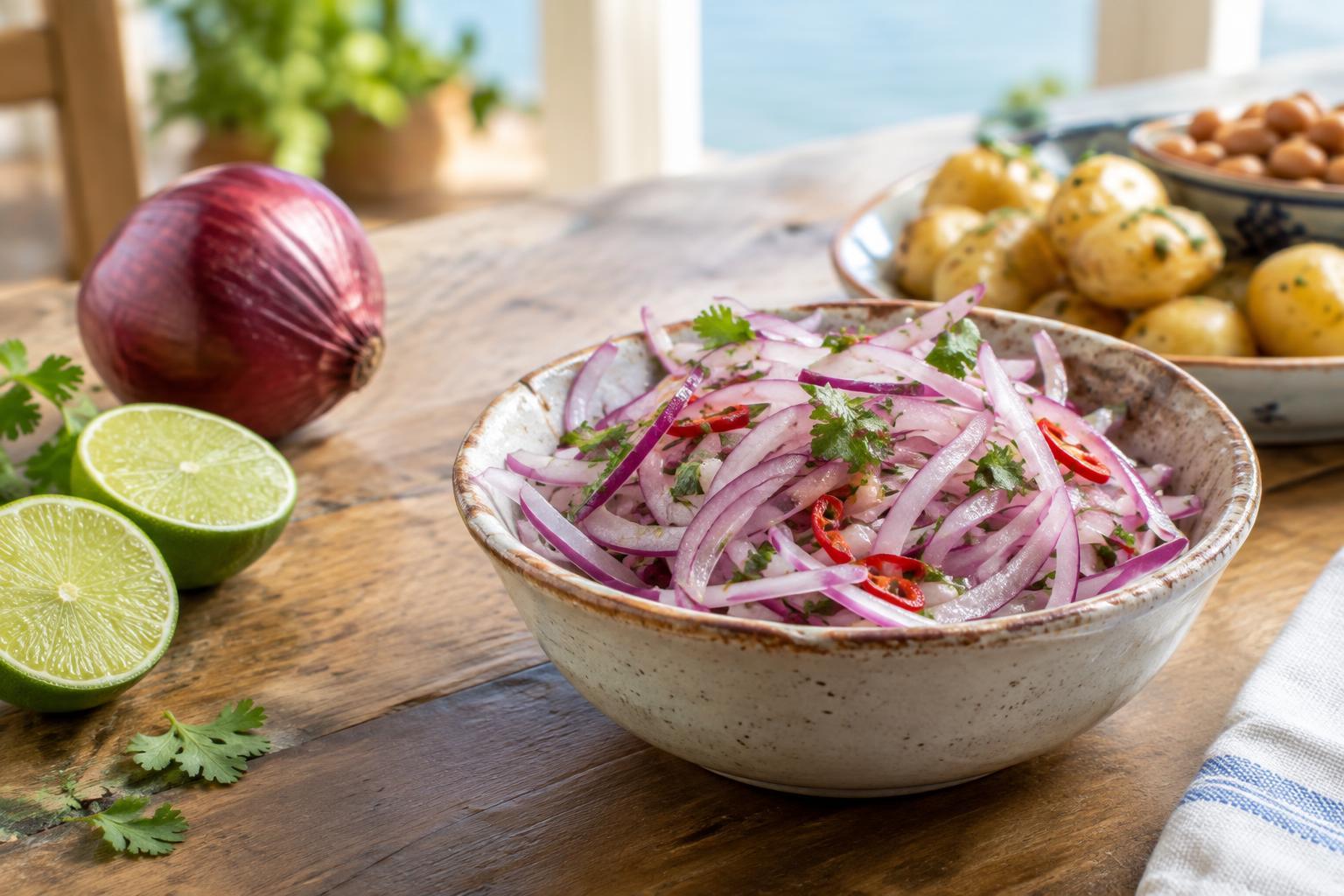
For a flexible coastal-style mixture, whisk together fresh lime juice, a little orange juice, finely chopped onion, chile and cilantro. Add salt to taste, then divide it between two clean containers. The first portion can season seafood; the second can dress a cooked dish at the table. If you prefer a milder finish, stir a little olive oil into the reserved portion just before serving.
Labeling or placing the containers in different parts of the counter can help prevent a mix-up. Give each one its own spoon. If you taste while adjusting the sauce, use the reserved, untouched portion and a fresh tasting spoon. Never dip a utensil that has handled raw seafood into sauce intended for serving.
Keep raw seafood and ready-to-eat food apart
Keep seafood refrigerated while it marinates, rather than leaving it on the counter. Set its covered container on a tray or in a low spot in the refrigerator so drips cannot land on vegetables or other foods. Wash your hands after handling the seafood, and use a separate board and utensils for ingredients that will be eaten without further cooking. Wash boards, knives and work surfaces with hot, soapy water after raw-seafood prep.
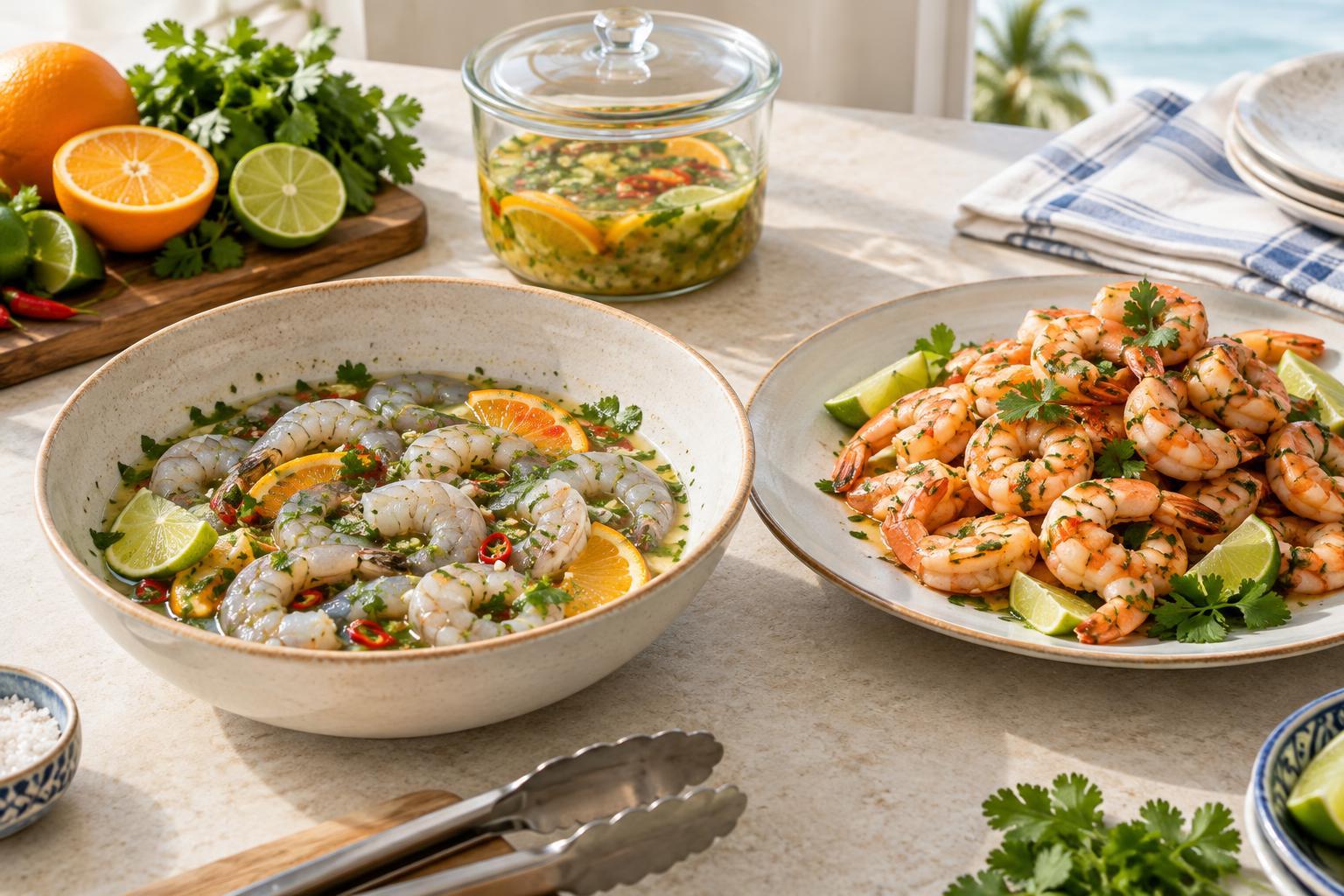
Think about the last few minutes before serving, too. Tongs used to move raw shrimp into a pan should not be used to lift the cooked shrimp onto a platter unless they have been washed first. The same applies to bowls and plates. Put cooked seafood on a clean serving dish, then add the sauce you reserved before any raw seafood touched the batch.
Can used marinade be cooked and served?
If you intend to turn used marinade into a sauce, it must be brought to a full boil before serving; simply warming it is not enough. Boiling can also change the fresh taste and texture of a citrus-and-herb mixture. For a bright finishing sauce, reserving a clean portion in advance is usually the easier and more appealing choice.
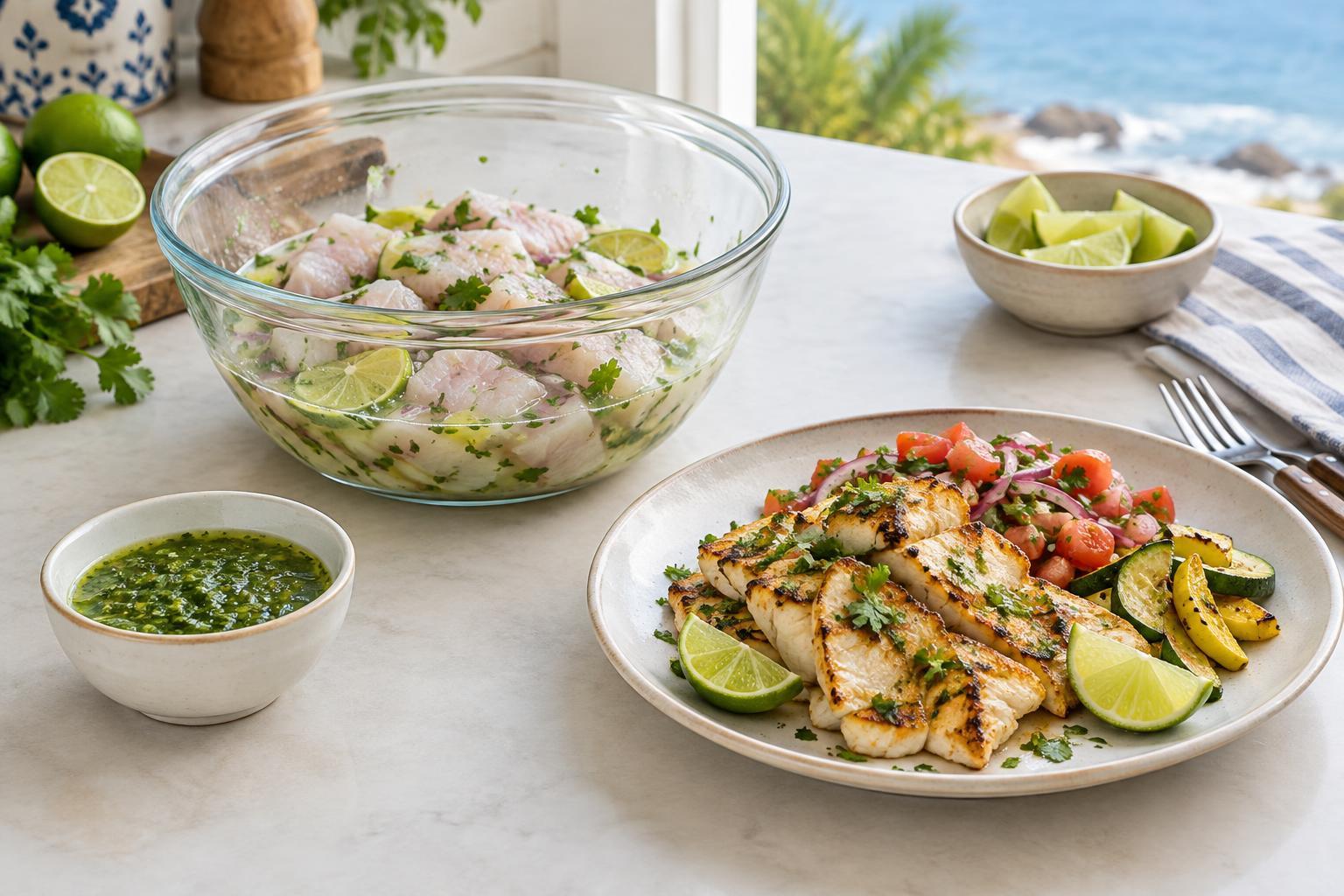
Do not assume that a sour marinade has made raw seafood safe to serve. Citrus juice can change its color and firmness, but citrus curing does not make raw seafood equivalent to cooked seafood. This distinction matters for ceviche and other preparations that are served without heat: careful sourcing, cold storage and clean handling are important, but they do not eliminate the risks associated with eating raw seafood. People who need to avoid raw seafood should choose a fully cooked preparation.
A dependable routine for your next seafood meal
Start with clean containers and utensils. Mix your sauce, set aside the portion you will serve, then add seafood only to the portion meant for marinating. Keep both containers refrigerated. When it is time to cook, move the seafood with utensils designated for raw food and discard the used marinade unless you have planned to boil it for a cooked sauce.
Finish with clean hands, a clean platter and the untouched sauce. This routine works whether dinner is grilled fish with a lime-onion drizzle, sautéed shrimp with chile and cilantro, or a platter of vegetables alongside seafood. Separating the sauce before marinating protects its fresh flavor while making it much easier to prevent cross-contamination.