Start with a marinade that supports the seafood
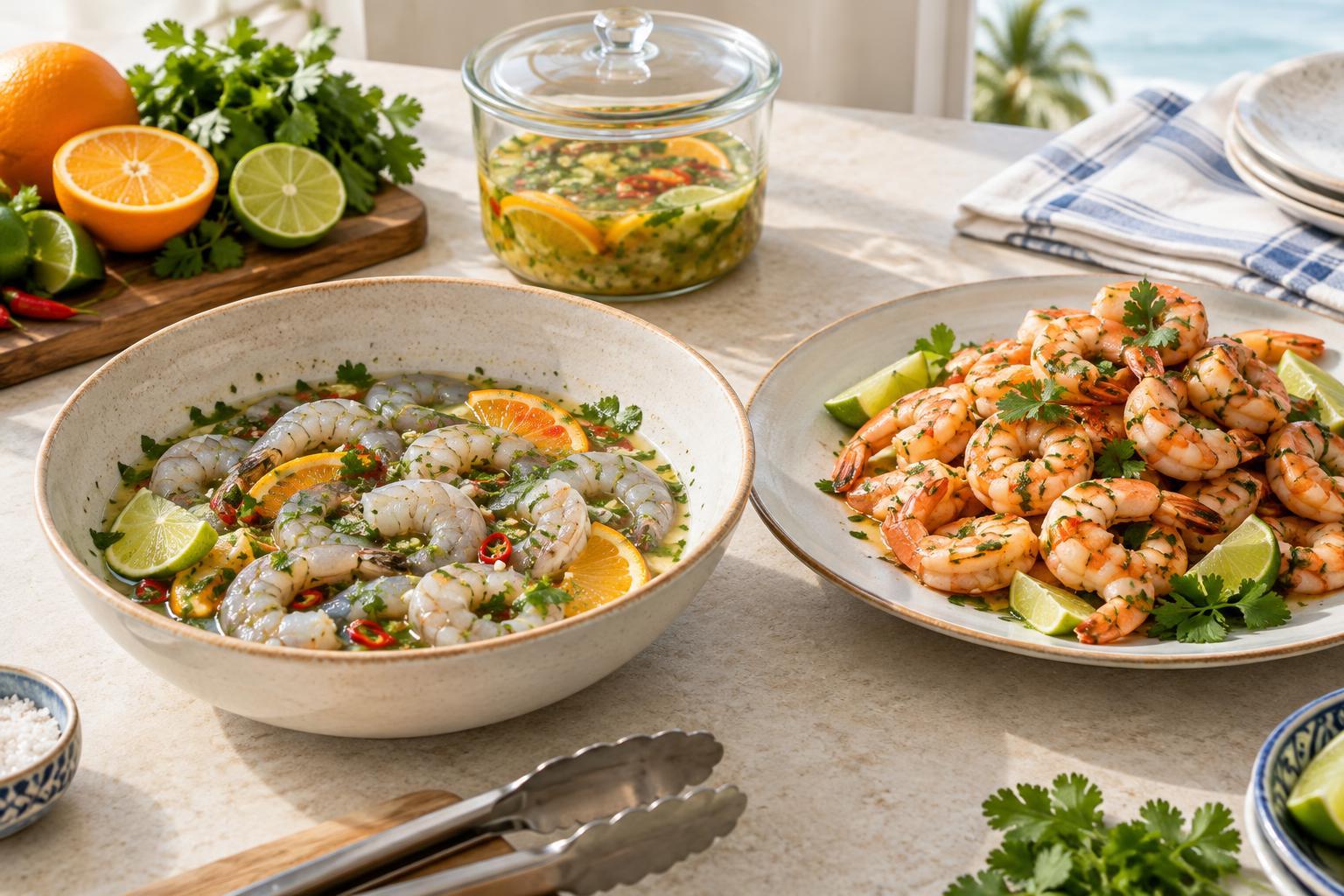
Coastal-inspired seafood marinades often bring together lime or other citrus juice, oil, garlic, herbs, chiles and a little salt. The goal is to add flavor without burying the taste of the fish or shellfish. For a simple starting point, whisk citrus juice with oil, a pinch of salt and a modest amount of finely chopped aromatics. Taste the mixture before it touches raw seafood, then adjust it to suit the dish.
A marinade does not need to soak through seafood to be useful. Much of its flavor stays near the surface, where it can make a difference once the seafood is cooked. Strong ingredients such as raw garlic and hot chile can intensify as a dish rests, so begin sparingly. If you want a particularly fresh citrus aroma, save some clean juice and herbs to add after cooking rather than relying on a long acidic soak.
Match the time to the texture
Seafood is generally more delicate than the meats people may be used to marinating. A brief rest of about 10 to 20 minutes may be enough for thin fish fillets or small shrimp; thicker, firmer pieces may suit roughly 20 to 30 minutes. Treat those ranges as kitchen starting points, not safety rules. The amount of acid, the size of the pieces and the texture you want all matter.
Citrus juice can firm and turn the outside of fish opaque while the center remains unchanged. Left too long in a strongly acidic marinade, delicate seafood may become chalky or soft rather than pleasantly tender. If your schedule requires advance preparation, mix the marinade ahead and refrigerate it separately. Combine it with the seafood closer to cooking time, or use oil, herbs and mild seasonings first and add the citrus later.
Keep seafood cold and the workspace clean
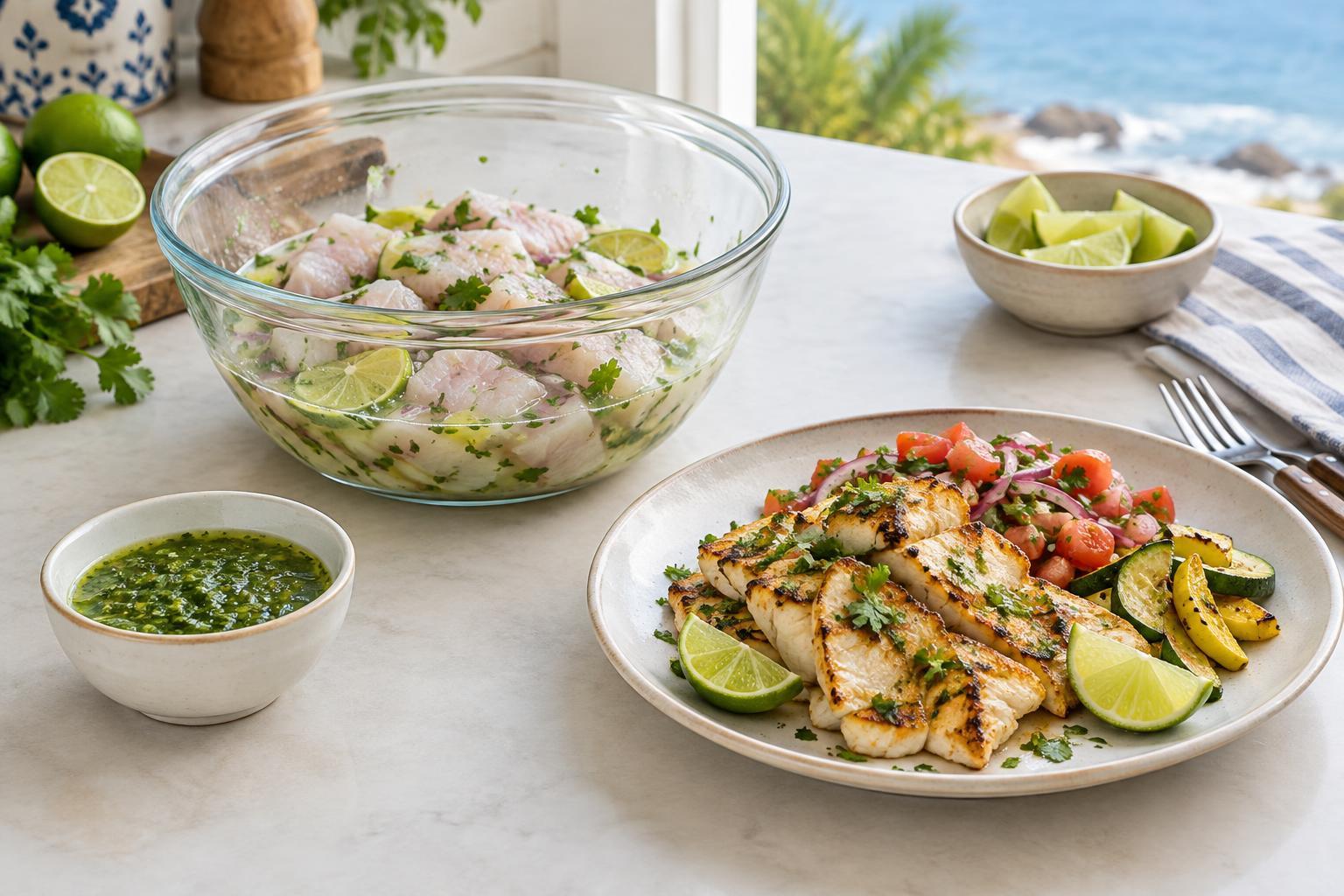
Marinate seafood in the refrigerator at 40°F (4°C) or below, not on the counter. Use a covered glass, ceramic or food-safe plastic container; these nonreactive options are also convenient with acidic mixtures. Set the container on a tray or in a spot where it cannot drip onto ready-to-eat food. If the seafood is frozen, thaw it safely in the refrigerator before marinating rather than leaving it out at room temperature.
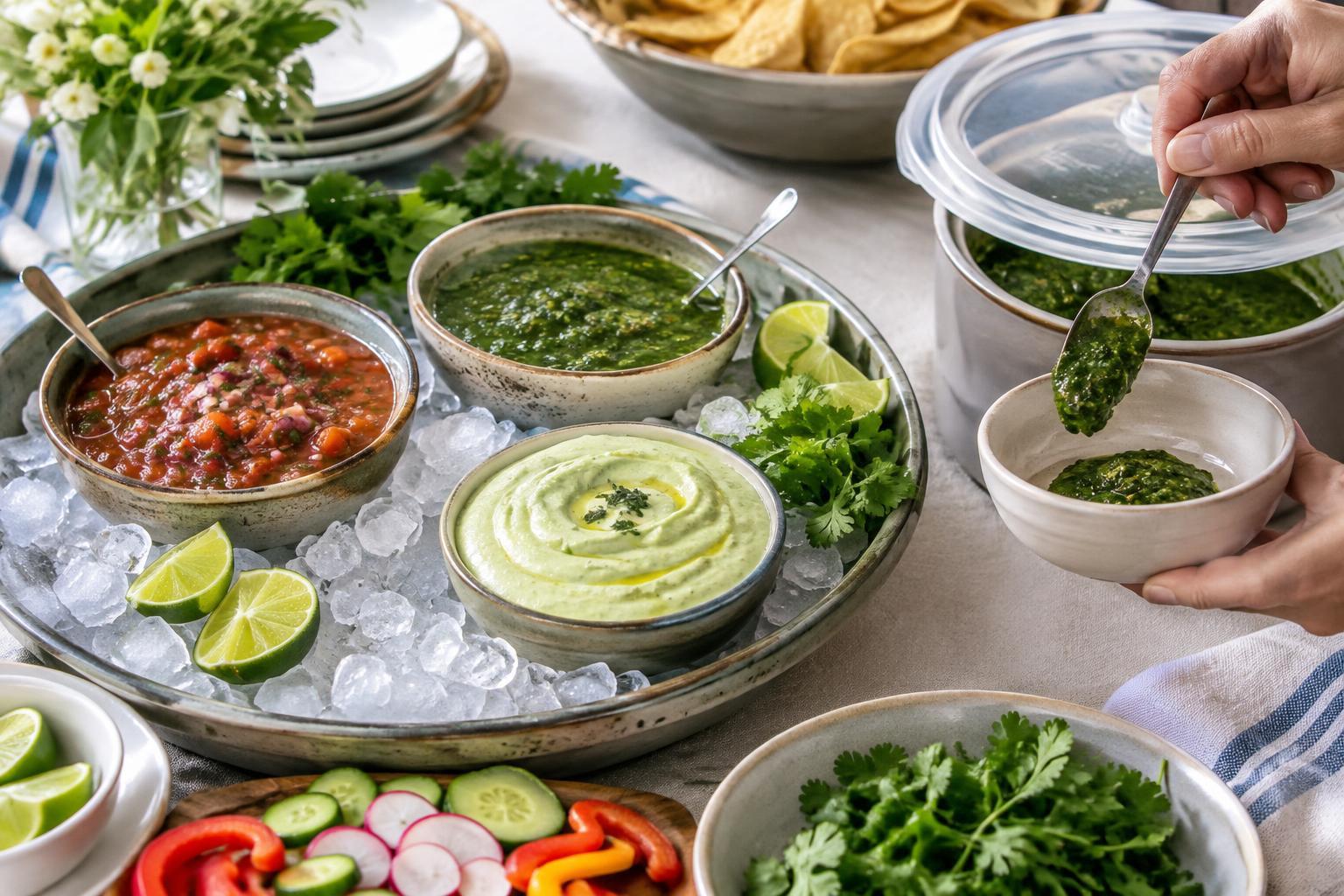
Keep raw seafood and its juices away from salad greens, garnishes and cooked food. Wash hands, utensils and work surfaces after handling it, and use a clean plate to receive the cooked seafood. Never brush cooked food with marinade that held raw seafood unless that marinade has been brought to a boil. An easier option is to set aside a portion of the freshly made marinade before adding any raw seafood, then use that untouched portion as a finishing sauce.
Understand what citrus does—and does not do
In dishes sometimes described as citrus-cured, acid changes seafood proteins and can make the flesh look more opaque and feel firmer. That visible change is not the same as cooking with heat. Lime or lemon juice does not reliably eliminate harmful microbes or make raw seafood equivalent to cooked seafood. A citrus-marinated piece of fish should still be treated as raw until it has been properly cooked.
For a cooked seafood dish, use the marinade for flavor and then apply heat. Fish is generally cooked to an internal temperature of 145°F (63°C); a food thermometer is the clearest way to check. Cook shrimp until the flesh is firm and opaque. If you are serving someone who needs to avoid raw or undercooked seafood, choose a fully cooked preparation rather than assuming that a longer citrus soak provides the same protection.
Build brightness after cooking
A short marinade can be one layer of flavor rather than the whole dish. Drain the seafood before cooking if excess liquid would prevent a good sear, and discard the used marinade unless you plan to boil it before reuse. Cook the pieces in a pan, on a grill or by another method suited to their size, then finish with reserved clean citrus juice, herbs or a spoonful of sauce that has not touched raw seafood.
This approach gives you more control: the seafood can cook without spending too long in acid, while the final squeeze of lime stays vivid. Serve it with a crisp vegetable side, rice or warm tortillas, and keep any perishable leftovers refrigerated promptly. Good timing, cold storage and clean handling let the marinade do its best job—adding flavor—without asking citrus to stand in for heat.