Start with a safe prep routine
Fresh pico de gallo, mango salsa, cilantro sauce and lime crema bring brightness to a coastal-inspired table. They also tend to contain cut produce, herbs or dairy that need thoughtful handling. Plan around refrigeration from the start: make room for covered containers, use clean utensils and set out only the amount guests are likely to eat soon.
Wash your hands and prep surfaces before you begin. Rinse whole tomatoes, peppers, fruit and herbs under running water before cutting them; do not wash produce with soap. Use clean boards and knives, and keep ingredients for ready-to-eat sauces away from raw seafood, meat and their juices. If you are preparing seafood as well, use separate utensils and wash any shared equipment thoroughly between tasks.
Chill promptly, even when a sauce tastes acidic
Put fresh salsas and creamy sauces in the refrigerator soon after making them, in covered, shallow containers that cool readily. Keep the refrigerator at 40°F (4°C) or below. A label with the preparation date helps when several similar containers are tucked away for a party. If you make a salsa ahead, stir it before serving and check whether excess liquid should be drained for texture.
Lime juice and vinegar add flavor, but they do not automatically make a homemade salsa safe to leave on the counter. The same applies to heat from chiles. Treat fresh sauces containing cut tomatoes, fruit, herbs or dairy as perishable unless you are following a tested preservation method. Citrus juice also does not make raw seafood equivalent to cooked seafood; keep any seafood preparations properly chilled and handle them separately from the sauces.
Give creamy sauces extra attention
Crema, yogurt, sour cream and mayonnaise-based sauces are easiest to manage when mixed cold and returned to the refrigerator until serving. If a recipe calls for uncooked egg, consider using pasteurized egg or a prepared mayonnaise instead. Keep the mixing spoon out of the serving container, and use a fresh spoon for each sauce so flavors and potential contaminants do not travel between bowls.
Some sauces thicken or separate in the fridge. Stir a lime crema or herb dressing just before it goes out, and adjust its texture with a small amount of cold liquid if needed. That last-minute adjustment is better than leaving the sauce at room temperature to soften. For a larger crowd, divide a batch into several small containers and keep the extras chilled.
Set up the table for small, fresh refills
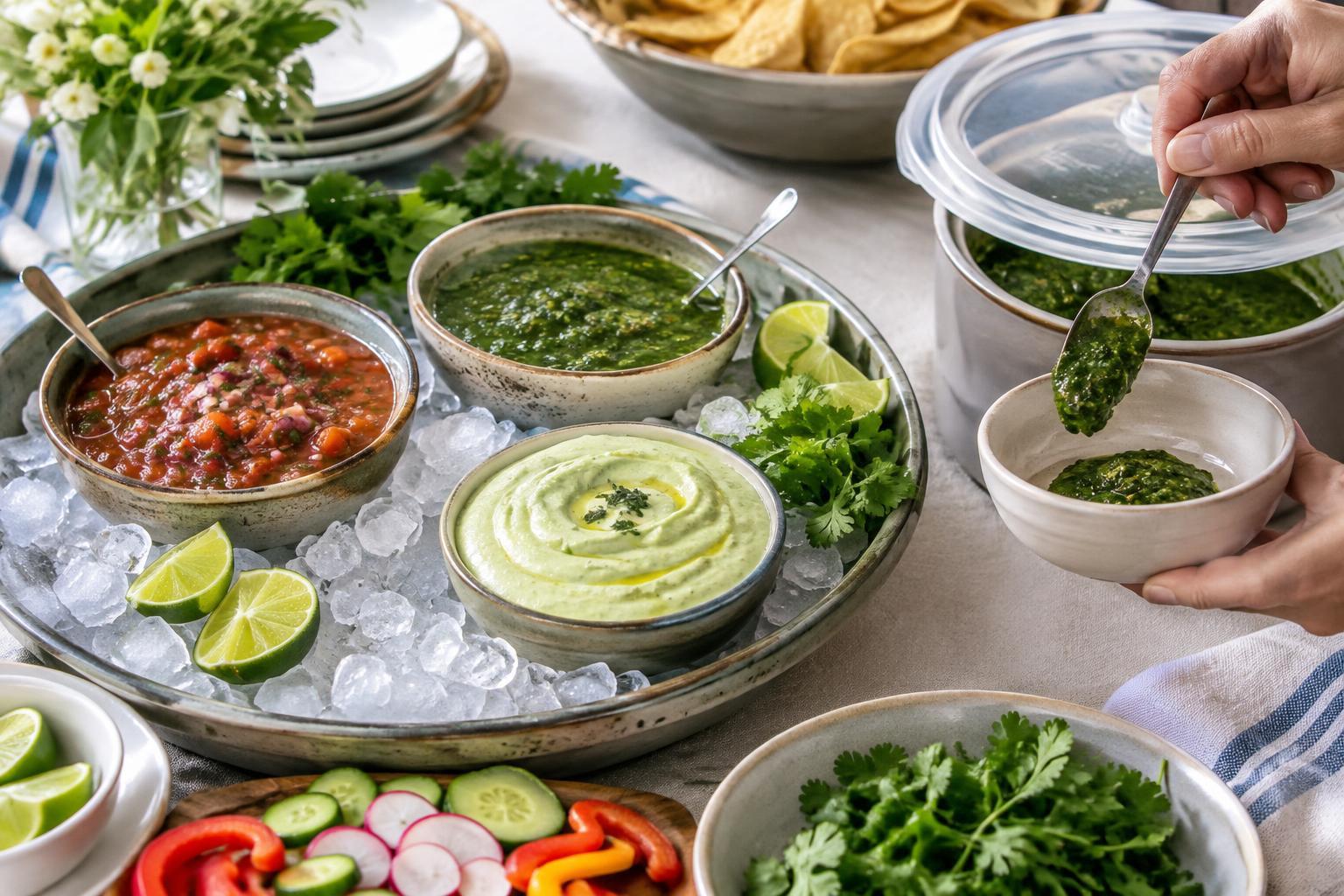
Serve sauces in small bowls rather than putting the full batch on the table. Refill with a clean bowl from the refrigerator instead of pouring fresh sauce onto a bowl that has been sitting out. Place serving spoons where guests can find them, and keep bowls away from direct sun or other heat. An ice-filled tray beneath a serving bowl can help it stay cool, but it is not a substitute for paying attention to time and temperature.
As a general food-safety rule, refrigerate perishable food within two hours of putting it out, or within one hour when the surrounding temperature is above 90°F (32°C). If you cannot tell how long a bowl has been out, discarding it is the safer choice. For an outdoor gathering, setting a timer for refills can be simpler than trying to remember when each sauce reached the table.
Handle leftovers according to where they have been
Keep untouched backup containers separate from sauces served to guests. Return the backup containers to the refrigerator promptly and use them soon, checking their ingredients and quality before serving them again. Fresh chopped salsa is often at its best within a day or two; its texture may decline before a creamy sauce does. Avoid assuming that either sauce has a long shelf life just because it contains lime.
Bowls that have spent too long on the table, or that may have been contaminated by shared utensils or dipping, should be discarded rather than combined with clean leftovers. When cleaning up, put safely held sauces into clean, covered containers and refrigerate them promptly. Small batches and small serving bowls make that decision easier—and help every spoonful taste as lively as it did when you made it.