Build the sauce around the fish
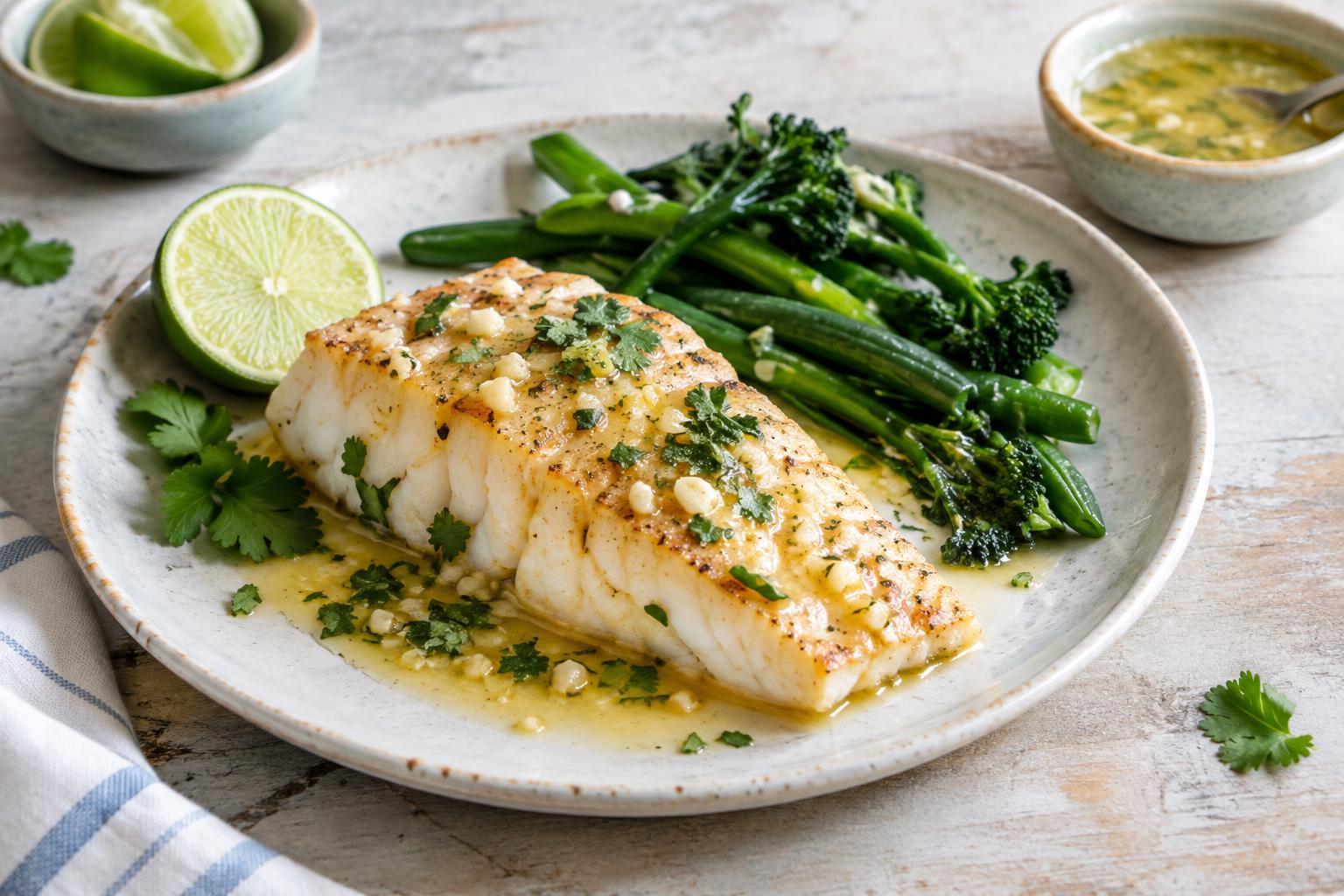
A finishing sauce should complement cooked fish, not make every bite taste only of butter. Garlic-lime butter works especially well when the fish has been simply seasoned and pan-seared, baked or grilled. The butter rounds out leaner fish, while lime gives the sauce a sharper edge. Spoon it over the fish just before serving so the surface keeps its texture.
For about four servings, start with four tablespoons of butter, one small garlic clove, a tablespoon of water and one to two teaspoons of lime juice. A little finely grated lime zest adds aroma without as much sharpness as more juice. Minced mild chile or a pinch of crushed chile can add warmth, but keep it optional if the fish already has a bold seasoning. If you use salted butter, taste before adding any more salt.
This is a flexible finishing sauce rather than a marinade. Make it after the fish is cooked or while the fish rests briefly. That way, you can adjust the sauce to the finished dish: a little more lime for a rich fish, or a little more butter for a lean, heavily browned fillet.
Use gentle heat, then add the lime
Melt the butter in a small pan over low heat. Add the finely minced garlic and stir until it smells fragrant and loses its raw edge, without letting it turn dark brown. Garlic can become bitter quickly in a hot pan, so lift the pan off the heat if it starts coloring faster than expected.
Stir in the water, then remove the pan from the heat before adding the lime juice. The water helps the butter and citrus come together when stirred, though this quick sauce may separate a little as it stands. That is fine: give it another stir just before spooning it over the fish. Adding the lime at the end preserves its fresh taste and makes it easier to judge how much the dish needs.
Taste with a clean spoon. If the sauce seems flat, try a small pinch of salt before reaching for more citrus. If it seems too sharp, stir in a little more butter. The goal is a sauce that tastes lively on a bite of fish, not one that needs to taste intensely sour on its own.
Choose additions that keep the sauce clear
A few additions can give the sauce a coastal Latin American feel without turning it into a different condiment. Finely chopped cilantro adds a fresh note; stir it in off the heat so it does not wilt into the butter. A small amount of minced chile brings gentle heat. If you want crunch, scatter toasted pumpkin seeds over the plated fish rather than mixing them into the pan.
Think about the rest of the plate before adding everything at once. With a chile-rubbed fish, plain garlic-lime butter may be enough. With a mild baked fillet, cilantro and a little chile can make the finish more vivid. The sauce also suits cooked shrimp, roasted zucchini or steamed potatoes. For vegetables, start with a light spoonful and offer more at the table; butter can quickly overwhelm a delicate side.
If you keep notes on your variations for a cooking website, browse Content Strategy · Bolster Digital when thinking about how to organize them. For planning how readers might find those notes, browse Website Planning · Bolster Digital.
Serve promptly and handle seafood carefully
Warm butter sauce is at its best soon after it is made. Keep the fish and sauce separate until serving, then spoon the sauce over portions on clean plates. If the butter cools and firms up, warm it gently over low heat and stir; avoid a hard boil after adding the lime.
Use utensils and surfaces that have not touched raw seafood when handling the cooked fish or finished sauce. If you decide to brush seafood with a separate lime mixture before cooking, discard any portion that has touched the raw seafood rather than using it as a finishing sauce. Citrus adds flavor, but citrus curing does not make raw seafood equivalent to cooked seafood. This garlic-lime butter is intended for seafood that has been properly cooked.