Start with live, well-chilled mussels
Steaming mussels takes little time, so the most important work happens before the pot goes on the stove. Buy live mussels from a reputable seafood seller and keep them cold on the trip home. Refrigerate them promptly in a bowl or colander set over a bowl, covered loosely with a damp towel. Do not seal live mussels in an airtight container or leave them submerged in fresh water. Plan to cook them soon after purchase.
Before cleaning, sort through the mussels. Discard any with broken shells. If a shell is open, tap it gently and give it a moment to close; discard mussels that stay open. Rinse the rest under cold running water, rubbing or scrubbing away visible debris. If a mussel has a fibrous tuft, or beard, protruding from its shell, pull it toward the hinge to remove it. Keep the cleaned mussels chilled until you are ready to cook, and wash your hands and work surface after handling them.
Build a broth that complements the shellfish
Choose a pot wide enough to hold the mussels without packing them tightly, with room to shake or stir them and a lid that fits well. Warm a little oil over medium heat, then soften finely chopped onion or shallot. Add garlic and a modest amount of fresh chile; stir just until fragrant so the garlic does not burn. A pinch of ground cumin is an option, but use it lightly if you want the mussels to remain the main flavor.
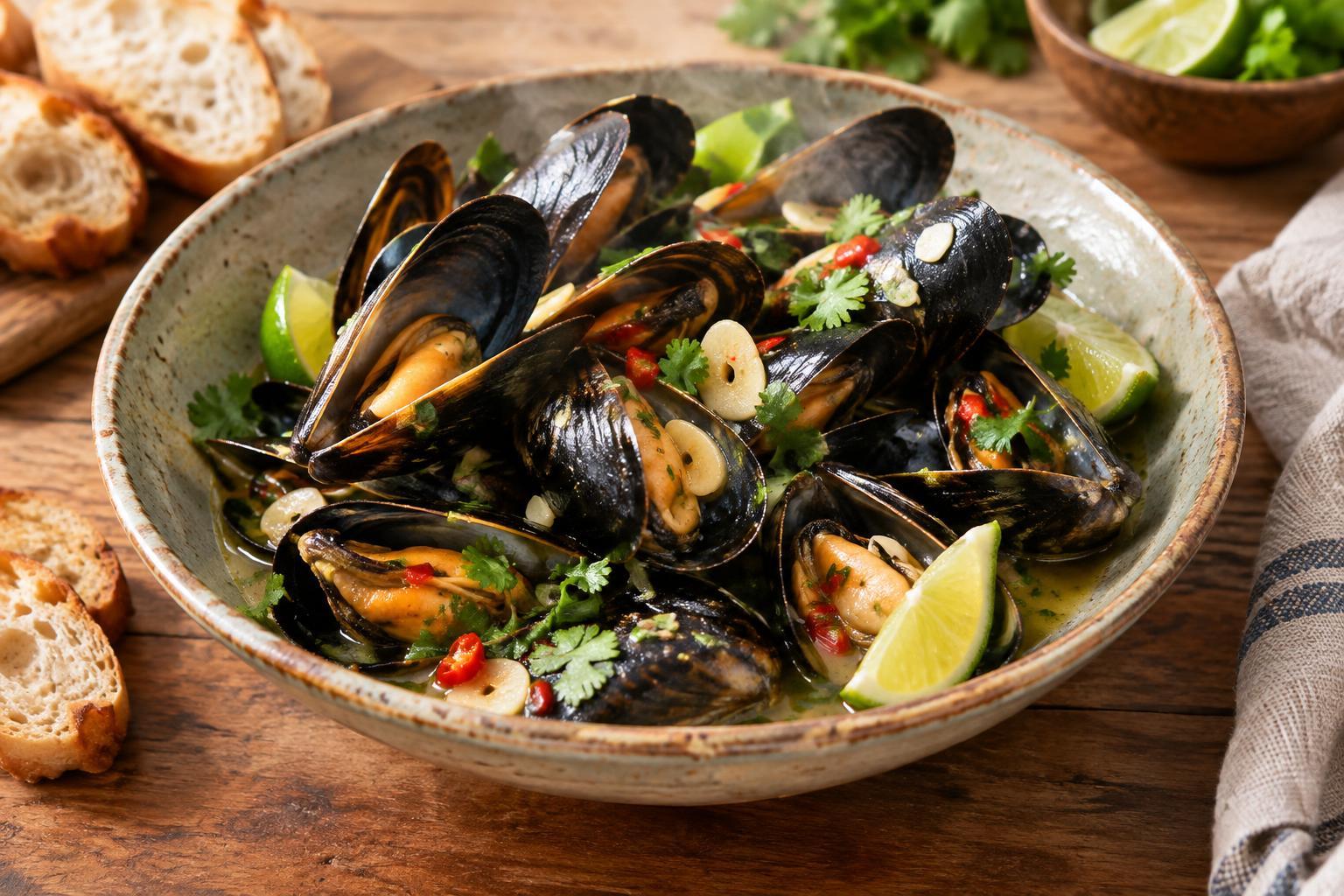
Add a shallow layer of liquid, such as water or unsalted broth, and bring it to a lively simmer. You do not need to cover the mussels with liquid: the lid will trap steam, and the shellfish will release juices as they open. Hold back on salt until you taste the finished broth, which may already have a briny edge. For a coastal Latin American accent, set out chopped cilantro, lime wedges and warm tortillas for serving.
Steam, check and serve promptly
Add the cleaned mussels to the simmering pot and cover it. Cook over medium-high heat, shaking the pot carefully once or twice so the mussels change position. Start checking after a few minutes. As the shells open, transfer those mussels to a serving bowl with clean tongs. Continue cooking the remaining mussels briefly, checking often rather than leaving the whole batch over the heat until the first ones turn tough. Discard any that remain closed after cooking.
Pour the hot broth over the opened mussels, leaving any grit at the bottom of the pot behind. Finish with cilantro and a squeeze of lime just before serving. Lime brightens the cooked dish; it is not a substitute for cooking shellfish. Citrus curing does not make raw seafood equivalent to cooked seafood. Serve the mussels hot, with tortillas or bread to catch the broth and a separate bowl for empty shells.
Keep the meal simple and handle leftovers carefully
Mussels bring plenty of flavor to their own broth, so a few sides are enough. A crisp cabbage salad, sliced avocado or plainly cooked rice can balance the warm, garlicky pot. If you want a stronger chile note, add a little fresh chile at the table rather than making the steaming liquid so spicy that it masks the shellfish.
Do not leave cooked mussels sitting out through a long meal. Refrigerate leftovers promptly in a covered container, with some broth to help keep them moist. When reheating, heat them thoroughly and avoid repeated cycles of warming and cooling. If mussels smell unpleasant at any stage, or you are unsure how they were stored, discard them rather than trying to rescue the dish with lime or seasoning.