A simple coastal supper
A sealed packet gives fish a gentle cooking environment: moisture from the vegetables and coconut milk turns to steam, while the juices stay close to the fillet. Lime and fresh herbs add brightness after baking. The result is a convenient supper with its own light sauce, rather than a dish that needs constant attention at the stove.
For four servings, gather about 1½ pounds of boneless white fish, divided into four similar portions. Cod, snapper or another firm white fish can work; thickness matters more than the name on the label because thicker pieces take longer to cook. You will also need one thinly sliced bell pepper, a small thinly sliced onion, ¼ cup coconut milk, one lime, a small handful of cilantro, a tablespoon of neutral oil, salt and, if you like, a finely chopped mild chile. Have four large sheets of oven-safe parchment ready. Check the parchment package for its temperature limit before preheating the oven to 400°F.
Build packets that hold their juices
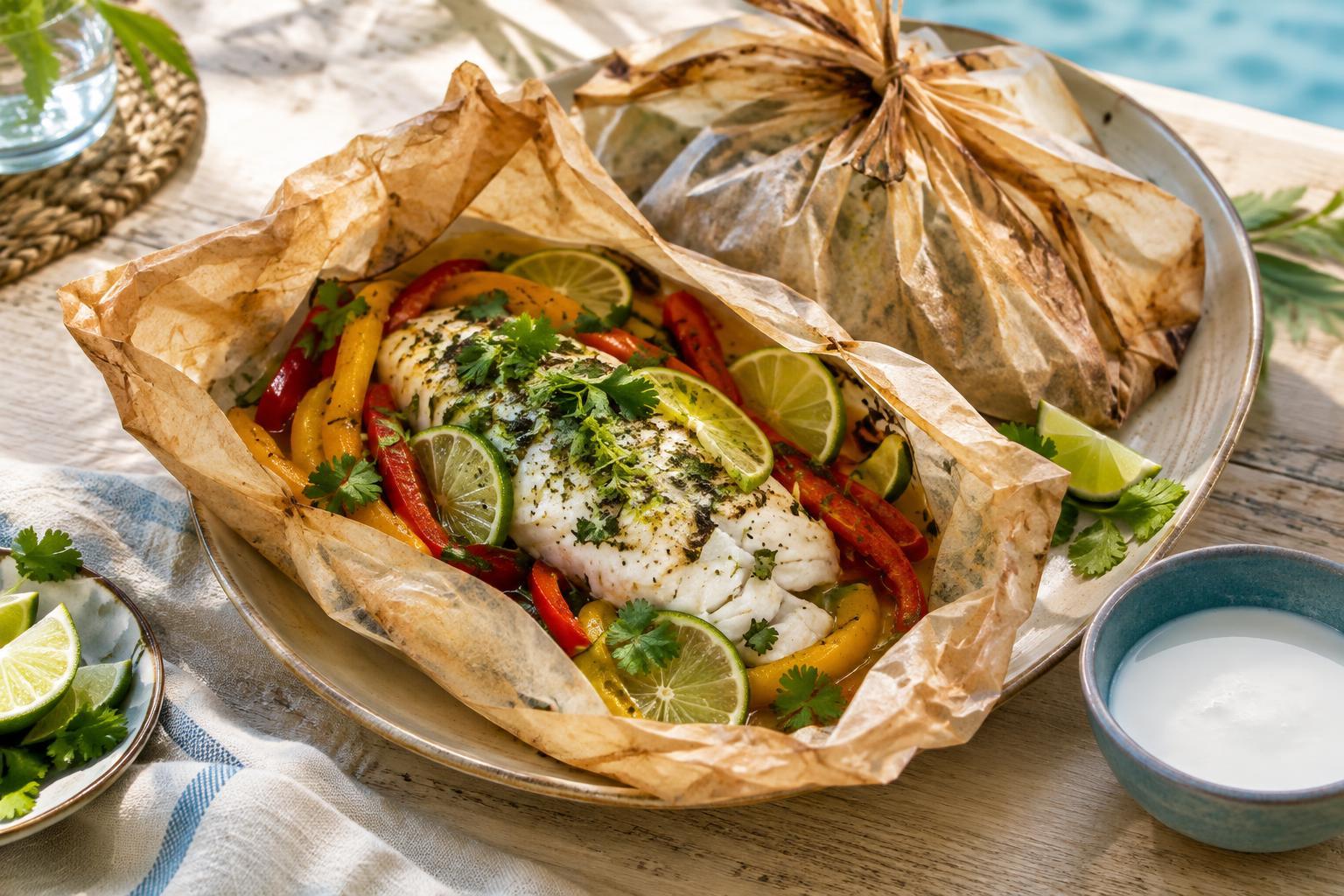
Set a rimmed baking sheet nearby and lay out the parchment sheets. Pat the fish dry with paper towels, season lightly with salt and wash your hands after handling it. Toss the pepper and onion with the oil and a pinch of salt. Divide the vegetables among the sheets, placing them in the center as a bed for the fish. Set one portion of fish on each bed, then spoon about a tablespoon of coconut milk over each. Add a little chile if using, and finely grate some lime zest over the top.
Bring the long sides of each parchment sheet together above the fish and fold them down in small, firm folds. Fold or twist the short ends closed, leaving a little space around the food so steam can circulate. Place the packets on the baking sheet with their seams facing up. Avoid overfilling them: a shallow layer of vegetables and a small amount of coconut milk are easier to seal than a deep pile with loose liquid.
Bake, then check the fish
Bake until the fish is cooked through, starting to check after about 15 minutes. The time may vary with the thickness of the fillets and how tightly the packets are filled. Carefully open one packet away from your face to avoid the hot steam. Insert a food thermometer into the thickest part of the fish; it should reach 145°F. If it has not, close the packet as well as you can and return the baking sheet to the oven, checking again after a few minutes.
Keep raw fish refrigerated until you are ready to assemble the packets. Use a clean board and utensils for any garnishes that will be added after baking, and wash surfaces that touched the raw fish. Lime juice is for flavor here, not for making the fish safe to eat: citrus curing changes the texture of raw seafood but does not make it equivalent to cooked seafood. Squeeze the lime over the fish only after it has reached the proper cooking temperature.
Finish at the table
Transfer each packet to a plate or shallow bowl, open it carefully and scatter cilantro over the fish. Spoon the coconut-scented juices over the top and offer lime wedges for anyone who wants more acidity. Rice is a useful partner because it catches the sauce; warm tortillas or a crisp cabbage salad also make the meal feel complete. Taste the juices before adding more salt, since their flavor may have concentrated inside the packet.
The packets can go directly to the table for a casual meal, or you can slide the fish and vegetables onto plates and pour the juices around them. If you are deciding how to arrange the fish, colorful peppers and a simple side, browse Design Principles · The Art and Form Journal for ideas about visual balance. Either way, open the packets just before serving so the fish stays warm and the herbs remain fresh.