What nopales bring to the plate
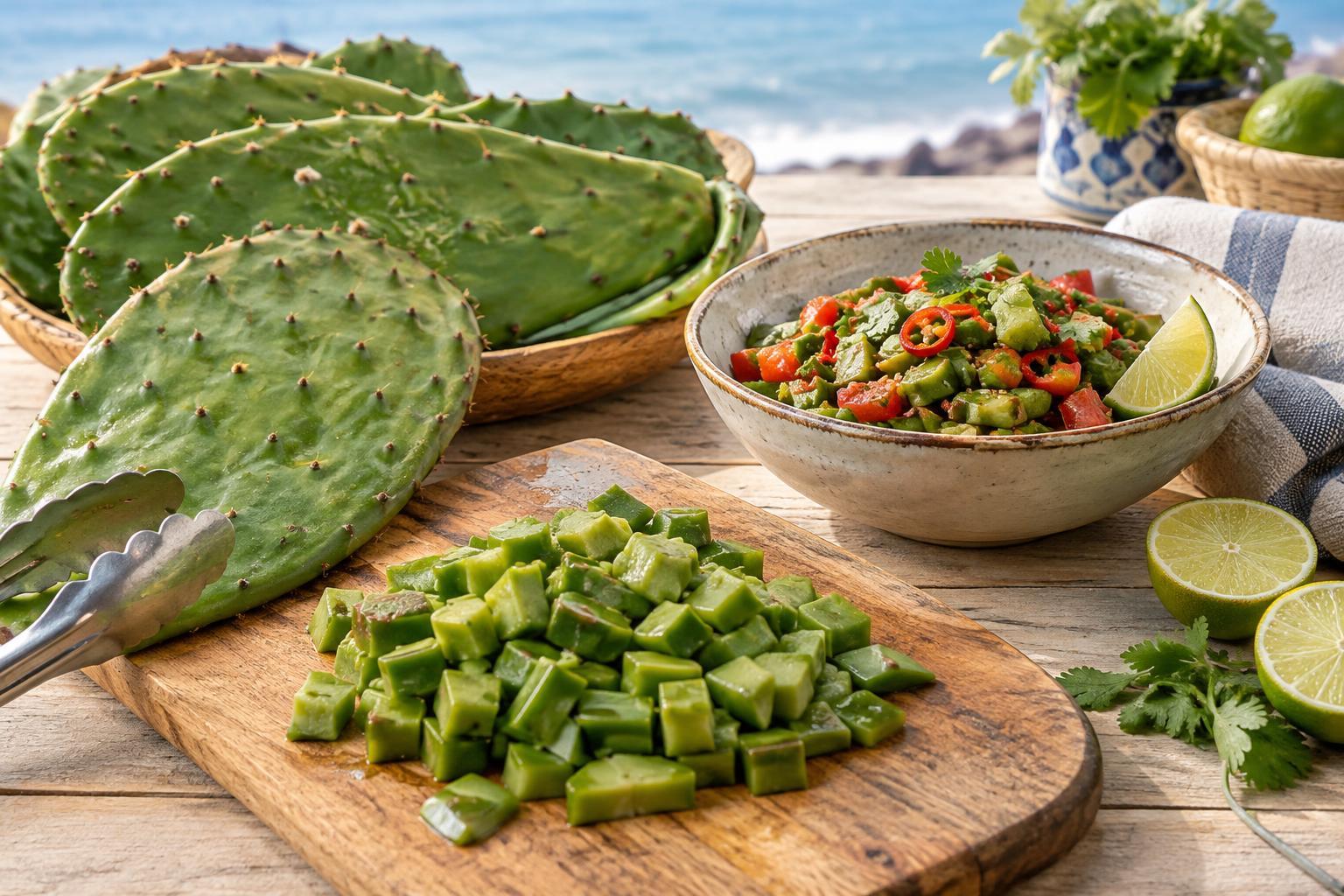
Nopales are the edible paddles of prickly pear cactus. They have a mild, green flavor with a gentle tartness and a texture that can be crisp or tender, depending on how they are prepared. Their fresh taste works especially well beside beans, tomatoes, onions, chiles and citrus. In a coastal-inspired meal, they can provide a bright vegetable contrast to grilled fish or shrimp without needing a complicated dressing.
When cut, nopales release a slippery liquid. Some cooks enjoy that texture, while others prefer to reduce it through cooking and draining. Neither approach is inherently better: a quick sauté leaves the pieces firmer and more noticeable, while longer cooking makes them softer. Decide how you want to serve them before choosing a method.
Choosing fresh paddles or prepared nopales
Look for fresh paddles that feel firm and have an even green color. Small or medium paddles are convenient for salads because they are often easier to slice thinly. Pass over paddles that feel limp or have extensive soft spots. Wear gloves or use tongs when handling them at the market; even paddles sold as cleaned may have a few sharp spines or tiny bristles left behind.
Jarred or canned nopales save preparation time and are useful when fresh paddles are unavailable. Check the ingredient list and liquid: some are packed with salt, vinegar, peppers or seasonings that will affect your finished dish. Drain and taste a piece before adding more acid or salt. A quick rinse can soften a strongly seasoned flavor, though it will not make a pickled product taste like a fresh paddle.
Cleaning and cutting fresh nopales safely
Set a paddle flat on a cutting board and hold its thicker end with tongs or a folded towel. With a small, sturdy knife, scrape or shave away visible spines and raised spots, working away from your hand. Trim the edge and the tough base, then inspect both sides under good light. Rinse the paddle and your tools after cleaning so loose bristles do not end up in the food.
Cut the cleaned paddle into strips for tacos or small pieces for a chopped salad. If you are new to preparing nopales, take your time rather than trying to remove spines in a single pass. Keep the cleaning area separate from ready-to-eat ingredients, and wash the board before using it for tomatoes or herbs.
Cooking for the texture you want
For a simple stovetop method, add cut nopales to a wide pan over medium heat with a little oil. Stir occasionally as they release moisture, and continue cooking until the pieces turn tender and much of the liquid has evaporated. Season near the end so you can judge their flavor after the moisture has reduced. Spreading them out in the pan helps the liquid cook off instead of collecting around the pieces.
Boiling is another option when you want soft nopales for a salad or bean dish. Cook the pieces in water until tender, then drain them well and let them cool. Their slippery texture may remain to some degree, which is normal. For a firmer result, try larger pieces on a grill or in a hot pan, then slice them after cooking. Let cooked nopales cool before combining them with delicate herbs.
Easy ways to serve them with citrus and chile
Toss cooled nopales with chopped tomato, red onion, cilantro and a squeeze of lime for a straightforward side. Add avocado just before serving, or spoon the mixture into warm tortillas with beans. For a sharper contrast, combine grilled nopales with orange segments and a little finely chopped chile. Add citrus gradually: nopales already have some tartness, and too much juice can overwhelm the vegetables.
Nopales also make a useful topping for thoroughly cooked fish or shrimp. Prepare the vegetable mixture separately, keep raw seafood and its juices away from ready-to-eat toppings, and clean utensils and surfaces between tasks. If you serve a citrus-dressed raw seafood dish instead, remember that citrus curing changes its texture but does not make raw seafood equivalent to cooked seafood. Guests who need to avoid raw seafood should be offered a cooked option.