What tomatillos bring to the table
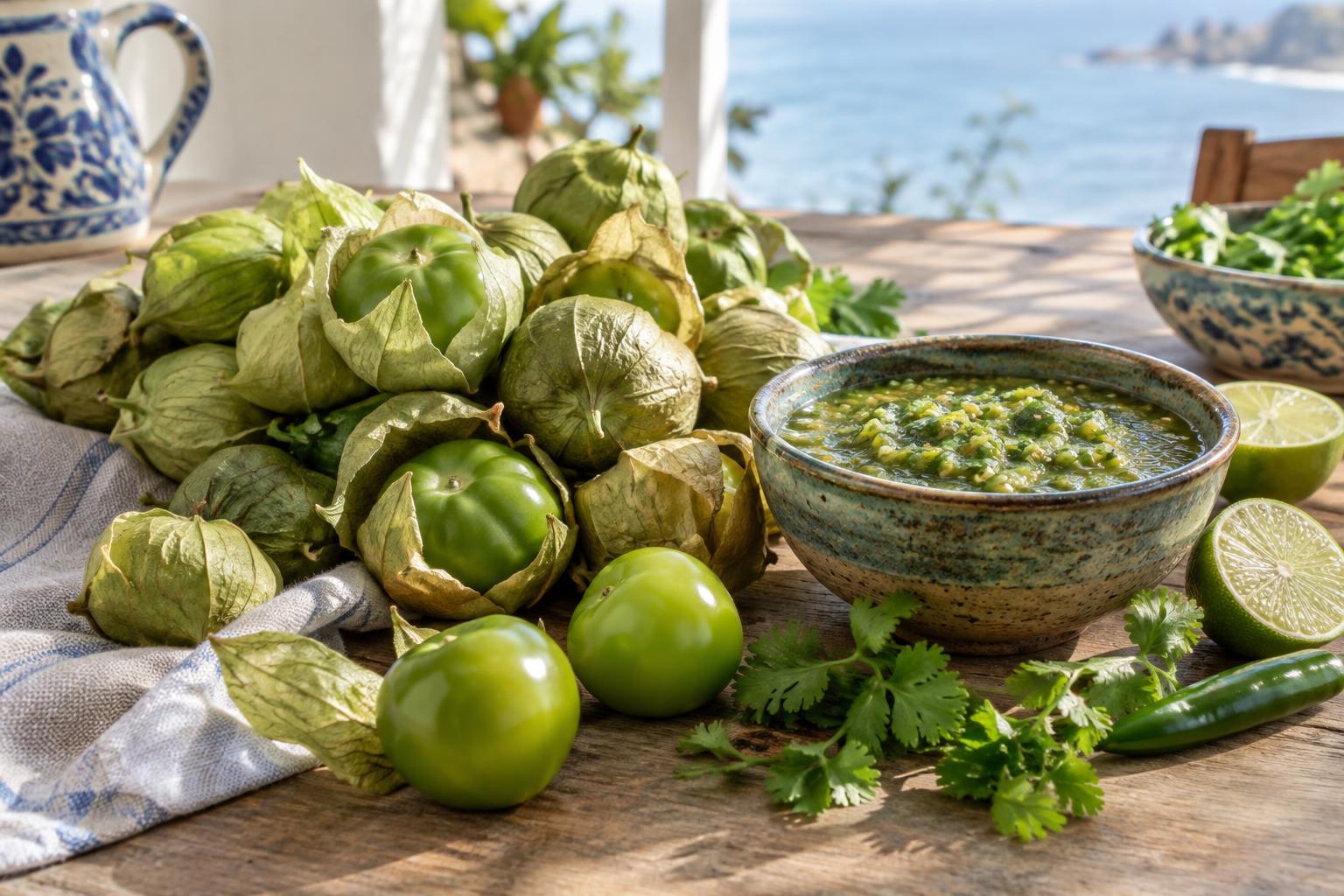
A tomatillo is a small fruit wrapped in a papery husk. Despite its name, it is not simply an unripe tomato. Cut one open and you will find firm flesh, small seeds and juice with a distinctly tart flavor. Blended into salsa, tomatillos add brightness and a little body without needing a long ingredient list.
That tartness suits coastal-style cooking, especially when a plate also has richness or heat. A spoonful of tomatillo salsa can sharpen grilled fish, brighten cooked shrimp or give roasted vegetables a lively finish. Tomatillos also work with familiar salsa ingredients such as chile, onion, cilantro and lime. Because their flavor is already acidic, start with less lime than you might use in a tomato salsa, then adjust after tasting.
How to choose good tomatillos
Look for tomatillos that feel firm and heavy for their size, without soft spots, leaks or visible mold. A dry husk is normal; it may fit closely around the fruit or split as the tomatillo grows. The fruit beneath should look sound, rather than shriveled. Most are green, though some varieties or more mature fruits show yellowish or purple tones. Color alone is less useful than firmness and overall condition.
If you can choose individual tomatillos, pick ones of similar size when you plan to roast them so they cook at roughly the same pace. Smaller, firm fruits can be pleasantly sharp in a raw salsa. Larger ones are convenient when you need enough sauce for a group. In either case, taste and adjust the finished salsa rather than assuming every batch will have the same level of tartness.
Storing and preparing them
Keep whole tomatillos in their husks in the refrigerator, preferably in a breathable bag or loosely covered container that allows moisture to escape. Check them periodically and use them while they are still firm. Wait to wash them until you are ready to cook or blend; storing them wet can encourage spoilage.
To prepare them, peel off and discard the husks. The surface underneath often feels sticky, which is normal. Rinse the fruit under running water and rub gently to remove that coating, then dry it if you plan to roast or char it. Trim away any damaged portions and discard tomatillos that are moldy or badly softened. Once made, keep salsa refrigerated in a clean, covered container. Make modest batches for meals over the next few days, and use a clean spoon each time you serve it.
Raw or roasted? Build the salsa you want
For a crisp, bracing salsa, blend about six medium raw tomatillos with a small piece of onion, a little chile, cilantro and a pinch of salt. Add water a spoonful at a time only if the blender needs help. Taste before adding lime; a squeeze may be enough. Leave the salsa coarse for spooning over tacos, or blend it smoother for drizzling over grilled vegetables and cooked seafood.
For a rounder flavor, roast or broil husked, rinsed tomatillos with onion and chile until softened and browned in spots. Let them cool briefly, then blend with salt and cilantro. Roasting softens the sharper edge of the tomatillos and gives the salsa more depth. If the result tastes too intense, add a little water; if it tastes flat, try a small pinch of salt or a squeeze of lime. Add chile gradually, since its heat can vary.
Serving it safely with coastal dishes
Tomatillo salsa is useful beyond chips. Spoon a raw version over cooked white fish just before serving, use roasted salsa alongside grilled shrimp, or pair either one with beans, charred corn, potatoes or a cabbage salad. For a gathering, keep the main batch chilled and put out smaller portions as needed, rather than leaving the whole container on the table.
If seafood is on the menu, handle it separately from ready-to-eat salsa ingredients: wash hands and utensils after touching raw seafood, and cook seafood appropriately before topping it with salsa. Lime juice and tomatillos make food taste bright, but citrus curing does not make raw seafood equivalent to cooked seafood. A tart salsa is a finishing flavor, not a substitute for careful seafood handling.