One ingredient, two useful forms
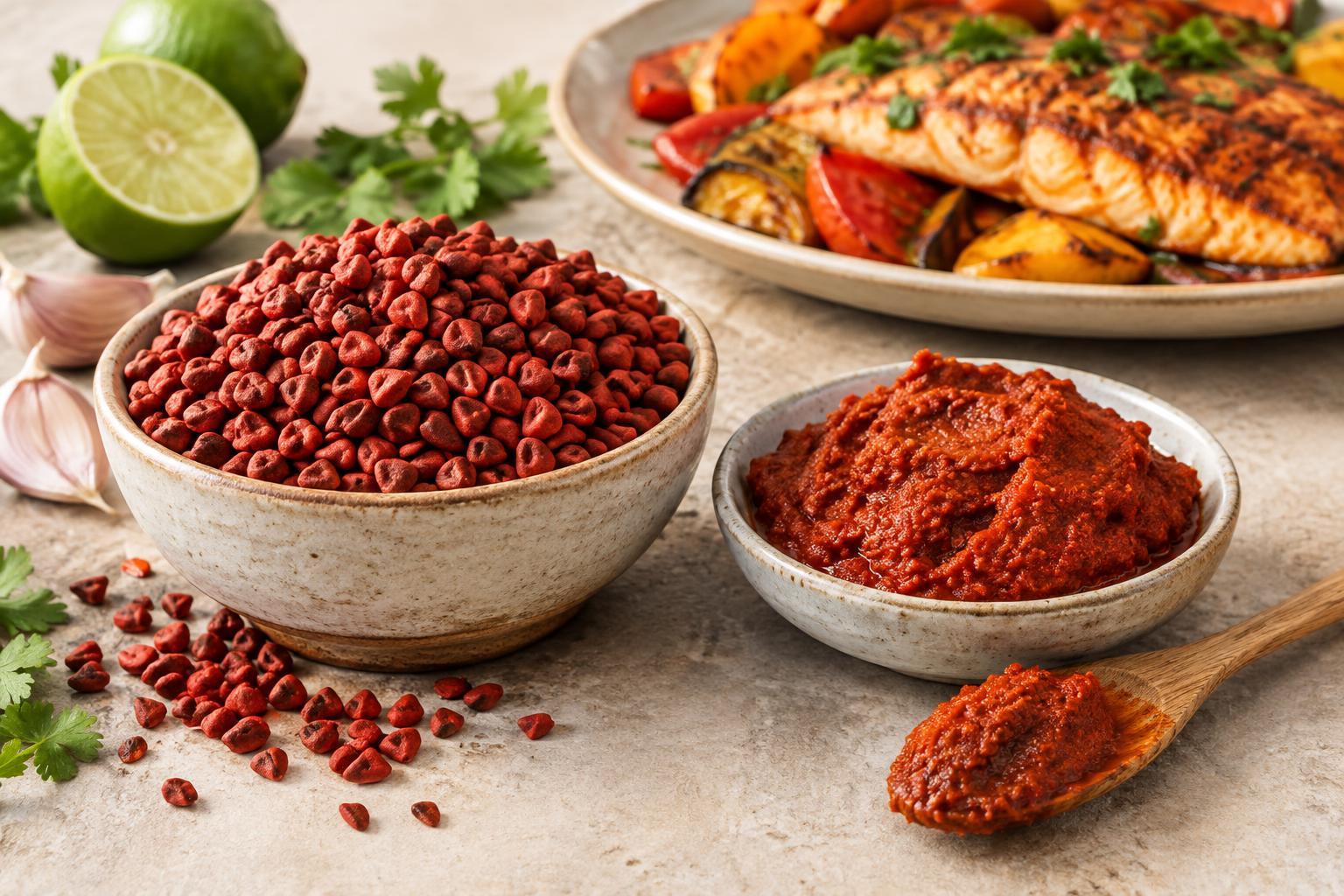
Achiote, also called annatto, comes from the seeds of the achiote plant. In the kitchen, the seeds are prized for the orange-red color they release into oil and for a mild, earthy flavor. Prepared achiote paste starts with ground achiote and adds other ingredients to make a concentrated seasoning. Both can bring warmth to a coastal-inspired dish, but they are not interchangeable spoon for spoon.
Choose seeds when you want to control the other flavors yourself or tint cooking oil for rice, beans or vegetables. Choose paste when you want a ready-made base for a rub or marinade. The paste may contribute enough salt, acidity and spice to shape the whole dish; seeds generally leave those decisions to you.
What changes in flavor and texture
Whole achiote seeds have a subtle earthy, slightly peppery character. Their color is often more noticeable than their taste, especially when used sparingly. One approachable method is to warm the seeds gently in oil until the oil takes on color, then strain them out. Avoid scorching them, which can introduce bitterness. Whole seeds are hard and gritty, so they are usually infused or finely ground rather than scattered over a finished dish.
Prepared paste is bolder because its flavor comes from the full mixture, not achiote alone. Depending on the product, it may include garlic, spices, vinegar or citrus ingredients. Some pastes are firm blocks that need to be loosened with liquid or oil; others are softer and easier to stir into a sauce. Taste a little of the diluted mixture before adding more salt or acid to your recipe.
How to read a prepared-paste label
Start with the ingredient list. A paste labeled achiote can vary considerably in its balance of achiote, seasonings, salt and acidic ingredients. If a recipe calls for paste and you are using an unfamiliar brand, the label helps you decide whether to add garlic, citrus or salt separately. Check the package for allergens or other ingredients you avoid, rather than assuming every paste has the same formula.
Next, look at the storage and preparation directions. They tell you whether the product needs refrigeration after opening and may suggest how to dissolve a firm paste. Packaging size matters, too: a small package you can use promptly may be more practical than a large block that will sit opened for months. For seeds, check that the package is intact and the seeds smell pleasantly earthy rather than stale or musty.
Using each in coastal cooking
Achiote-infused oil is an easy way to give sautéed onions, roasted squash or a pot of rice a warm hue without introducing the other seasonings in a paste. For a more assertive coating, loosen achiote paste with a little oil or liquid and brush it onto vegetables or seafood before cooking. Because paste blends vary, begin with a modest amount and adjust the seasoning after cooking.
If you have seeds but a recipe calls for paste, grinding the seeds alone will not reproduce the paste’s acidity, salt and spices. Build those flavors separately, using the recipe as a guide. If you have paste but want the effect of infused oil, use a small amount and expect its other ingredients to come through. In either case, color is not a reliable measure of how strongly a dish is seasoned.
Keep seafood refrigerated until you are ready to prepare it, and prevent raw seafood and its marinade from contacting foods that will not be cooked. Cook seafood to an appropriate safe temperature. If a paste mixture has touched raw seafood, do not use it as a finishing sauce unless it has been thoroughly cooked. Citrus juice may change the texture of raw seafood, but citrus curing does not make it equivalent to cooked seafood.
Keeping seeds and paste at their best
Store whole achiote seeds in a tightly closed container in a cool, dry, dark place. Limiting exposure to heat, light and moisture helps preserve their flavor and color. Ground achiote has more surface exposed to air, so keep it well sealed and pay closer attention to changes in aroma. Discard seeds or ground achiote if you notice mold, damp clumps or an off smell.
For prepared paste, follow the package’s directions before and after opening; formulations and packaging differ. Use clean utensils when taking paste from a container, seal it well and refrigerate it if the label instructs you to do so. If its appearance or smell changes in an unexpected way, discard it. Keeping a note of when you opened it can make an otherwise easy-to-forget ingredient simpler to manage.