What sour orange adds to a dish
Sour orange, often called naranja agria and sometimes sold as bitter or Seville orange, is valued for more than its acidity. Its juice is tart and aromatic, with an orange-peel quality and a gentle bitter edge. That combination gives marinades and sauces a flavor that is brighter than sweet orange juice but rounder than lime juice alone.
In home kitchens, sour orange is especially useful in marinades for pork, chicken, and fish destined for cooking. It also works in dressings, pickled onions, and finishing sauces. Recipes vary by region and household, so think of it as an ingredient to taste rather than a flavor that must follow one exact formula.
Choosing and using fresh fruit
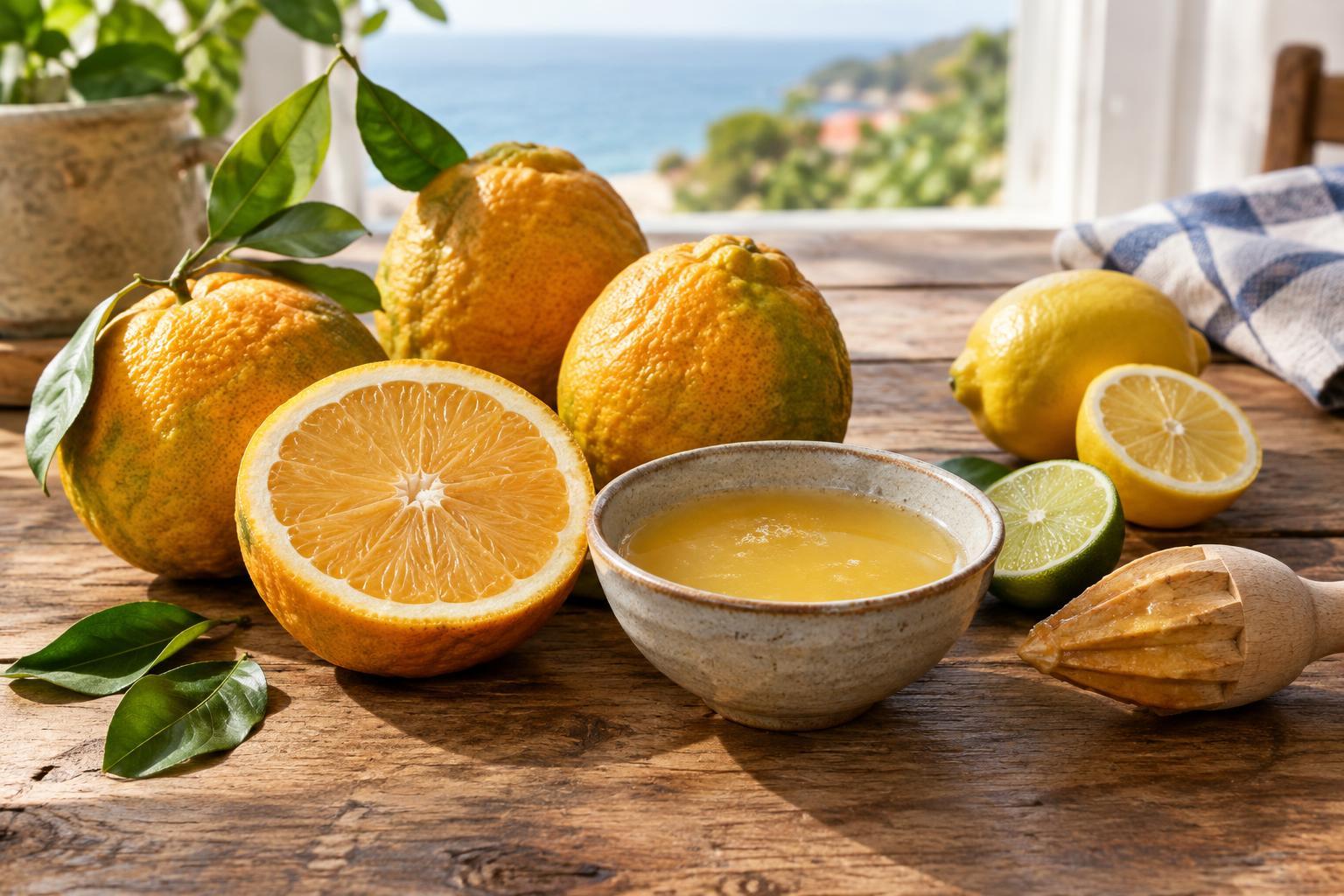
If you find fresh sour oranges, choose fruit that feels heavy for its size and has no soft, leaking, or moldy spots. Skin color can vary, so color alone is not a reliable guide to flavor or ripeness. A few surface blemishes are less important than sound fruit and a fresh citrus aroma.
Wash the fruit before cutting it, even if you will use only the juice. Roll it gently on the counter, halve it, and squeeze through a strainer to catch the seeds. Taste a drop before adding it to a recipe: one batch may seem more sharply acidic or bitter than another. Add the juice gradually, especially to a dressing or sauce that will not be cooked.
The peel can be fragrant, but use it sparingly. A little finely grated outer zest can reinforce the orange aroma; scraping into the white pith may add more bitterness than you want. If you have extra juice, refrigerate it promptly in a covered container and use it soon, or freeze small portions for later cooking.
When bottled juice makes sense
Bottled sour orange juice is a convenient option when fresh fruit is hard to find or a recipe calls for more juice than a few oranges will provide. It can be particularly handy for a cooked marinade, where other ingredients such as garlic, herbs, and spices share the spotlight. Fresh juice may be preferable when its aroma is the main feature, as in a simple dressing.
Read the label rather than relying only on the name on the front. Some products contain sour orange juice, while others are blends of citrus juices; salt, sweeteners, or preservatives may also be present. None of those details automatically makes a bottle unsuitable, but they affect how you should season the dish. Check the ingredient list, taste the juice on its own, and adjust added salt or sugar accordingly.
Follow the bottle’s storage directions, including any instruction to refrigerate after opening. Pour out what you need instead of dipping used utensils into the bottle. If a marinade has touched raw meat or seafood, do not use it as a finishing sauce unless you bring it to a safe cooking temperature first.
A flexible substitute from common citrus
When sour orange is unavailable, start with equal parts fresh sweet orange juice and fresh lime juice. The orange supplies fragrance and a little sweetness; the lime supplies the sharper acidity. This is a starting point, not an exact match. If the mixture tastes too sweet for a savory marinade, add more lime. If it tastes too piercing, add more orange.
For a more layered flavor, replace part of the lime juice with grapefruit juice, or add a little orange zest. Grapefruit can contribute a pleasant bitter note, but it may change the flavor noticeably, so taste as you go. Lemon can stand in for lime if necessary, though the result will have a different citrus character. Avoid trying to recreate sour orange by adding a large amount of bitter pith; it can overwhelm the food.
Mix only as much substitute as you need and season the finished dish, not just the juice. Garlic, herbs, chile, and salt can all shift how sourness registers. In a dressing, you may want a little oil for balance; in a cooked marinade, you may prefer the citrus to remain assertive.
Using citrus safely with seafood
Sour orange and its substitutes are appealing with seafood, but acidity has limits. Citrus juice changes the texture and appearance of raw fish or shellfish; it does not make raw seafood equivalent to fully cooked seafood or reliably eliminate food-safety risks. If you want a fully cooked dish, cook the seafood with heat rather than relying on a citrus marinade.
Keep seafood cold, use clean utensils and surfaces, and prevent raw juices from touching ready-to-eat ingredients. When serving a citrus-dressed seafood dish, take particular care with sourcing, handling, and prompt refrigeration. These habits let sour orange do what it does best: bring vivid flavor without asking it to do the work of heat.