Why jicama works with bold flavors
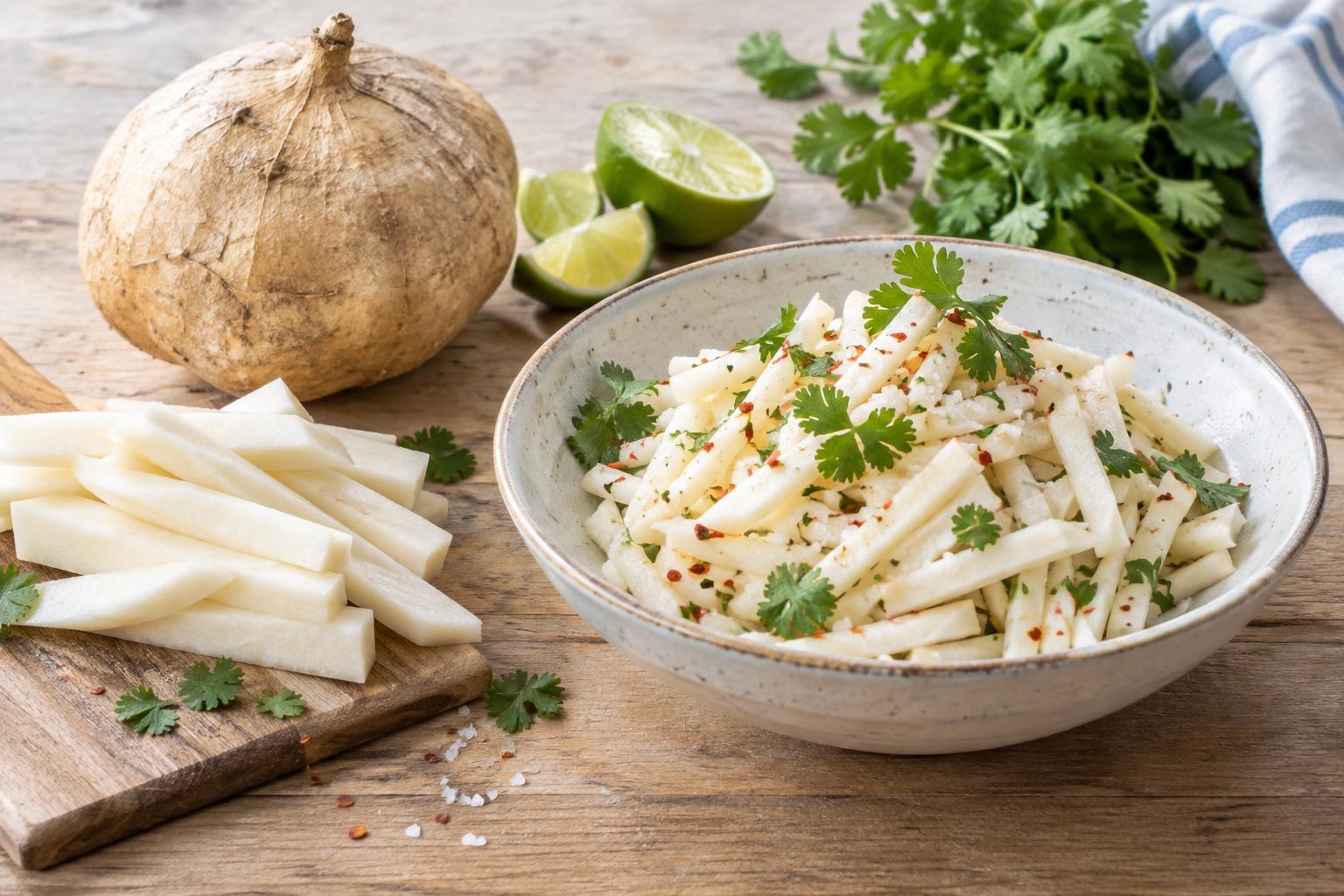
Jicama is a round, tan-skinned root with pale flesh, a gentle sweetness and a refreshing crunch. It does not need cooking to be enjoyable: sliced into sticks or thin half-moons, it provides the kind of crisp bite that makes a snack feel complete. Its flavor is mild enough to let lime, orange, chile and herbs take the lead without disappearing beneath them.
That balance makes jicama especially useful alongside rich or spicy food. Add it to a platter of grilled vegetables, tuck it into a slaw for fish tacos, or serve it as a cool contrast to beans and rice. You can also make it the main event in a simple fruit-and-vegetable salad. Start with a modest amount of seasoning, taste, and add more citrus or chile until the sweetness and heat feel balanced.
Choose a firm root, then peel it well
Look for jicama that feels firm and heavy for its size, with skin that is reasonably dry and intact. Small surface marks are less concerning than soft spots, wet patches, mold or deep cuts. A larger root may be convenient when feeding a group; a smaller one may be easier to use in a single meal. Either way, buy only as much as you expect to prepare while it is still crisp.
Before cutting, rinse the root under running water and scrub away any dirt so the knife does not carry it onto the flesh. Trim the ends for a stable cutting surface, then remove the tough brown skin and any fibrous layer just beneath it with a knife or sturdy peeler. The peeled white root is the part to eat. Do not use the leaves, stems, pods or seeds as food.
To cut even sticks, make thick slices first, stack a few at a time and slice them into batons. For a finer salad, cut the batons into matchsticks. Use a stable board and keep your fingers clear of the blade; a large jicama can be awkward to hold until you have trimmed a flat side.
Build a chile-citrus pairing
For a quick snack, toss jicama sticks with fresh lime juice, a small pinch of salt and your preferred chile. Freshly chopped chile brings sharp heat; a ground chile adds warmth and coats the pieces more evenly. Add zest if you want a stronger citrus aroma without making the jicama wetter. Let the mixture stand briefly so the flavors mingle, then taste again before serving.
To turn that idea into a salad, combine jicama with orange segments, cucumber and thinly sliced red onion. Cilantro or another tender herb adds freshness, while a little olive oil rounds out a tart dressing. If your oranges are very sweet, use more lime; if your chile is particularly hot, begin with less. The goal is to keep the jicama’s crunch at the center rather than cover it with dressing.
Jicama also plays well with creamy or savory additions. Try it with avocado added just before serving, or scatter it over a bowl of warm beans for a temperature contrast. When serving it beside seafood, keep the jicama and any ready-to-eat salad ingredients separate from raw seafood, its juices and the utensils used to prepare it.
Keep the crunch from prep to table
Whole, unpeeled jicama is best kept in a cool, dry place and used before it develops soft spots. Once you peel or cut it, refrigerate the pieces in a covered container. A dry container helps keep a plain batch versatile: you can season only the portion you need and save the rest for another salad or snack. If the cut surface has become slimy or has an off smell, discard it.
Dress jicama close to serving time when you want the firmest bite. Citrus and salt will draw out some moisture as the salad sits, so give a made-ahead mixture a stir and drain excess liquid if needed. Keep prepared salads chilled rather than leaving them out for an extended gathering, and use clean serving utensils.
Lime juice adds flavor, not a substitute for safe food handling. This matters especially if a jicama salad shares a table with ceviche or another seafood dish: citrus curing changes raw seafood’s texture and appearance, but it does not make it equivalent to cooked seafood. Keep raw seafood chilled and separate during preparation, and choose cooked seafood if you want to avoid serving it raw.