What pepitas bring to salsa
Shelled pumpkin seeds, often sold as pepitas, can do more than add crunch. Ground into a salsa, they lend a nutty flavor and give the sauce body without cream or flour. That makes them especially useful alongside bright ingredients such as tomatillos, lime and fresh herbs: the seeds soften the sharp edges while letting the salsa taste lively.
The challenge is texture. A few large seed fragments can make an otherwise smooth sauce feel sandy. The solution is not simply to blend for as long as possible. Toast the pepitas evenly, let them cool, grind them finely while dry, and then give them enough liquid to blend into the rest of the salsa.
Toast gently, then grind finely
Start with raw, shelled pepitas. Spread about 1/2 cup in a dry skillet over medium-low heat. Stir or shake the pan often so the seeds toast evenly. Take them off the heat when they smell nutty and have a little color; dark brown spots can make the finished salsa bitter. Transfer them to a plate rather than leaving them in the hot pan, and let them cool completely.
A small spice grinder or food processor is useful for the next step. Pulse the cooled seeds in short bursts, stopping to scrape down the sides, until they resemble a fine meal. Avoid running the machine continuously: the seeds contain oil and may begin to clump into a paste before every piece is evenly ground. If your machine leaves coarse bits, grind in smaller batches. A mortar and pestle works too, though it takes more patience to reach a fine texture.
Taste a tiny pinch of the ground pepitas before they go into the blender. If you still feel hard, distinct pieces, keep grinding. This quick check is easier than trying to fix a gritty salsa after all the ingredients have been combined.
Build a bright, spoonable salsa
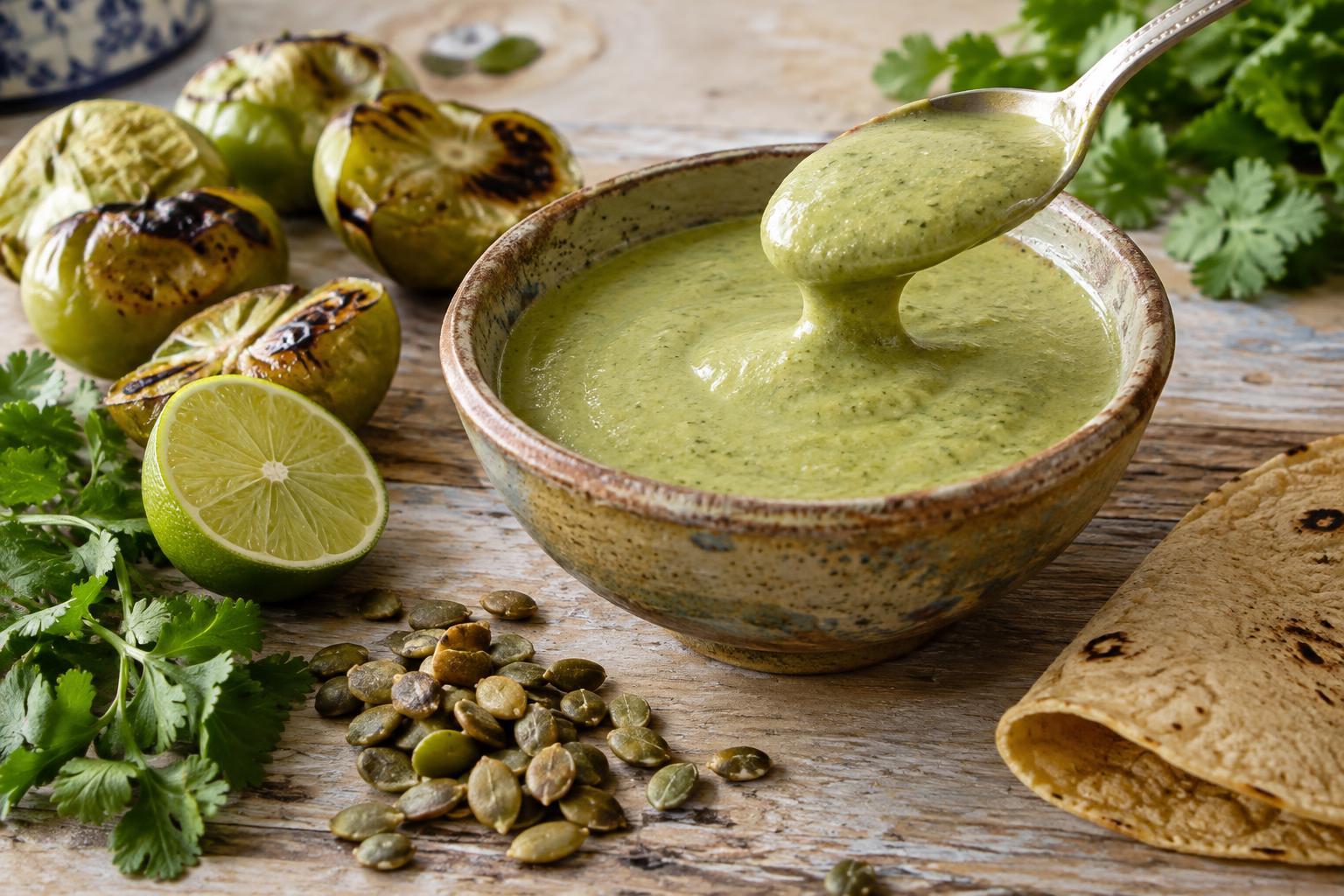
For a simple version, roast or simmer about 3/4 pound of husked, rinsed tomatillos until softened. Blend them with the ground pepitas, a small piece of onion, one chile with its seeds removed if you prefer less heat, a handful of cilantro, and a pinch of salt. Add a few tablespoons of water to help the blades move, then blend until the mixture looks uniform. Let cooked ingredients cool somewhat before blending, and follow your blender’s guidance for warm foods rather than sealing a full jar of hot salsa.
Add more water a spoonful at a time until the salsa falls easily from a spoon. The pepitas continue to absorb moisture as the sauce rests, so it may need another splash before serving. Finish with lime juice to taste. Adding the lime near the end makes it easier to balance its acidity against the earthy seeds and the tang of the tomatillos.
For an especially refined texture, pass the blended salsa through a fine-mesh sieve, pressing gently with a spoon. This is optional if the seeds were ground thoroughly, but it can catch any stubborn fragments. If the salsa tastes flat, adjust the salt and lime before adding more chile; heat alone will not replace that balance.
Serve and store it thoughtfully
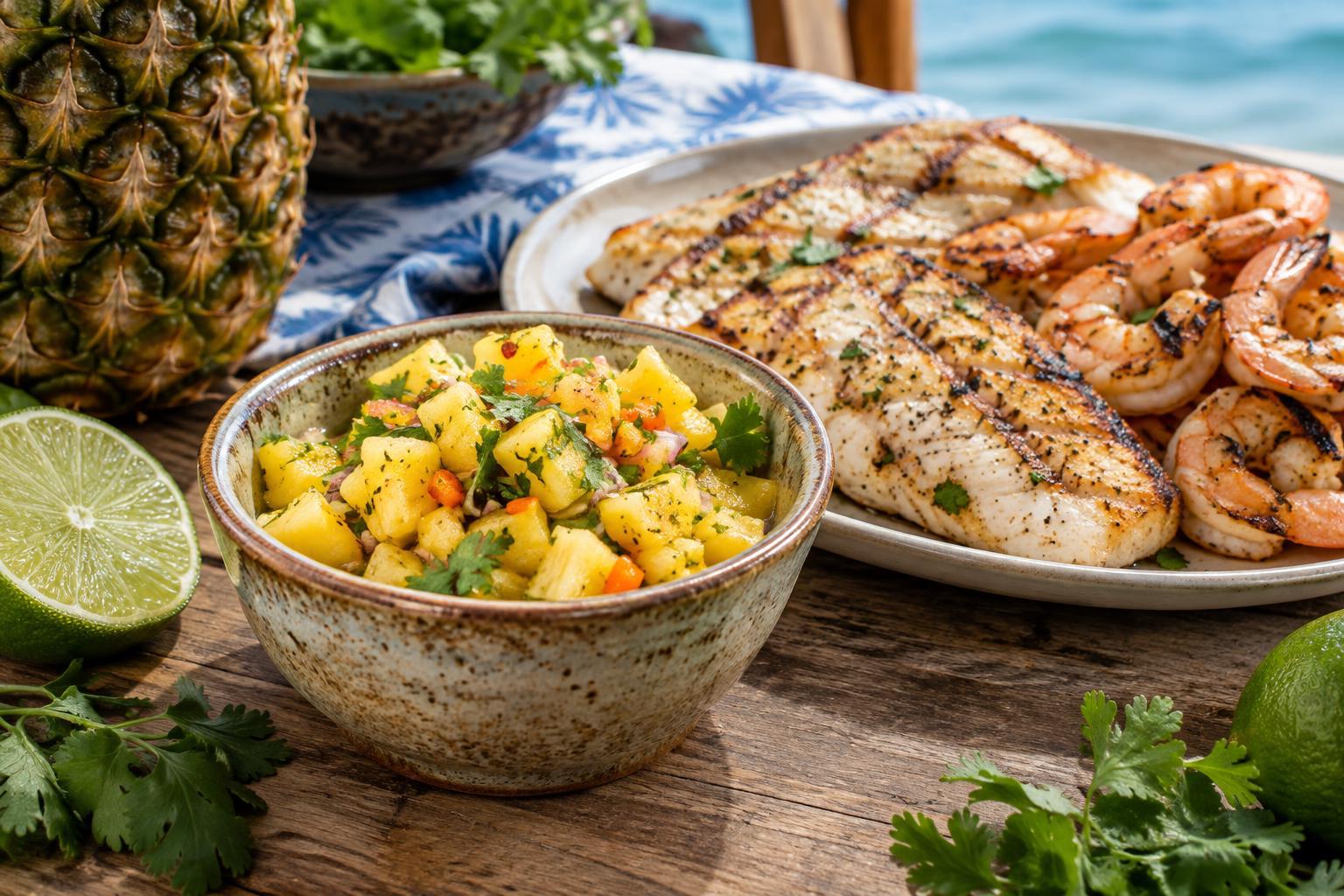
Spoon toasted pepita salsa over roasted vegetables, grilled fish or shrimp, or use it as a sauce for tacos. Its body also makes it a useful dip for crisp vegetables. Keep a little water nearby when serving: a quick stir and a small splash can restore its pourable texture if it thickens on the table.
Treat the finished salsa as a perishable food. Refrigerate it promptly in a covered container, use clean utensils to serve it, and discard any portion left at room temperature for more than two hours. If pairing it with seafood, cook the seafood safely and keep raw seafood and its juices away from the salsa and other ready-to-eat ingredients. Lime adds flavor, but citrus curing does not make raw seafood equivalent to cooked seafood.