Start with a balanced lime dressing
A good slaw dressing should taste lively on a forkful of vegetables, not just on its own. Lime juice brings brightness, while oil softens its sharp edge and helps carry flavor across cabbage, radishes and herbs. For a starting batch, whisk together 3 tablespoons fresh lime juice, 1 teaspoon mild mustard, 1 teaspoon honey or another sweetener if desired, and 1/2 teaspoon salt. Slowly whisk in 6 tablespoons neutral oil. Taste it with a piece of cabbage before adjusting: the vegetable is a better guide than a bare spoon.
This makes a flexible vinaigrette, not a fixed rule. If your limes are especially tart, add a little more oil or a small pinch of sweetener. If the dressing tastes flat, try another pinch of salt before adding more lime. Finely grated lime zest can deepen the citrus aroma without adding liquid. For a gentle coastal-inspired variation, stir in a little minced garlic or finely chopped cilantro after the dressing comes together. Keep the additions small so they complement the vegetables rather than weighing them down.
Build an emulsion that clings
Oil and lime juice separate naturally. Mustard helps them mix temporarily, but the way you combine them matters too. Put the lime juice, mustard, sweetener and salt in a bowl, then add the oil in a thin stream while whisking steadily. The dressing should turn slightly opaque and look unified. A jar with a tight lid also works: combine the ingredients and shake vigorously until the vinaigrette looks blended.
You do not need a thick, creamy sauce. A light emulsion is enough to spread small droplets of oil and lime over the slaw rather than sending lime juice straight to the bottom of the bowl. If the dressing separates while it waits, whisk or shake it again before using. If it tastes oily once it reaches the vegetables, add a few drops of lime juice; if it bites too sharply, whisk in a little more oil. Make those adjustments in the dressing bowl, where they are easier to distribute evenly.
Prepare the vegetables to stay crisp
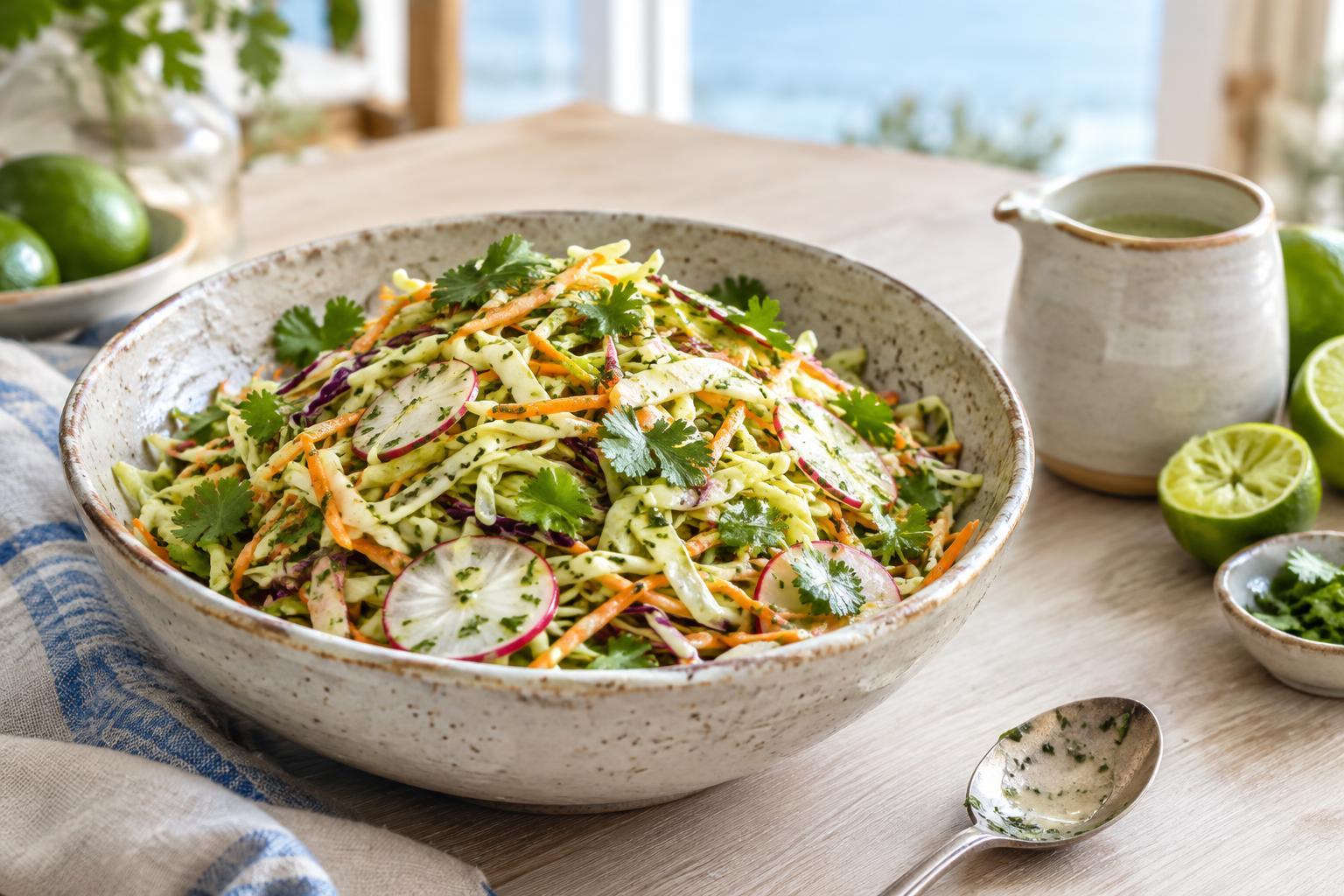
Start with about 6 cups of thinly shredded cabbage, or a mix of cabbage and sturdy vegetables such as sliced radishes or carrots. Thin, fairly even cuts give the vinaigrette more surface to coat. After washing, dry the vegetables well in a spinner or with clean towels. Water left on the leaves dilutes the dressing and makes it more likely to collect in the serving bowl.
Cabbage can sit briefly after shredding, but tender additions are best saved for the end. Fold in cilantro, thinly sliced scallions or other delicate herbs close to serving time. If using sliced onion, keep the amount modest so it does not overwhelm the lime. For a slaw alongside grilled fish, beans or roasted vegetables, aim for a mix that is easy to lift with a fork rather than a bowl packed so tightly that the dressing cannot reach the lower layers.
Dress lightly, then taste
Begin with 4 tablespoons of vinaigrette for 6 cups of prepared vegetables. Toss thoroughly, lifting from the bottom, and let the slaw stand for a few minutes. Taste a forkful and add more dressing a spoonful at a time if needed. You may not need the whole batch: the right amount depends on how finely the vegetables are cut and how dry they are. A finished slaw should glisten lightly without leaving much liquid behind.
For the crispest texture, dress the slaw shortly before serving. If you need to work ahead, store the dried vegetables and vinaigrette separately in the refrigerator, then shake the dressing and combine them at the last minute. A little softening after dressing is normal, but a long rest draws moisture from the vegetables. If the bowl has become watery, tossing in extra dressing will usually make it heavier; instead, lift the slaw into a clean serving bowl with tongs.
Serve it safely with seafood
Lime slaw is a bright partner for cooked shrimp, grilled fish or other coastal-inspired dishes. Keep seafood chilled until it is time to prepare or serve it, and use clean utensils and surfaces when handling ready-to-eat vegetables. If raw seafood is part of the meal, keep its juices and preparation tools away from the slaw and vinaigrette. Refrigerate prepared components rather than leaving them out while the rest of the meal comes together.
Lime juice changes the texture and appearance of raw seafood, but citrus curing does not make it equivalent to seafood cooked with heat. Treat citrus-cured seafood as raw when deciding how to handle and serve it. The slaw itself needs no seafood to shine: its crisp vegetables and lightly clinging dressing bring contrast to a plate without turning it into a puddle.