Start with a salsa that lets seafood shine
Pineapple-habanero salsa works especially well with cooked seafood because it brings contrast: juicy fruit against a seared or grilled surface, bright lime against rich fish, and a little chile heat after each bite. The goal is not to make the hottest salsa possible. It is to keep the seafood recognizable beneath the topping.
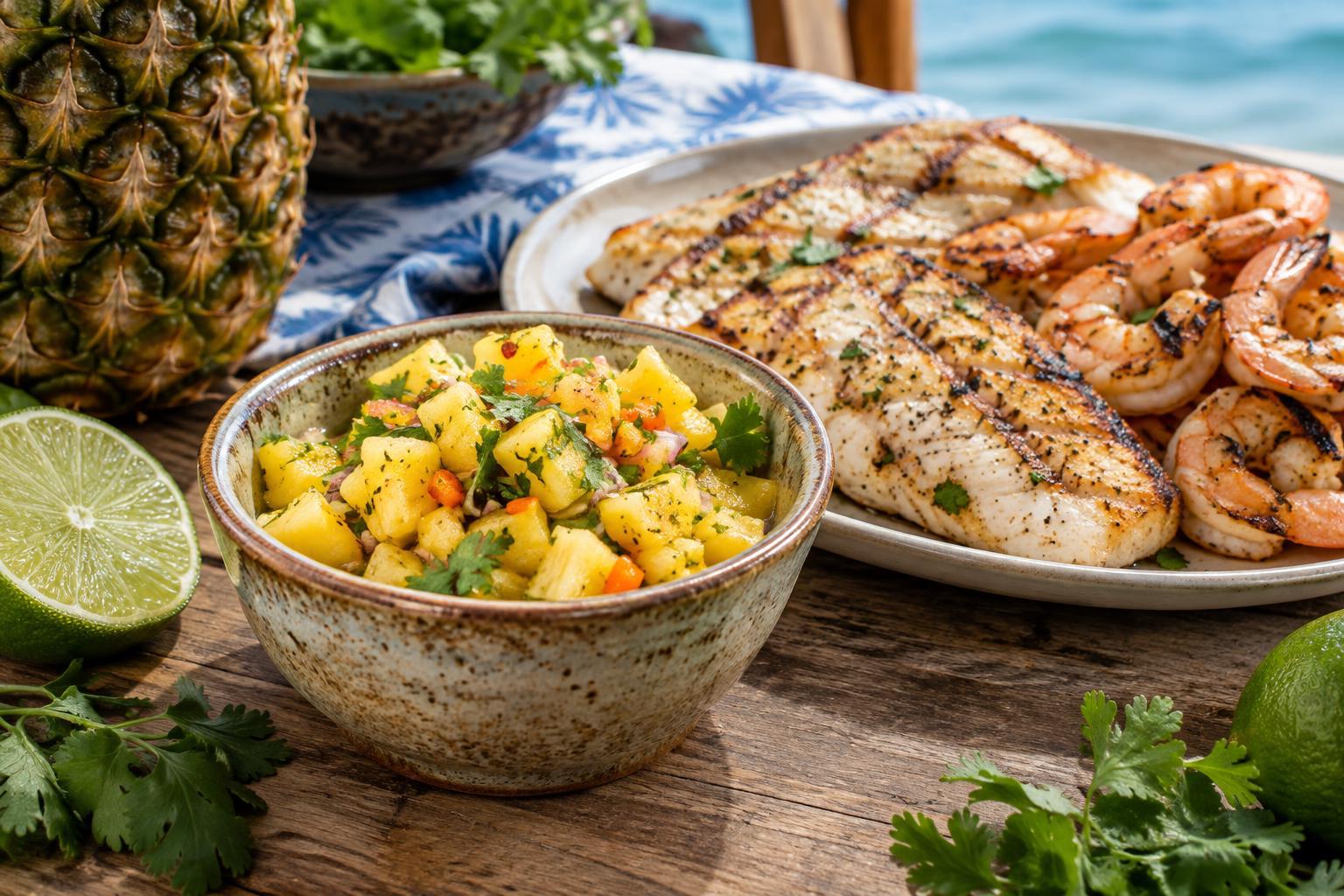
For a small bowl, begin with about two cups of finely diced pineapple, a few tablespoons of minced red onion, a squeeze of lime and a pinch of salt. Add chopped cilantro if you like it. Then introduce habanero a little at a time. This is a flexible starting point, not a rigid formula: pineapple varies in sweetness and acidity, and individual chiles can taste quite different.
Build balance one taste at a time
Taste the pineapple before adding anything else. If it is very sweet, lime and salt will help bring it into focus. If it tastes tart or subdued, use a lighter hand with lime; a little extra ripe pineapple may do more for the salsa than added sugar. Red onion gives the fruit a savory edge, while cilantro adds freshness without making the mixture heavier.
Habanero brings both heat and a fruity aroma, but its heat can take over quickly. Mince a small piece, stir it through the salsa and taste a spoonful with some pineapple in it. Wait a moment before deciding whether to add more. Removing the pale inner ribs and seeds can make portioning easier, though the chile flesh itself remains hot. Wear gloves if your skin is sensitive, and wash your hands, knife and board thoroughly after handling chiles. Avoid touching your eyes.
If the finished salsa is too hot, make more of the pineapple, onion and lime mixture and combine the two. More lime alone may sharpen the flavor without sufficiently reducing the heat. If the salsa tastes flat, try a small pinch of salt before adding extra chile.
Choose a texture for the way you will serve it
A finely diced salsa is easy to spoon over shrimp, fish tacos or a whole grilled fillet. Cut the pineapple and onion into similarly small pieces so each bite gets a little of everything. For a looser sauce, pulse a portion of the pineapple with lime and habanero, then stir it back into the diced fruit. Keep some pieces intact for texture rather than blending the entire batch smooth.
Fresh pineapple gives the salsa a crisp, juicy bite. Canned pineapple can also work when it is well drained; taste before seasoning because its sweetness may differ from fresh fruit. For a deeper, less crisp flavor, briefly grill pineapple slices, let them cool and dice them before mixing. That variation is particularly good beside plainly seasoned grilled fish.
Pair it with cooked fish and shrimp
Let the salsa provide the bold flavors and season the seafood simply. Salt, a little oil and a straightforward cooking method give pineapple and habanero room to stand out. Spoon the salsa over cooked shrimp just before serving, tuck it into fish tacos, or serve it on the side of a grilled fillet so everyone can choose how much heat to add.
Consider the rest of the plate, too. Rice, beans or a mild vegetable side can soften the salsa’s intensity. If you are serving a crowd, set out extra lime and keep the salsa’s starting heat moderate; guests who want more can add finely chopped chile to their own portions. Stir the salsa before serving, since pineapple releases juice as it sits.
Keep preparation and serving safe
Make the salsa with clean utensils and keep it separate from raw seafood and the surfaces used to prepare it. Cook seafood appropriately before adding the salsa, and use a clean spoon to serve it. If preparing the salsa ahead, cover and refrigerate it; refrigerate leftovers promptly rather than leaving the bowl out for an extended meal.
Lime brightens this salsa, but its acidity is not a cooking step. Citrus curing can change the look and texture of raw seafood; it does not make raw seafood equivalent to cooked seafood. For this pairing, add the pineapple-habanero salsa to seafood that has already been cooked.