What tamarind brings to a sauce
Tamarind has a tartness that feels different from a squeeze of lime: fruity, rounded and a little earthy. In a coastal-inspired sauce, it can cut through the richness of fried fish, give grilled shrimp a glossy finish or add depth to a dressing for crisp vegetables. It works especially well alongside chiles, garlic and herbs, but it needs balancing. Too much can make a sauce sharply sour; too much added sugar can hide the fruit altogether.
The first step is knowing which form of tamarind you have. Recipes may call for pulp, paste or concentrate as though they were interchangeable, yet products vary in strength, texture and sweetness. Rather than trusting a fixed substitution, treat the recipe quantity as a starting point and taste your way to the finished sauce.
Pulp and concentrate are not the same
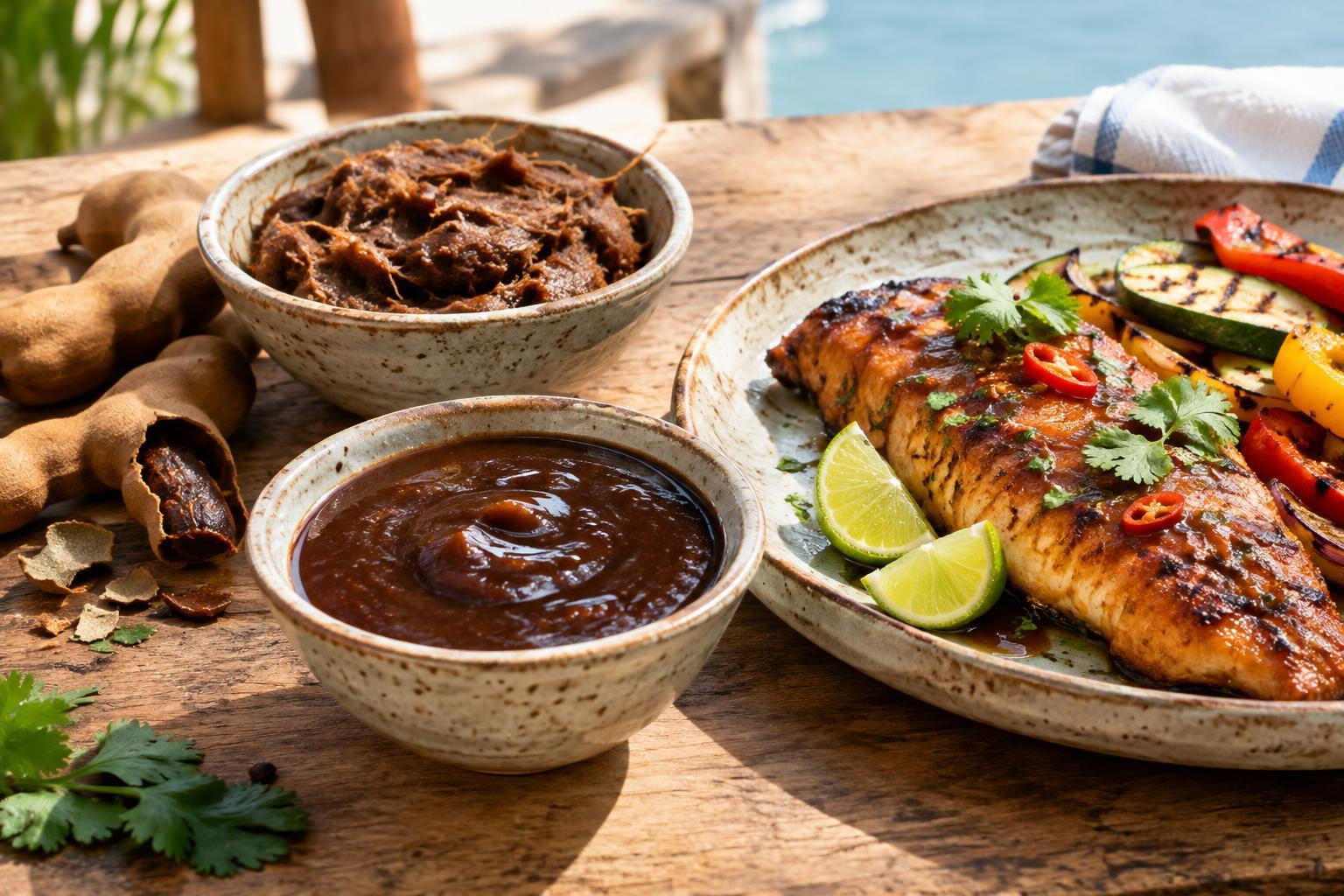
Tamarind pulp is the fruit’s sticky flesh, sometimes sold as a compressed block with fibers or seeds still mixed in. To use it, soften a piece in warm water, work it with your fingers or a spoon, and strain out the solids. The resulting liquid is tart but adjustable: more water makes a lighter tamarind base, while less water makes a stronger one. Measure the strained liquid for a recipe rather than the dry block when possible.
Tamarind concentrate is usually a ready-to-use, pourable or spoonable product. It saves the soaking and straining step, but its intensity can differ considerably between brands. Some jars contain mostly tamarind; others may include sugar, salt or other ingredients. Check the label and taste a small dab diluted in water before adding it to a sauce. If it is already sweetened, hold back on any sugar the recipe suggests.
A practical swap is to begin with less concentrate than you would use of strained pulp liquid. Stir it into the sauce, then add more in small increments until the tartness is where you want it. If a concentrate is thick, loosen it with water before judging the flavor; a dense spoonful can taste harsher than it will once dispersed.
Build balance in a useful order
For a simple sauce, start with diluted tamarind, then add a savory element such as salt, a little sweetness and an aromatic such as garlic or chile. Taste after each addition. Salt can make the fruit flavor clearer without making the sauce sweet. A small amount of sugar, honey or another sweetener can soften a hard acidic edge, but the aim is usually a lively sweet-tart balance, not a syrupy glaze.
Think about the food the sauce will meet. A sauce for fried fish can be brighter and thinner because the crust and oil will mellow it on the plate. A glaze for grilled shrimp may need a touch more sweetness so it coats rather than tastes severe. A dressing for cucumber or cabbage should be seasoned more firmly than the vegetables alone, since their released water will dilute it. If the sauce becomes too sweet, add tamarind a little at a time; if it becomes too sour, try water and a pinch of salt before reaching for more sugar.
Let the sauce sit briefly, then taste it again. Chile heat and garlic can become more noticeable as flavors mingle. If you plan to serve it chilled, taste it cold as well: a sauce that seems balanced while warm may need a final adjustment at serving temperature.
Three easy directions to try
For a quick table sauce, whisk diluted tamarind with finely chopped chile, garlic, salt and just enough sweetener to round the edges. Add water until it drizzles easily, then spoon it over cooked fish or roasted vegetables. For a glaze, keep the mixture thicker and brush it onto seafood near the end of cooking so its sugars are less likely to scorch.
For a vegetable dressing, combine a lighter tamarind base with a little oil, salt and chopped herbs. Toss it with a sturdy salad shortly before serving and check the seasoning once the vegetables are coated. If you want lime as well, add it last. Lime brings a fresh, immediate citrus note, while tamarind supplies the deeper tartness; using both without tasting can make the dressing needlessly sharp.
Handle seafood and leftovers with care
Keep raw seafood chilled, use clean utensils and surfaces, and prevent raw juices from touching ready-to-eat food. If you use a tamarind sauce as a marinade for raw seafood, set aside a separate portion for serving before the raw seafood goes in. Do not spoon used marinade onto cooked food unless you have boiled it thoroughly first.
Tamarind and citrus can change the texture and appearance of raw seafood, but acid curing does not make it equivalent to cooking. For a cooked seafood dish, use an appropriate cooking method and check doneness rather than relying on the sauce’s acidity. Refrigerate leftover sauce promptly in a clean container, and discard it if it has been contaminated with raw seafood.