The difference is partly in the name
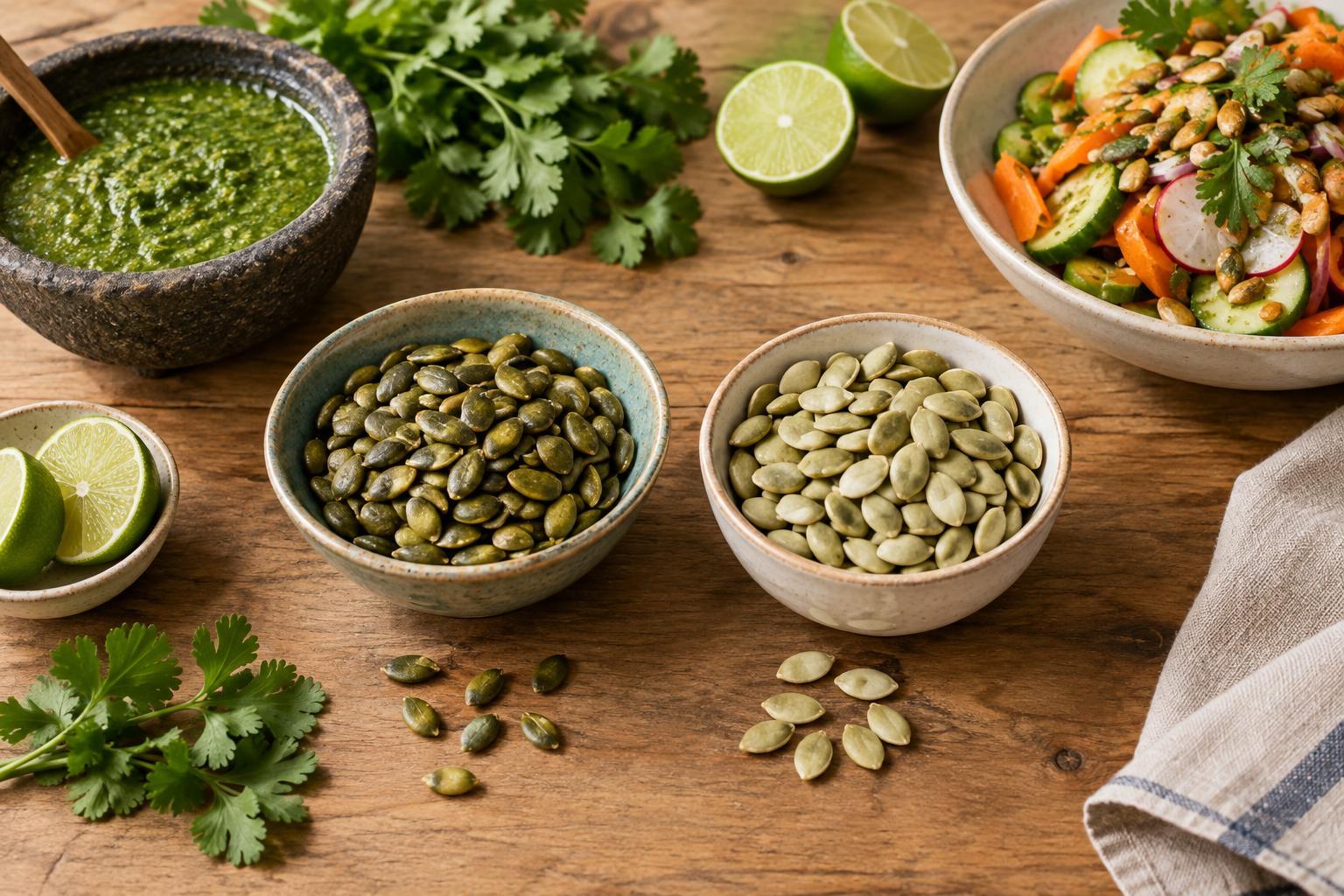
A pepita is an edible pumpkin seed without a tough outer hull. Some pumpkins produce seeds that are naturally hull-less; other pumpkin seeds can be mechanically hulled. At the store, both may appear as small, flat, green seeds, and packages may use “pepitas,” “shelled pumpkin seeds” and “hulled pumpkin seeds” for similar products. The label alone may not tell you which kind of pumpkin they came from.
The more useful distinction for cooking is between green, hull-free seeds and whole seeds still enclosed in their pale, fibrous hulls. Whole pumpkin seeds can be roasted and eaten as a snack, but they will not blend as smoothly into a sauce. If a recipe calls for pepitas, choose the green seeds unless it specifically says to use whole pumpkin seeds.
Choose by flavor, texture and seasoning
For a sauce, start with plain, unsalted pepitas or hulled pumpkin seeds. They let you control the salt and make it easier to balance herbs, chiles and citrus. Raw seeds have a mild flavor; gently toasted seeds taste nuttier and give a sauce more depth. Pre-roasted seeds can save time, but check whether they contain salt, oil or other seasonings before adding them to a recipe.
For a finishing sprinkle, texture matters more. Toasted seeds offer a firmer crunch than raw ones and stand up well on roasted vegetables, beans and grain bowls. Salted pepitas can be convenient here: taste them first, then season the rest of the dish accordingly. Whether a bag says “pepitas” or “hulled pumpkin seeds,” look at the seeds and ingredient list to see what you are buying.
Make them work in sauces
Pepitas bring body to a blended sauce without making it heavy. For a simple green sauce, toast plain seeds, let them cool briefly, then blend them with cilantro, a little chile, garlic, water and lime juice. Add liquid gradually until the mixture is spoonable, and season after blending. The seeds soften as they absorb liquid, so you may need another splash of water if the sauce sits before serving.
For a deeper flavor, toast the seeds in a dry skillet over medium-low heat, stirring often. Take them off the heat when they smell fragrant and begin to color; small seeds can scorch quickly. Use the finished sauce with grilled vegetables, beans or cooked fish. If you are serving it alongside raw seafood, keep the sauce and its utensils away from raw-seafood juices until serving.
Add crunch to salads and sides
A handful of pepitas can make a simple side feel complete. Scatter toasted seeds over cabbage slaw with lime, a tomato and avocado salad, or roasted squash with herbs. Add them just before serving if you want them to stay crisp. For a softer texture, fold raw or lightly toasted seeds into a grain or bean salad and give them time to absorb some dressing.
Match the seasoning to the dish rather than coating every batch the same way. A pinch of chile can suit a citrusy slaw, while plain toasted seeds let a bright herb dressing lead. If you are serving guests, consider putting the seeds in a separate bowl so people can add their own crunch.
Store them well and handle seafood separately
Because these seeds contain oil, their flavor can deteriorate in warm storage. Keep them tightly sealed in a cool, dry place for short-term use; refrigerate or freeze them if you buy a large bag or cook with them infrequently. Smell and taste a few before using them. If they taste stale or unpleasantly bitter, a fresh batch will make a better sauce or topping.
Pepitas pair beautifully with coastal dishes, but a seed topping or citrus dressing does not change seafood safety. Use clean utensils and surfaces, keep raw seafood chilled and separate from ready-to-eat ingredients, and follow appropriate handling guidance for the seafood you serve. Citrus curing changes the texture and appearance of raw seafood; it does not make it equivalent to cooked seafood.