Choose by texture, not just by name
Avocado brings richness to coastal cooking without competing with bright ingredients. Slices can soften the heat of a chile-spiked dish, while diced avocado adds substance to a tomato and cucumber salad. Blended with lime, herbs and a little water, it becomes a smooth sauce for grilled fish or vegetables. Before choosing one, decide whether you need tidy pieces or a fruit soft enough to mash.
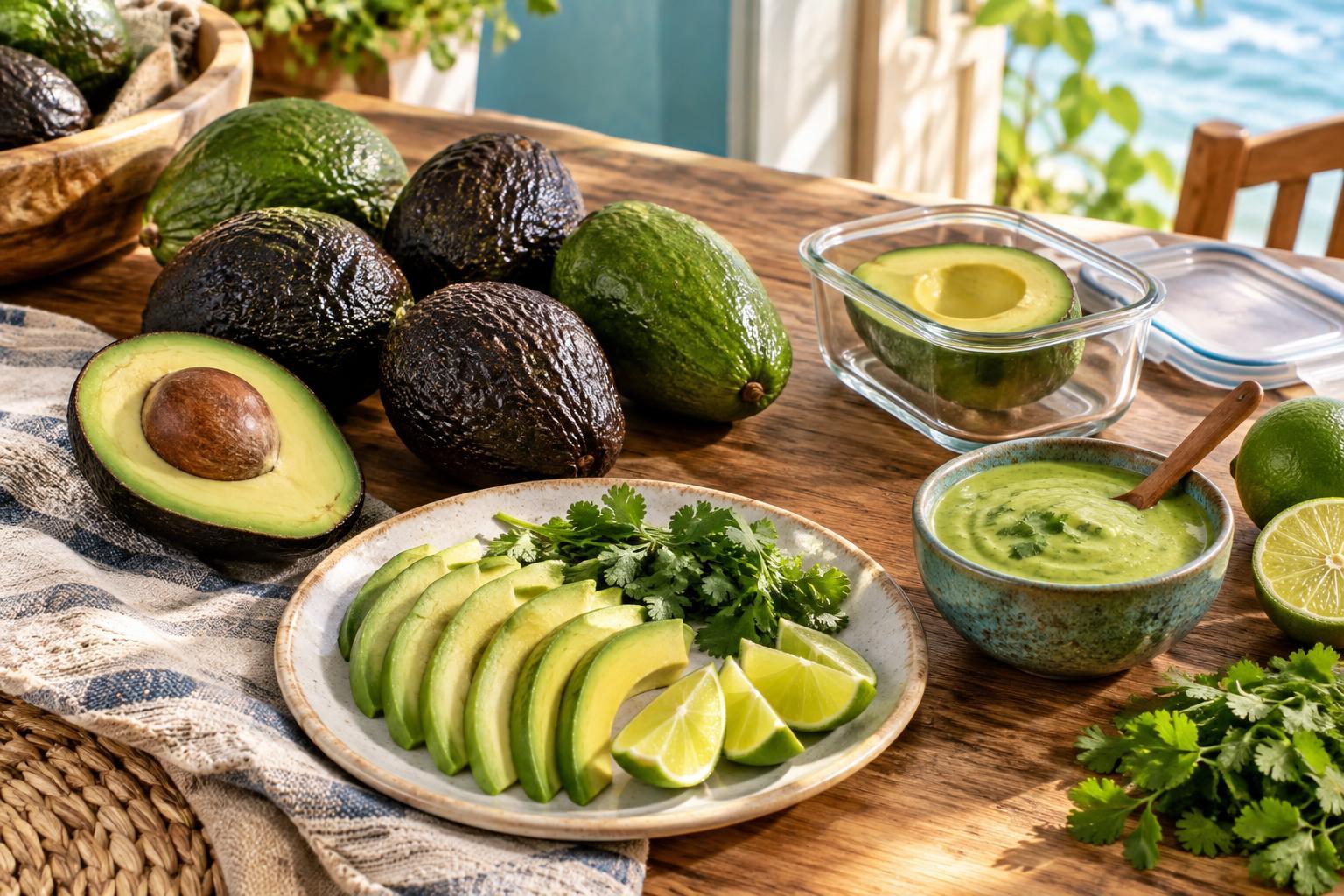
Hass avocados are small to medium-sized, with pebbled skin that often darkens as they ripen. Their creamy flesh suits sauces, spreads and chunky toppings. Fuerte avocados tend to have smoother green skin and can work well for slices when ripe but still firm. Larger, green-skinned avocados sometimes sold as Florida avocados often have a lighter, less dense texture. Names and availability vary by market, so treat these as starting points rather than guarantees: the individual fruit matters more than its label.
Read ripeness with a gentle hand
For an avocado you plan to use today, hold it in your palm and apply gentle, even pressure. A ripe fruit should yield slightly without feeling hollow, mushy or noticeably bruised. A hard avocado needs more time; one with soft pockets may have damaged flesh inside. Avoid pressing repeatedly with a fingertip, which can bruise fruit that is otherwise in good shape.
Skin color can help with some varieties, especially Hass, but it is not a universal ripeness test. Many green-skinned types remain green when ready to eat. Check for deep dents, split skin or leaks, and choose fruit that feels appropriately heavy for its size. If shopping ahead, pick a firm avocado and let it ripen at room temperature, checking it daily. A paper bag can help it ripen faster; adding a banana or apple may speed the process further, though the timing is unpredictable.
Match the avocado to the dish
For neat slices beside grilled seafood, choose an avocado that gives only a little under pressure. Cut it shortly before serving, then season with salt and a squeeze of lime. Firmer-ripe fruit also holds its shape better when folded gently into a salad with onion, herbs and citrus. Add it near the end so stirring does not turn the dressing cloudy.
For a spoonable sauce, choose a softer ripe avocado with no off smell or dark, sunken areas. Mash it with lime juice, salt and finely chopped cilantro, or blend it with water until it reaches a pourable consistency. Taste before adding more citrus: enough acidity lifts the richness, but too much can obscure the avocado. Keep avocado toppings and sauces separate from raw seafood during preparation, using clean utensils and surfaces. Citrus juice can change raw seafood’s texture, but citrus curing does not make it equivalent to cooked seafood.
Store whole and cut fruit differently
Leave hard avocados at room temperature until they soften. Once ripe, move them to the refrigerator if you are not ready to use them; the cold slows further ripening but does not stop it completely. Check them before cooking rather than assuming they will remain at the same stage for a set number of days.
After cutting, refrigerate the avocado promptly in a clean, covered container. To limit browning, brush the exposed flesh lightly with lime or lemon juice and press food wrap against the cut surface, or use a snug container that leaves little air around it. Leaving the pit in one half protects only the flesh it covers. Browning alone is usually a surface quality change, not a reliable test of whether the avocado is safe to eat; discard it if it develops an unpleasant smell, mold or slimy texture.
Plan for the best texture
A ripe avocado is easiest to enjoy when the rest of the meal is nearly ready. Prepare the dressing, wash the herbs and arrange the platter first, then cut and season the fruit. If you have a leftover half, cover and chill it for another meal rather than leaving it on the counter. Slight surface browning can be trimmed or stirred into a mash if the fruit otherwise looks and smells sound.
This simple plan lets avocado play different roles across a coastal menu: firm slices alongside a main dish, cubes in a crisp vegetable side, or a creamy spoonful over warm rice and beans. Choosing for the texture you need—and protecting the cut surface afterward—will do more for the finished plate than searching for a single perfect variety.