Build the glaze from tart pulp
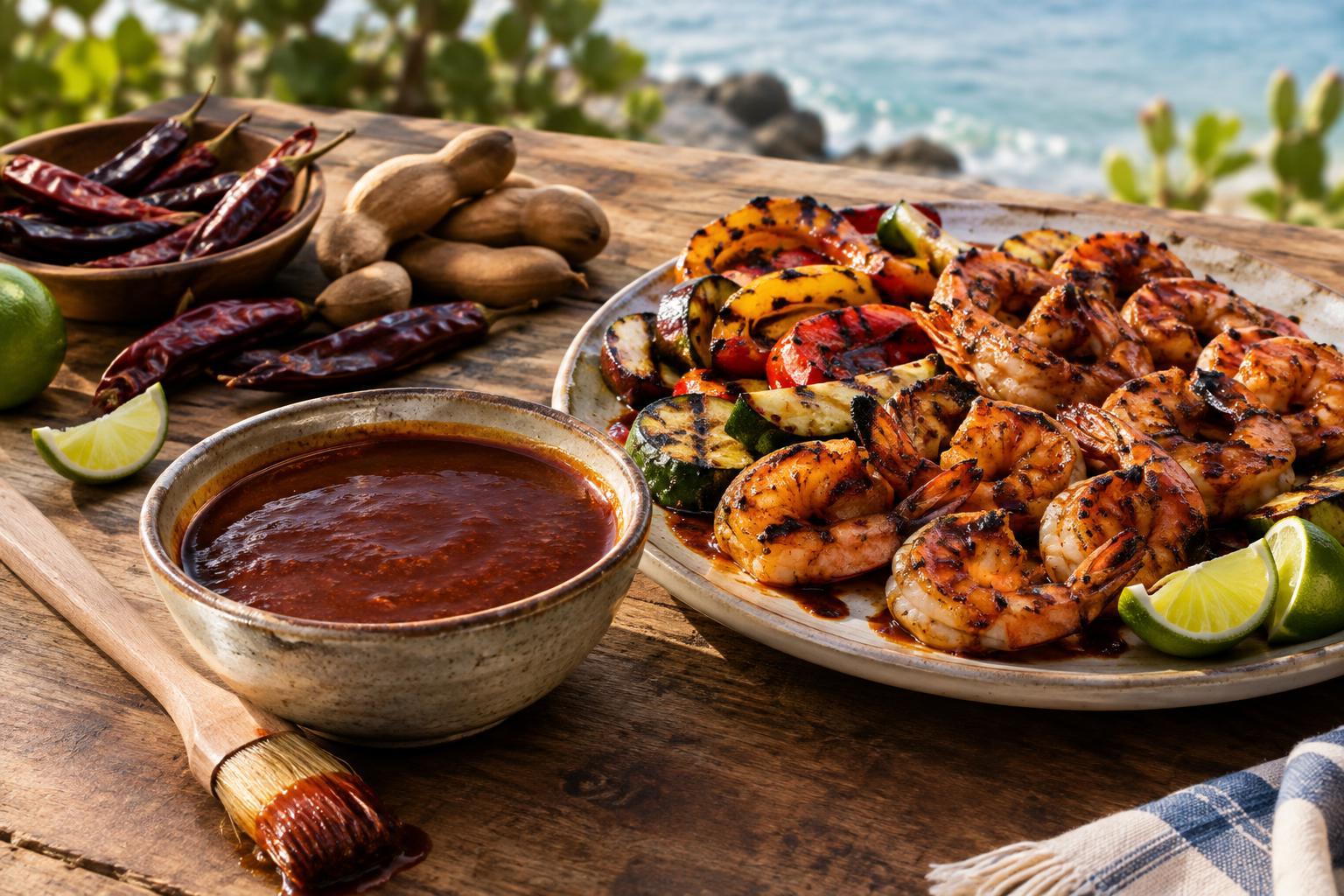
Tamarind brings a deep, fruity tartness that works well with chile, garlic and the smoky edges of grilled food. A good glaze keeps that tang while adding just enough sweetness to cling to a brush. It should flow off a spoon in a thin ribbon, not sit in a sticky mound. Because tamarind products vary in strength and sweetness, taste the sauce as you build it rather than relying on color alone.
For a small batch, start with about 1/2 cup smooth, unsweetened tamarind pulp, 1/2 cup water, 2 tablespoons brown sugar or honey, 1 small minced garlic clove, 1 tablespoon finely chopped mild chile, and a pinch of salt. For more heat, add a little hot chile at a time. If using a dense tamarind concentrate instead of prepared pulp, begin with less tamarind and extra water, then adjust to taste. Sweetened tamarind products may need little or no added sugar.
Make a smooth base before reducing
If you are starting with a block of seedless tamarind, soften a portion in warm water, work it with a spoon, then press it through a sieve. This removes fibers and any hard bits that would catch on a brush or burn in the pan. Prepared pulp can usually be whisked directly with the water. Either way, stir until the base is evenly mixed before adding it to the heat.
Combine the tamarind base, sweetener, garlic, chile and salt in a small, heavy-bottomed saucepan. Bring it to a gentle simmer over medium-low heat, stirring often, especially along the bottom and corners of the pan. Cook until the garlic loses its raw edge and the sauce lightly coats a spoon. Remove it from the heat while it still looks a little loose; it will thicken as it cools. If you want a particularly even finish for brushing, strain out the chile and garlic pieces after cooking.
Balance flavor and thickness without scorching
Taste a cooled spoonful before making adjustments: a hot glaze can be harder to judge, and it can burn your tongue. If the sauce is sharply sour, add a small amount of sweetener. If it tastes flat or overly sweet, add a little more tamarind pulp or a squeeze of lime after taking the pan off the heat. Salt helps bring the fruit and chile together. Make each change gradually so the tamarind remains the main flavor.
For a brushable glaze, thickness matters as much as taste. If it drips off immediately, simmer it briefly over low heat. If it drags or forms strings, whisk in water a teaspoon at a time. Avoid turning up the burner to speed the process: once the sauce thickens, its sugars can catch quickly. A wide pan also reduces liquid faster than a small saucepan, so watch it closely if that is what you use.
Brush late and keep a clean portion for serving
Tamarind-chile glaze suits shrimp, fish, chicken, roasted squash and grilled corn. Cook the food most of the way before brushing on a thin layer, then finish over moderate or indirect heat. On a grill, move the food away from direct flame if the glaze starts to darken too fast. Several light coats are easier to control than one thick coat, which can drip onto the heat and scorch before the food is ready.
Pour the glaze into separate bowls before you start brushing: one for contact with raw food and one clean portion for the table. Do not return a brush or spoon that has touched raw seafood or poultry to the serving portion. Cook seafood and poultry thoroughly using appropriate food-safety guidance; the glaze’s acidity does not make raw seafood equivalent to cooked seafood. Refrigerate unused glaze promptly in a clean, covered container, and discard any leftover brushing portion that contacted raw food.
Use the same method beyond the grill
You do not need open flame to put this sauce to work. Brush it onto nearly finished roasted vegetables and return them to the oven briefly, watching for dark edges. Spoon a little clean glaze over cooked fish just before serving, or thin it with warm water for a tart drizzle over rice and crisp vegetable sides. Its bright flavor is especially useful beside rich or smoky dishes.
If you plan to make the glaze ahead, leave it slightly thinner than your target texture. Once chilled, it may firm up; gentle warming and a splash of water will bring it back to a brushable consistency. Taste again after thinning and add a pinch of salt or a little tamarind if needed. The goal is a sauce that adds tang and gentle heat without hiding the food beneath it.