A simple supper built around garlic
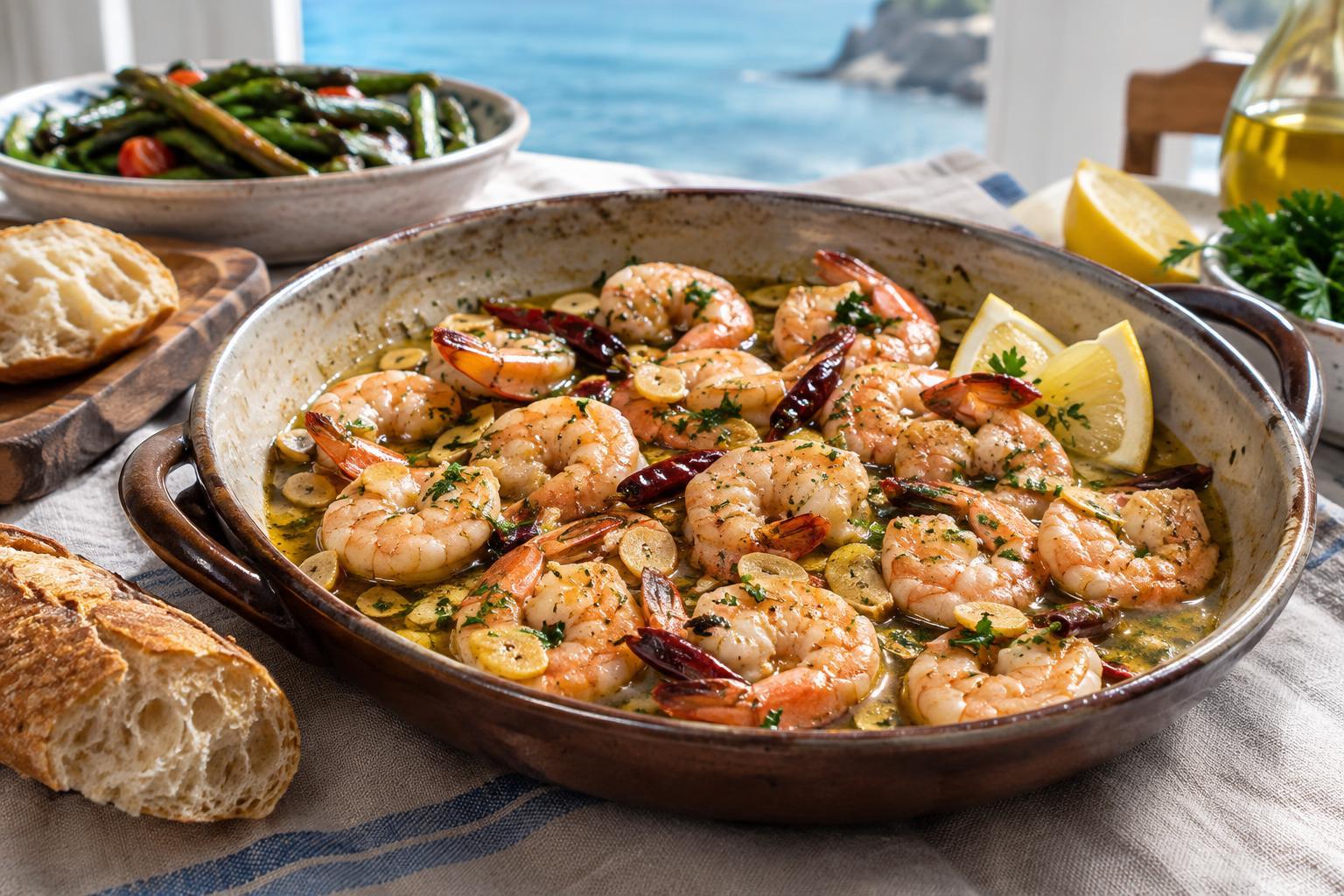
Shrimp al ajillo is a good choice when you want dinner to feel generous without spending much time at the stove. The basic idea is straightforward: warm garlic and chile in oil, add shrimp, and cook just until they are done. A squeeze of lime at the end brings brightness to the rich, fragrant pan juices. Recipes vary from kitchen to kitchen, so treat the chile, herbs, and citrus as flexible accents rather than a fixed formula.
For three to four servings with sides, gather 1 pound of peeled, deveined shrimp; 4 to 6 garlic cloves, thinly sliced; 2 tablespoons of olive oil; 1 small fresh chile, sliced, or a pinch of dried chile flakes; salt; 1 lime; and a small handful of chopped cilantro or parsley. Have your sides ready before you start cooking. Once the garlic hits the pan, the meal moves quickly.
Prep the shrimp and keep the garlic gentle
If the shrimp are frozen, thaw them in the refrigerator. For a quicker thaw, keep them in a sealed bag under cold running water, then cook them promptly. Pat the shrimp dry with a clean towel so they sear rather than steam, and season lightly with salt. Keep raw shrimp and their juices away from foods that will not be cooked; wash hands, utensils, and surfaces after handling them.
Set a wide skillet over medium-low heat and add the oil, garlic, and chile. Stir for a few minutes, adjusting the heat as needed. You want the garlic to turn fragrant and pale gold, not dark brown; browned garlic can make the whole dish taste bitter. If your chile is especially hot, start with a little and add more at the table. Its heat should lift the garlic flavor, not hide the sweetness of the shrimp.
Raise the heat to medium and spread the shrimp in a single layer. If the pan is crowded, cook them in two batches and return the first batch to the pan briefly at the end. Turn the shrimp as they cook, stopping when the flesh is opaque and firm rather than translucent. The time depends on their size and the pan, so watch the shrimp instead of relying on a timer. Remove the skillet from the heat, squeeze in some lime juice, and scatter over the herbs. Taste and adjust the salt or chile before serving.
Make the pan juices part of the meal
The garlicky oil is as welcome as the shrimp. Spoon both over warm rice, or serve them with crusty bread for catching the juices. For a fuller plate, add black beans, sliced avocado, and a crisp cabbage salad. A salad dressed simply with lime and salt provides contrast without competing with the skillet. Roasted or sautéed vegetables also work well; choose something you can finish before the shrimp go into the pan.
To change the character of the dish, add a little lime zest for sharper citrus aroma or finish with chopped scallions for a mild onion note. You can also cook a few halved cherry tomatoes alongside the shrimp, provided the pan is large enough to keep everything in one layer. Add extra lime only after cooking: its freshness is most noticeable at the end, and it cannot replace cooking as a food-safety step. Citrus may change seafood’s texture and appearance, but citrus curing does not make raw seafood equivalent to cooked seafood.
Serve promptly and handle leftovers with care
Shrimp al ajillo is best served straight from the skillet, while the garlic is aromatic and the shrimp are tender. If you are cooking for guests, set out the rice, bread, or salad first, then make the shrimp last. That way, you can focus on the brief cooking window instead of trying to finish several dishes at once.
Refrigerate leftovers promptly in a covered container rather than leaving seafood at room temperature through a long meal. Reheat gently until heated through; prolonged cooking can make shrimp rubbery. If the garlic oil has thickened in the refrigerator, a small splash of water in the pan can help loosen it. Leftovers are also good tucked into a warm tortilla with cabbage, herbs, and a fresh squeeze of lime.