Let the scallops be the focus
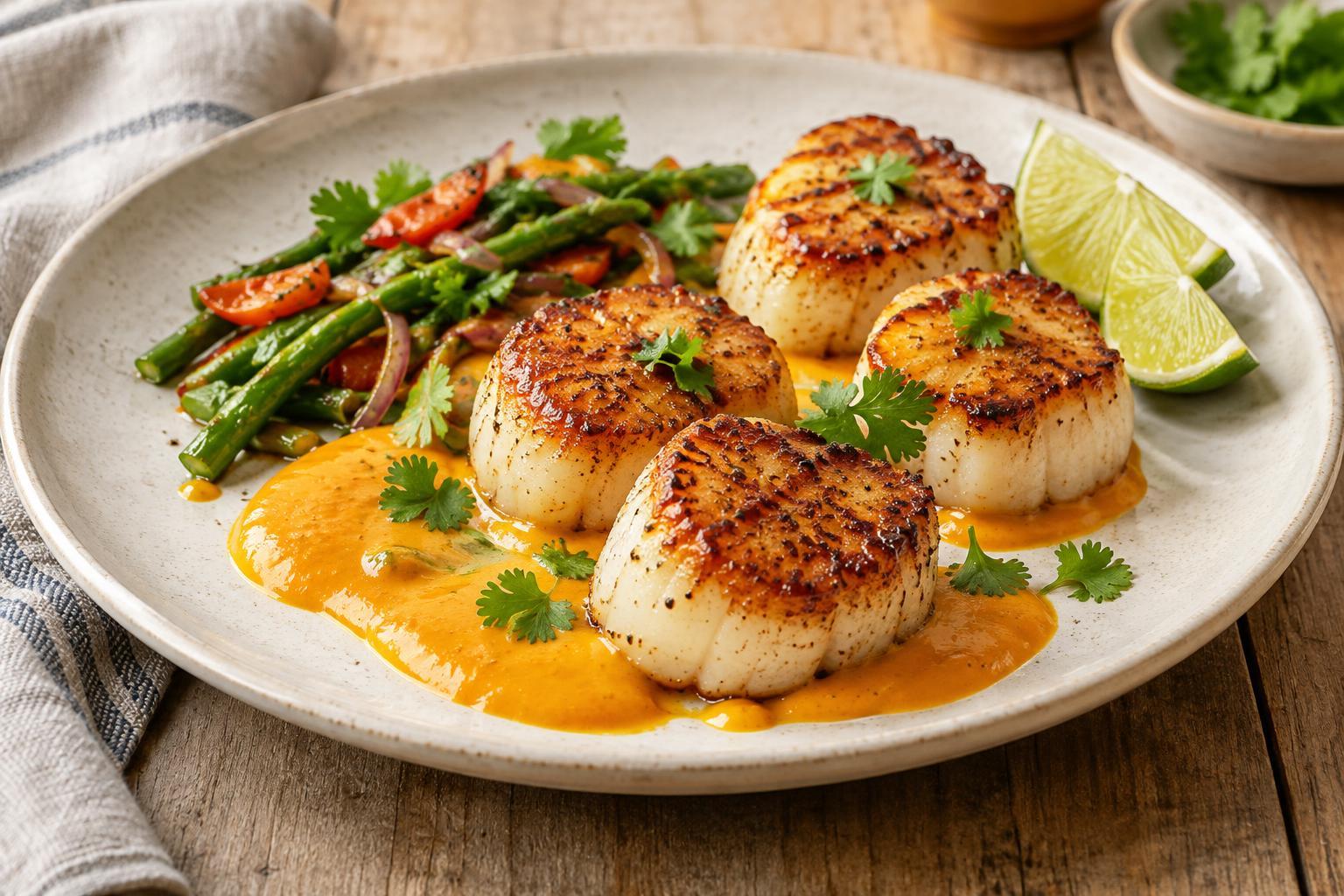
A good scallop already brings sweetness to the plate. Ají amarillo, a yellow-orange chile used in Peruvian cooking, adds fruitiness and gentle-to-moderate heat that can frame that sweetness rather than cover it. For this dish, make a small amount of sauce and serve it beneath or beside the scallops. The contrast is the point: a browned surface against a smooth, bright sauce.
Look for large sea scallops of similar size so they finish at roughly the same time. If you have a choice, scallops labeled “dry” are often easier to brown than those treated with added liquid. Either can work, but very wet scallops need extra attention with paper towels. Remove the small, firm side muscle if one is attached; it can be chewy. Frozen scallops are also an option: thaw them in the refrigerator, then drain and dry them thoroughly.
Make a simple ají amarillo sauce first
For about four servings, stir together 2 tablespoons ají amarillo paste, 3 tablespoons plain yogurt or mayonnaise, 1 tablespoon lime juice and a small pinch of salt. Taste before adding more chile: pastes vary in heat and saltiness. If you want a thinner sauce, add water a teaspoon at a time. Refrigerate it while you prepare the scallops.
This cool, creamy version keeps the cooking focused on the sear. It also leaves room for adjustments: a little more lime makes the sauce sharper, while more yogurt softens the heat. Set out clean plates and spoon on the sauce just before serving. Keeping it off the scallops until the last moment helps preserve their browned surface.
Dry surfaces make better crusts
For four servings, use about 1 to 1¼ pounds of large sea scallops. Drain them and pat every side dry with paper towels. If time allows, leave them uncovered on a paper-towel-lined plate in the refrigerator for 15 to 30 minutes, then pat them dry again. Keep seafood refrigerated until you are ready to cook; do not leave it out to dry on the counter.
Season both sides lightly with salt just before cooking. Skip a wet marinade here. Lime juice and other acidic ingredients add flavor, but they also put moisture on the surface, where it works against browning. Citrus can change the texture of raw seafood; it does not make raw seafood equivalent to cooked seafood. Save the lime for the sauce or a small squeeze at the table.
Sear in batches and watch the edges
Heat a heavy skillet over medium-high heat until hot. Add a thin film of neutral oil, then place the scallops in the pan with space between them. If they touch or crowd the skillet, cook in batches. Set each scallop down gently and leave it alone for about 2 minutes. Lifting it repeatedly interrupts contact with the pan; waiting gives the crust a chance to form. When the underside is golden and releases easily, turn it.
Cook the second side for about 1 to 2 minutes, adjusting for thickness and the heat of your pan. The sides will turn opaque as the scallop cooks toward the center. Avoid extending the cooking time just to deepen the second side’s color; that is a common route to a rubbery scallop. For a food-safety check, use an instant-read thermometer in the thickest part and cook seafood to 145°F (63°C). Because scallops cook quickly, check promptly and remove each one as it reaches the target.
Transfer cooked scallops to a clean plate, not the plate that held them raw. If the pan begins to smoke heavily between batches, lower the heat slightly and wipe it out carefully before adding fresh oil. A hot, clean cooking surface matters more than maximum heat.
Serve promptly, with contrast
Spoon a little ají amarillo sauce onto each plate and set the scallops on top, browned side up. Add cilantro if you like, and serve with rice, roasted corn or a crisp cabbage salad. These sides balance the richness without asking the scallops to wait in the pan.
Handle raw scallops as you would other raw seafood: keep them cold, wash hands and utensils after contact, and prevent their juices from touching ready-to-eat ingredients. Refrigerate leftovers promptly. If you reheat them, do so thoroughly, though their texture is best when they are served fresh from the skillet.