Choose seafood that suits a short second cook
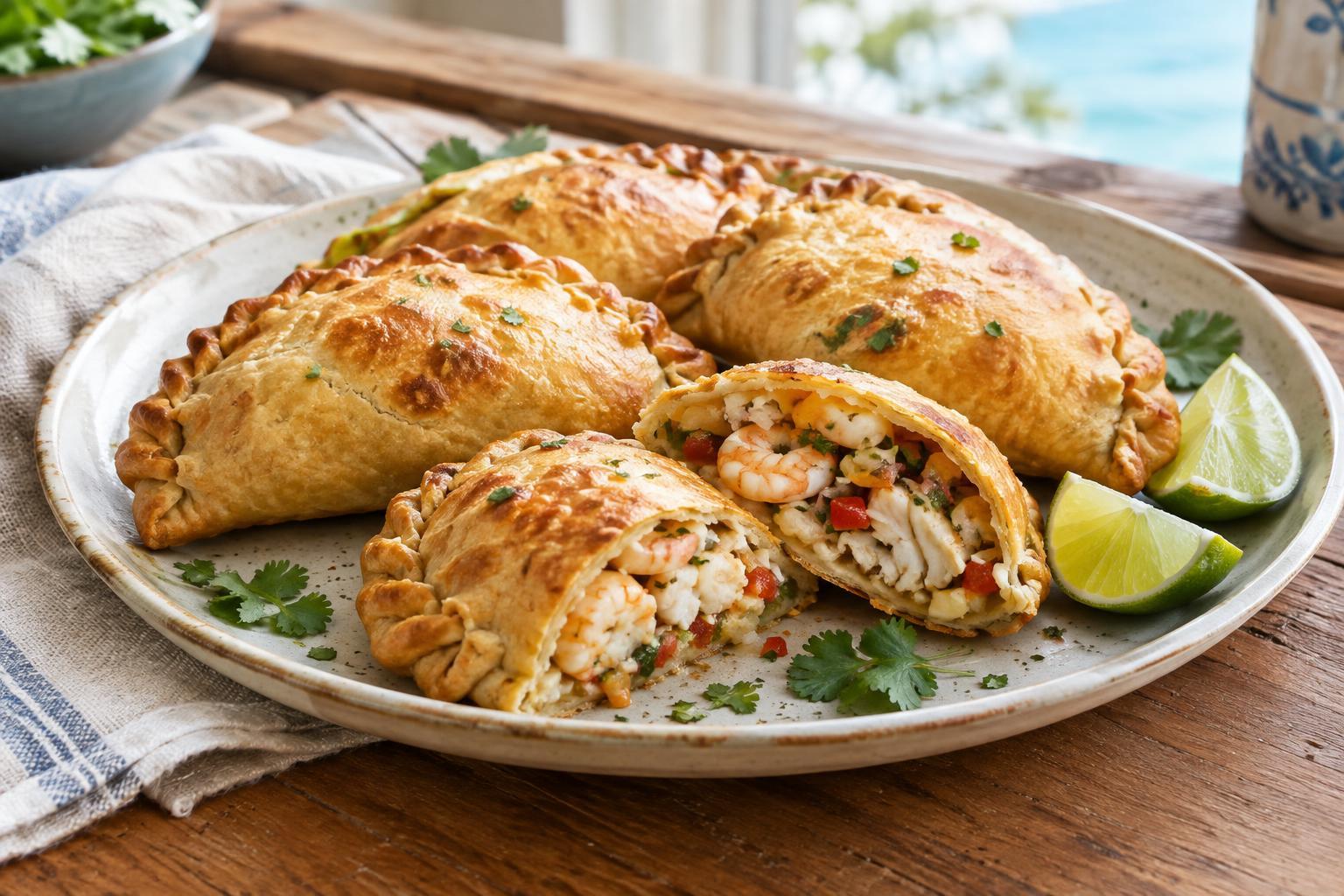
A seafood empanada goes through two stages: the filling is cooked, then the pastry is baked or fried. Choose seafood that can remain pleasant through both. Chopped shrimp offers a springy texture; firm white fish flakes into larger, softer pieces; and well-drained cooked crab makes a delicate filling. You can use one or combine two, but keep the pieces small enough to fit inside a sealed pastry without turning them into a paste.
For the most control, cook the seafood gently before filling the empanadas. Shrimp should turn opaque, and fish should be cooked through before it is folded into the vegetables. Stop cooking once the seafood is done rather than letting it simmer in sauce. The second heating will warm the filling, so a long first cook is the easiest way to end up with dry, rubbery bites.
Build flavor without building up liquid
Start with finely diced onion, bell pepper or mild chile cooked until softened and until their released moisture has mostly evaporated. Garlic, cumin, paprika, cilantro stems or a little tomato paste can add depth without much liquid. If you use fresh tomato, remove the watery seeds and cook the chopped flesh down first. Let the vegetable mixture cool slightly before folding in the seafood; this helps you avoid cooking the seafood longer than necessary.
Citrus belongs in the filling, but use it selectively. Lime zest brings aroma with no extra moisture, while a small squeeze of juice can brighten the mixture after cooking. Add juice a little at a time, tasting as you go. Citrus juice is a seasoning here, not a substitute for cooking seafood: citrus curing does not make raw seafood equivalent to cooked seafood.
The finished filling should hold together loosely on a spoon, with no puddle left in the pan. If it looks wet, drain off free liquid rather than relying on the dough to absorb it. A small amount of thick sauce can bind the ingredients; a generous spoonful of thin sauce is more likely to soften the pastry. Offer a bright salsa or extra lime at the table instead of packing all that moisture inside.
Cool the filling before it touches the dough
Warm filling makes pastry harder to handle and can soften it before it reaches the oven. Spread the cooked filling in a shallow dish so it cools quickly, then refrigerate it until cold if you are not assembling immediately. Keep seafood refrigerated rather than leaving the filling on the counter while you prepare a large batch of dough.
Handle raw seafood separately from ready-to-eat ingredients: use clean hands and utensils, and wash boards and surfaces that touched it. Keep the seafood cold until cooking, and promptly refrigerate any assembled empanadas that are waiting for the oven. If using previously cooked seafood, keep it chilled before adding it to the filling and heat the finished empanadas thoroughly.
Fill and seal for a crisp crust
Use dough rounds large enough to leave a clear border around the filling. Place a modest spoonful in the center of each round; overfilling makes the seam difficult to close and encourages leaks. Keep the edges free of filling and oil, lightly moisten them if your dough needs it, then press firmly and crimp with a fork or fold into a rope edge. A secure seal does more for crisp pastry than an extra-thick crust.
Arrange the empanadas with space between them on a baking sheet. An optional egg wash helps them brown, but avoid letting it pool along the bottoms. Bake according to the directions for your dough until the pastry is browned and crisp and the filling is hot throughout. If frying, maintain steady heat and work in small batches; oil that cools too much can leave the pastry greasy. Let the empanadas rest briefly on a rack before serving so steam can escape rather than collect underneath.
Make the next batch easier
If your first batch has a soft bottom, check the filling before changing the dough. Excess juice, vegetables that were not cooked down, and filling packed into the seams are common causes. If the pastry browns before the center heats, try smaller portions or a thinner layer of filling next time. Small adjustments make it easier to keep both textures in balance.
Serve seafood empanadas with a crisp cabbage salad, sliced avocado or a citrusy sauce on the side. Refrigerate leftovers promptly and reheat them until hot throughout; an oven or toaster oven is more likely than a microwave to restore some crust crispness. The goal is simple: a restrained, well-seasoned filling inside pastry that has room to bake.