A bright side with its own character
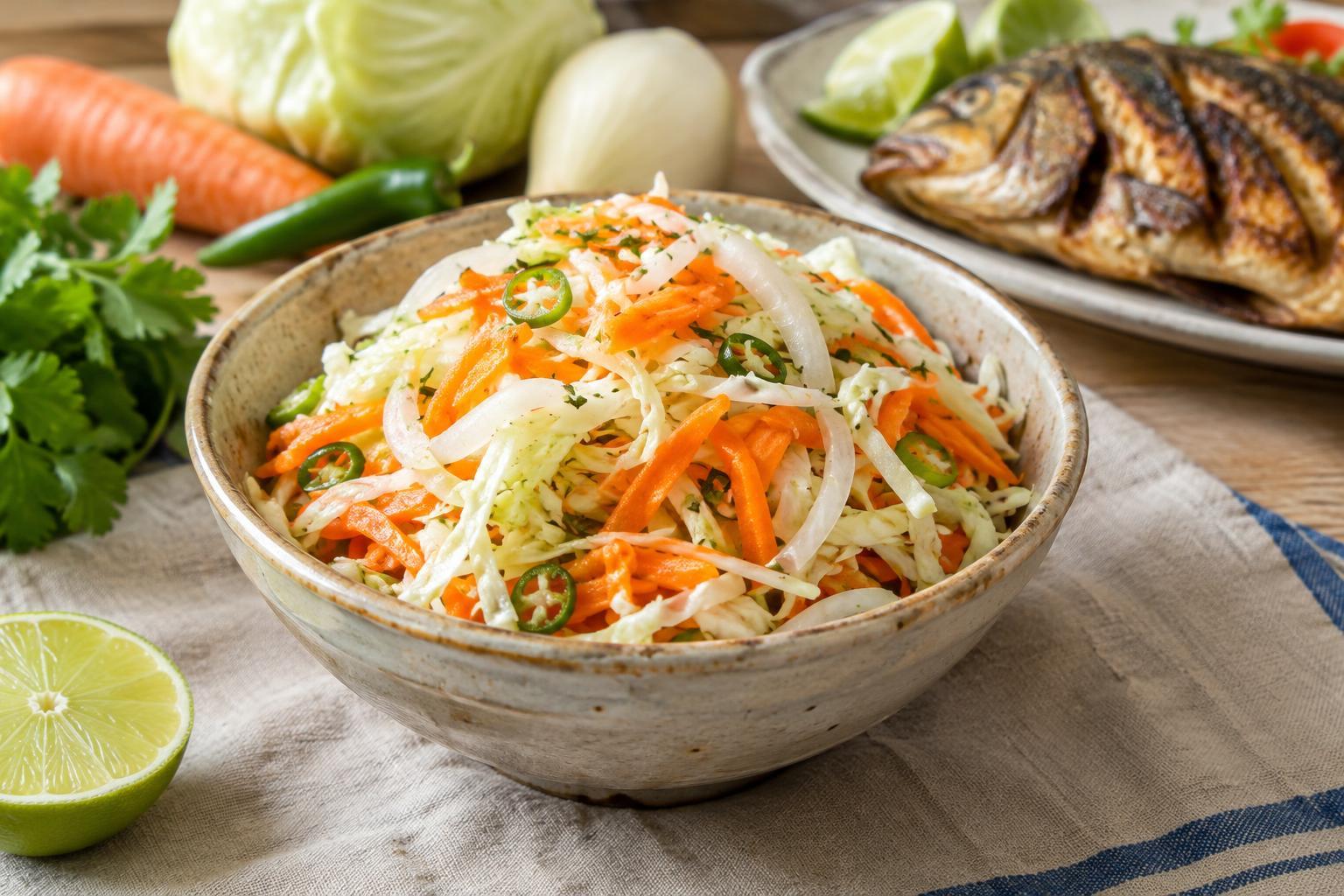
Curtido is a Salvadoran cabbage slaw best known as a companion to pupusas. Its mix of cabbage, carrot, onion and oregano offers crunch and tang without demanding much time at the stove. It is equally welcome beside a plate of grilled fish or shrimp: the vegetables add a fresh contrast to rich, smoky or spicy flavors.
Some versions of curtido develop their tang through fermentation; others use vinegar for a quicker result. This recipe takes the vinegar route and is kept refrigerated. It will not have quite the same depth as a fermented curtido, but it is easy to prepare ahead and adjust to suit a meal.
Choose and cut the vegetables
For a generous bowl, start with about half a medium green cabbage, two carrots and half a small onion. You will also need roughly half a cup of vinegar, one teaspoon of dried oregano, salt, and enough water to soften the vinegar’s sharpness. White vinegar gives a clean tang; apple cider vinegar lends a fruitier note. A sliced fresh chile is optional.
Slice the cabbage thinly so it bends easily but retains some bite. Grate or finely shred the carrots, and cut the onion into thin slivers. Try to keep the pieces similar in thickness: an occasional long strand is fine, but large chunks of cabbage will stay noticeably firmer than the rest. Put everything in a large bowl with room to toss.
Dress it, then give it time
Sprinkle the vegetables with about one teaspoon of salt and toss with clean hands or tongs. Let them stand for 10 to 15 minutes, then gently squeeze a handful. The cabbage should feel a little more flexible. If a large pool of liquid has collected, drain some away; there is no need to wring the vegetables dry.
Add the vinegar, oregano and optional chile. Toss thoroughly, then add a few tablespoons of water if the dressing tastes too sharp. The vegetables do not need to float in liquid, but the dressing should reach them all when tossed. Taste a strand of cabbage and adjust the salt or vinegar a little at a time. Transfer the curtido to a clean covered container and refrigerate for at least an hour. Several hours gives the flavors more time to settle while the cabbage stays pleasantly crisp.
Put curtido to work at a coastal table
Set a small mound of curtido beside grilled fish, spoon it into shrimp tacos, or serve it with rice and beans and a simply cooked fillet. Its acidity can lift a meal that includes fried plantains or other rich sides. For a fuller spread, offer lime wedges and a hot sauce separately so guests can choose their own level of sharpness and heat.
Drain a serving with a fork or slotted spoon before placing it on a tortilla or next to a crisp-skinned fish; too much dressing can make either soggy. If you are serving seafood ceviche as well, treat curtido as a separate side, not a safety step. Citrus juice can change the texture and appearance of raw seafood, but citrus curing does not make raw seafood equivalent to cooked seafood.
Keep the crunch and handle it carefully
Store this quick curtido covered in the refrigerator rather than leaving it out to ferment. Use clean utensils when taking a portion, and return the container to the refrigerator promptly. Its texture is usually liveliest in the first few days; discard it if you notice mold, an off odor or other signs of spoilage.
When preparing it alongside seafood, keep the salad ingredients and finished curtido away from raw fish or shrimp and their juices. Wash your hands, cutting board and utensils after handling raw seafood, and use a clean plate for cooked food. Those small habits let curtido remain what it should be: a cool, crunchy contrast ready to brighten the next bite.