What makes farofa crisp
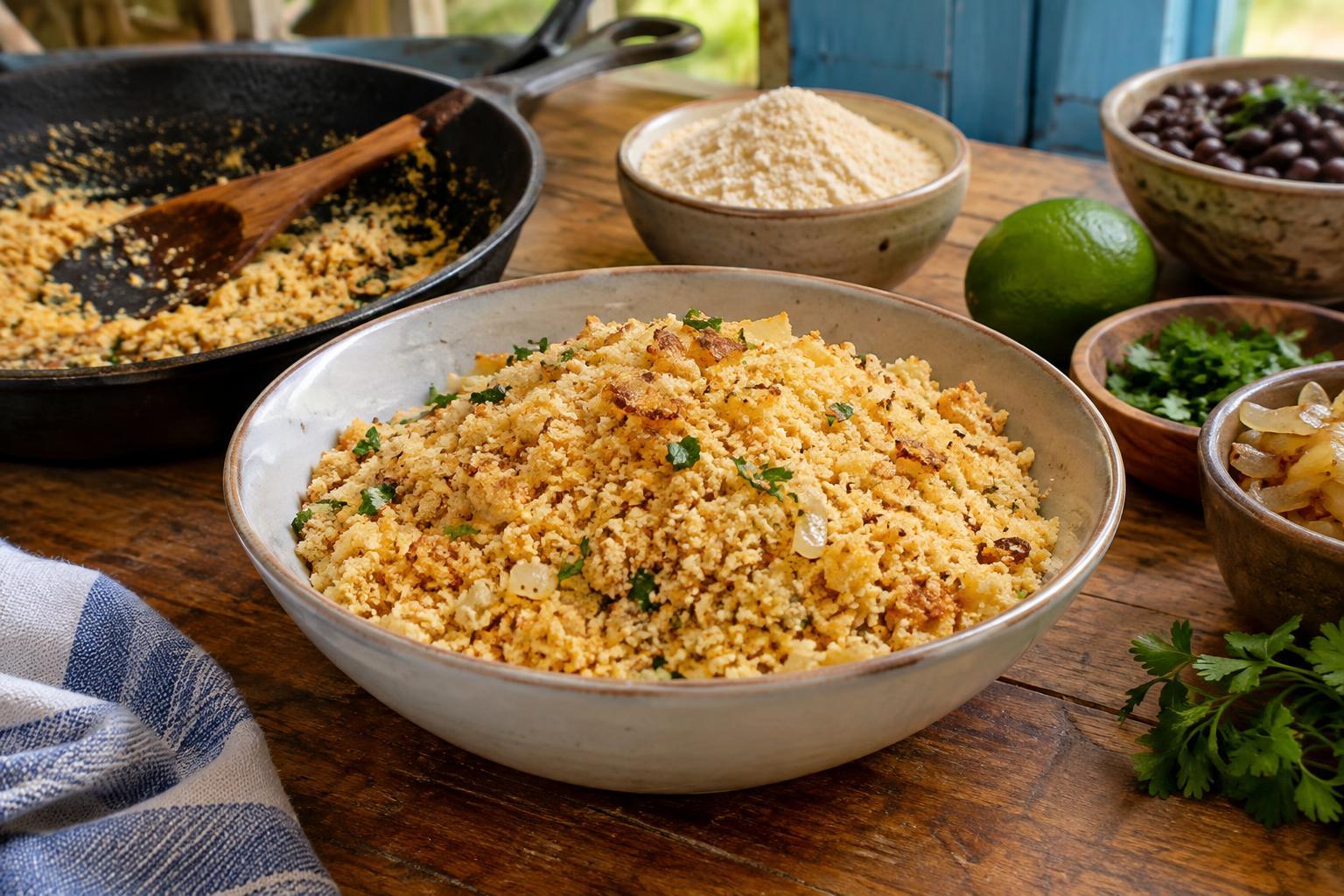
Farofa is a Brazilian side dish made by coating and toasting cassava flour, often called farinha de mandioca, with fat and seasonings. It is served as a loose, crumbly accompaniment rather than a soft mash. A spoonful adds contrast to juicy beans, roasted vegetables, grilled fish, or a plate with plenty of sauce. Its appeal is in the small crisp grains, so the goal is to toast them evenly without letting them turn dark or bitter.
Look for cassava flour sold for making farofa. It may be labeled raw or toasted, and its grind can range from fine to coarse. Coarser flour makes a more distinct, crunchy topping; finer flour gives a softer, sandier result and can color quickly in the pan. This is not the same ingredient as tapioca starch, which is much finer and behaves differently when heated. If your flour is already toasted, it still benefits from warming with seasonings, but it may need less time in the pan.
Set up the pan before you start
For a simple batch, use about one cup of cassava flour, two tablespoons of butter or oil, and a pinch of salt. A wide, heavy skillet gives the flour room to spread and helps reduce hot spots. Have a heatproof spoon or spatula ready before adding the flour: once it is in the pan, stirring matters more than precise timing.
If you want onion or garlic, cook them in the fat first over medium-low heat. Let onion soften and lose some moisture; add minced garlic near the end so it does not burn. Reduce the heat if either begins to brown faster than you intended. You can also keep the base plain and add herbs or other delicate ingredients after toasting. This makes it easier to judge the flour’s color and prevents small pieces of seasoning from scorching while you stir.
Toast gently and watch for small changes
Add the cassava flour to the warm fat and stir until the grains are evenly coated. Keep the heat at medium-low or low, depending on your stove and pan. Spread the flour across the skillet, then stir and scrape the bottom frequently, moving flour from the hotter center toward the edges. Break up any clumps as you go. A thin, moving layer toasts more evenly than a deep pile left undisturbed.
Watch the flour rather than relying on a timer. Untoasted flour should gradually look drier and take on a light golden color; already-toasted flour may change only slightly. Its aroma should become pleasantly nutty, not sharp or smoky. If one area darkens quickly, lift the pan off the heat and keep stirring while it cools a little. Turning down the burner alone may not stop a hot skillet from browning the flour. Taste a cooled pinch to check the texture and seasoning, then transfer the farofa to a bowl when it is ready. Leaving it in the pan can continue the toasting.
Add flavor without losing the crunch
Once the flour is off the heat, adjust the salt and fold in ingredients that suit the meal. Chopped parsley or cilantro adds freshness; lime zest brings citrus aroma without wetting the grains. Crisp cooked bacon, sautéed mushrooms, or toasted nuts can add richness and texture. Add moist ingredients, such as diced tomato or a squeeze of lime, just before serving, or offer them alongside so the farofa stays loose and crisp.
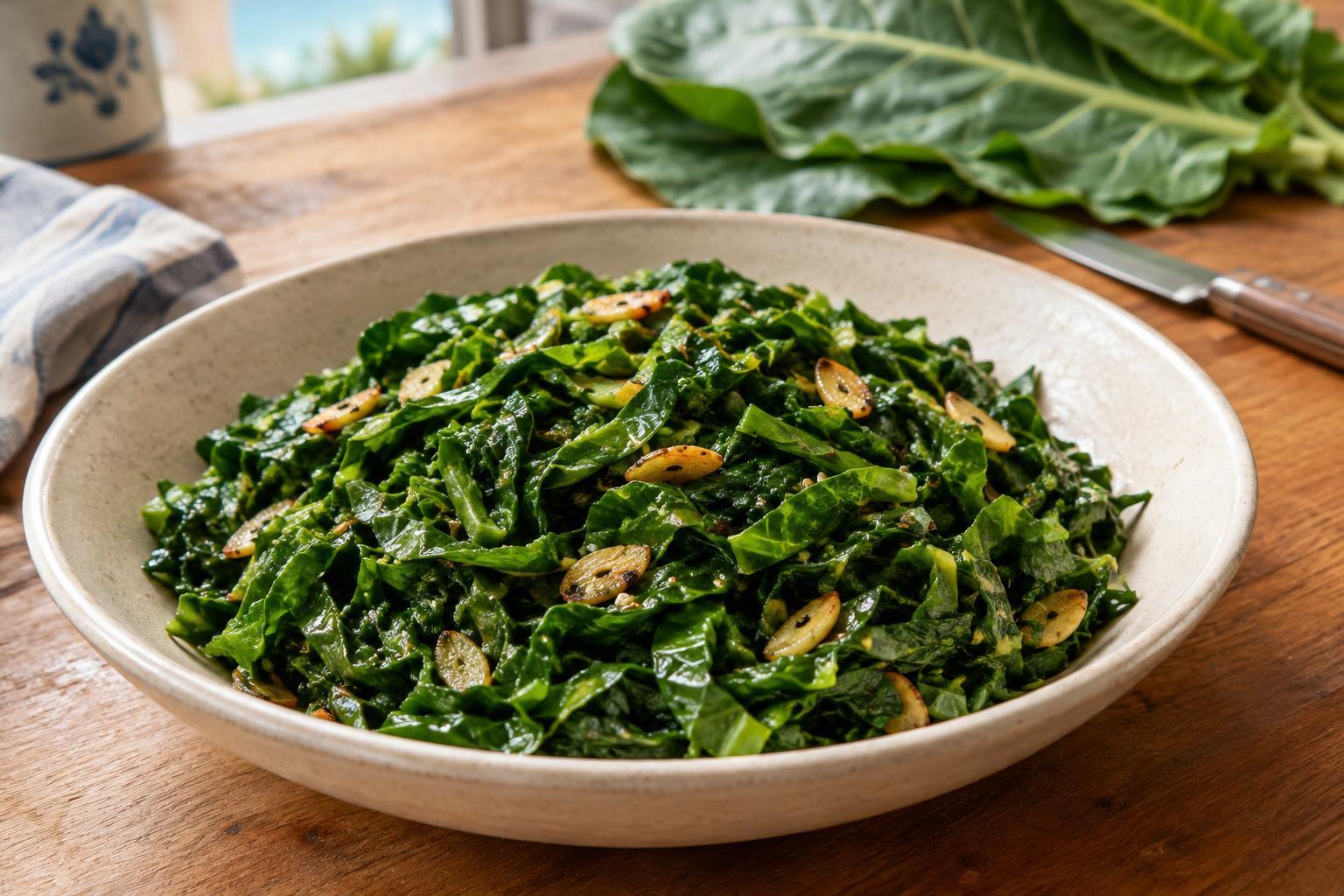
Serve farofa in a bowl and let everyone spoon on what they like. With grilled seafood, it can catch a little of the cooking juices while leaving some grains crunchy. It also works beside black beans or sautéed greens. If seafood is part of the meal, handle and cook it appropriately; citrus juice changes its texture and appearance but does not make raw seafood equivalent to cooked seafood.
Troubleshooting and storing leftovers
If the flour tastes dusty, it may need more time over gentle heat or a little more fat to coat it evenly. If it turns greasy or forms heavy clumps, stir in a small amount of additional flour and warm it through. Black flecks or a bitter smell signal scorching; lowering the heat will not restore a burnt batch, so it is better to start again with a clean skillet.
Let leftover farofa cool, then store it covered in the refrigerator, especially if it contains onion, bacon, or other cooked additions. To bring back some crunch, spread it in a dry skillet over low heat and stir until warmed through. Keep the heat gentle during reheating, too: the grains have already been toasted once and can darken quickly.