A savory side with coastal character
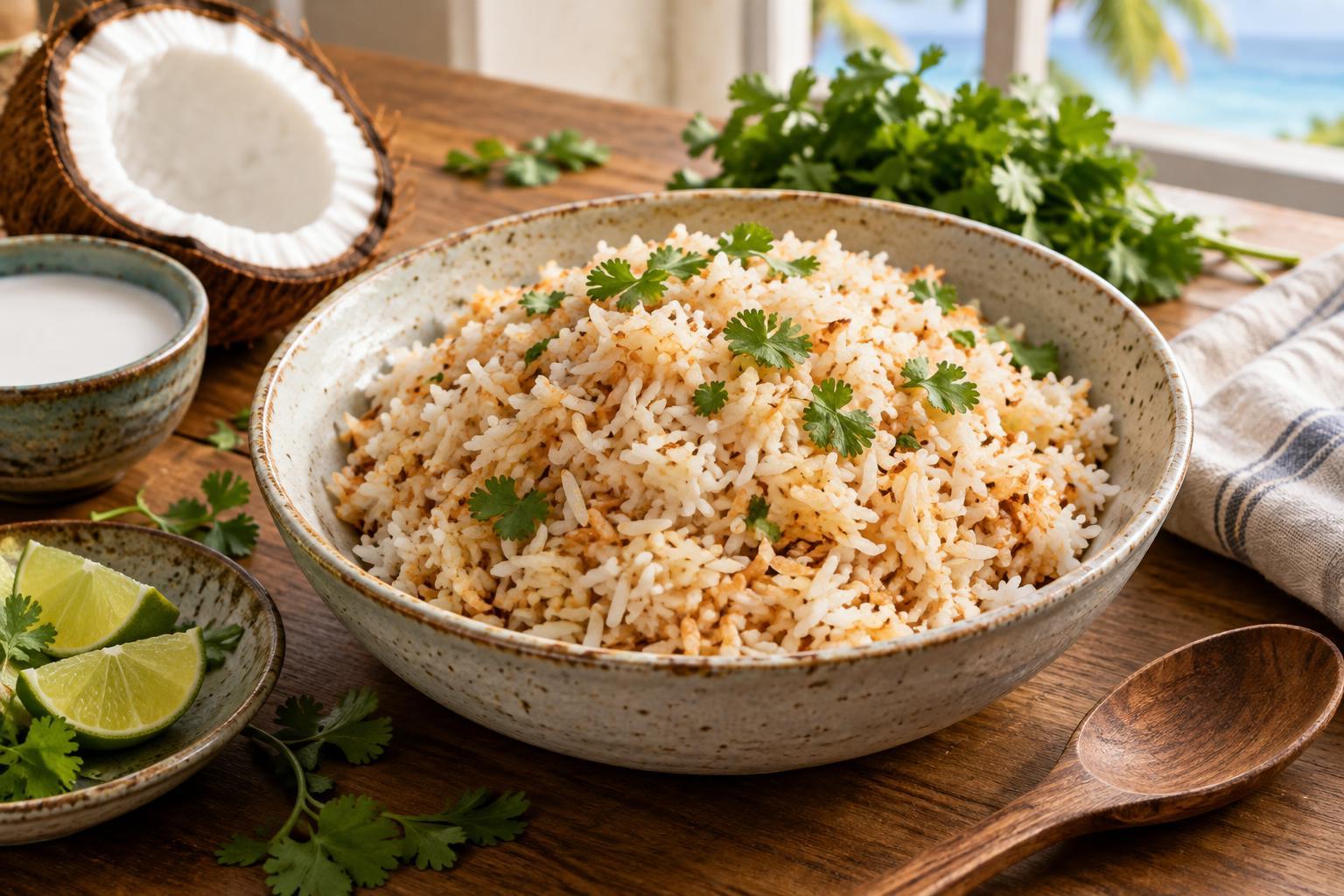
Arroz con coco is a natural companion to the seafood, beans, and vegetable dishes of Colombia’s Caribbean coast. Versions vary from kitchen to kitchen: some are sweet, while others let the coconut taste rich and gently savory. In some preparations, coconut milk is cooked down until its fat separates and the remaining solids brown. Those toasted bits, often called titoté, give the rice a deeper color and flavor. This version keeps the coconut milk pale for a straightforward weeknight side and focuses on distinct, fluffy grains.
The key is to treat coconut milk as part of the cooking liquid, not as an extra ingredient poured on top of the usual amount of water. Too much total liquid can leave the rice soft or sticky. Gentle heat and a covered rest matter just as much as the measurement: they allow moisture to spread through the pot without repeated stirring.
Choose the rice and measure the liquid
For about three to four side servings, use 1 cup of uncooked long-grain white rice, 1 cup of unsweetened full-fat coconut milk, 3/4 cup of water, and 1/2 teaspoon of salt. Coconut milk from a can or carton intended for cooking works best; a thin coconut beverage sold for drinking will give a different result. Stir the coconut milk before measuring if the cream has risen to the top. For a subtle aromatic note, add a small piece of scallion or a crushed garlic clove, then remove it before serving.
Check the rice package before starting. This liquid amount suits many ordinary long-grain white rices, but brands, grain types, and pots differ. If your usual rice consistently needs more water, add a tablespoon or two; if it tends to cook soft, begin with the stated amount. Brown rice and parboiled rice need different timing and may need different amounts of liquid, so they are not direct substitutions in this method.
Rinsing the rice in a fine-mesh sieve until the water runs less cloudy removes some loose surface starch. Drain it well so the water clinging to the grains does not quietly change your measurements. Rinsing will not turn a naturally clingy rice into a long-grain rice, but it can help this version finish with cleaner separation.
Cook gently, then leave the lid on
Put the drained rice, coconut milk, water, and salt in a small, heavy-bottomed saucepan. Stir once to distribute the salt and break up any thick pockets of coconut cream. Bring the mixture to a gentle boil over medium heat, watching closely: coconut milk can foam and rise quickly. Stir once more, cover with a snug lid, and immediately turn the heat to low.
Cook for about 15 to 18 minutes, until the visible liquid has been absorbed and the rice is tender. Resist lifting the lid repeatedly or stirring as it cooks. Stirring releases starch, while frequent checks let out the steam the grains need. If the pot smells toasted before the rice is tender, lower the heat and add a tablespoon or two of hot water around the edge. If the grains are tender but the surface looks wet, give the covered pot another minute or two over low heat.
Turn off the heat and leave the pot covered for 10 minutes. This pause helps the moisture settle and makes the rice easier to fluff without crushing it. Remove any aromatics, then lift and separate the grains with a fork. Taste before adding more salt; the rice should be pleasant on its own without overpowering what you serve alongside it.
Serve it well and handle leftovers carefully
Serve savory coconut rice with cooked fish, sautéed shrimp, beans, or a crisp tomato and cucumber salad. A squeeze of lime at the table adds brightness without making the rice taste sour. If you want the darker, toastier character found in some Colombian preparations, explore a titoté method as a separate variation: simmering coconut milk until its solids brown changes how much liquid remains, so simply applying that step to the measurements above may leave the rice undercooked.
Spread leftover rice into a shallow container so it cools promptly, then refrigerate it within two hours of cooking. Reheat only the portion you plan to eat until it is steaming hot throughout. If serving the rice with seafood, cook the seafood appropriately and keep it chilled before cooking; citrus juice can change the texture of raw seafood, but citrus curing does not make it equivalent to cooked seafood.