Build the dish around contrasting textures
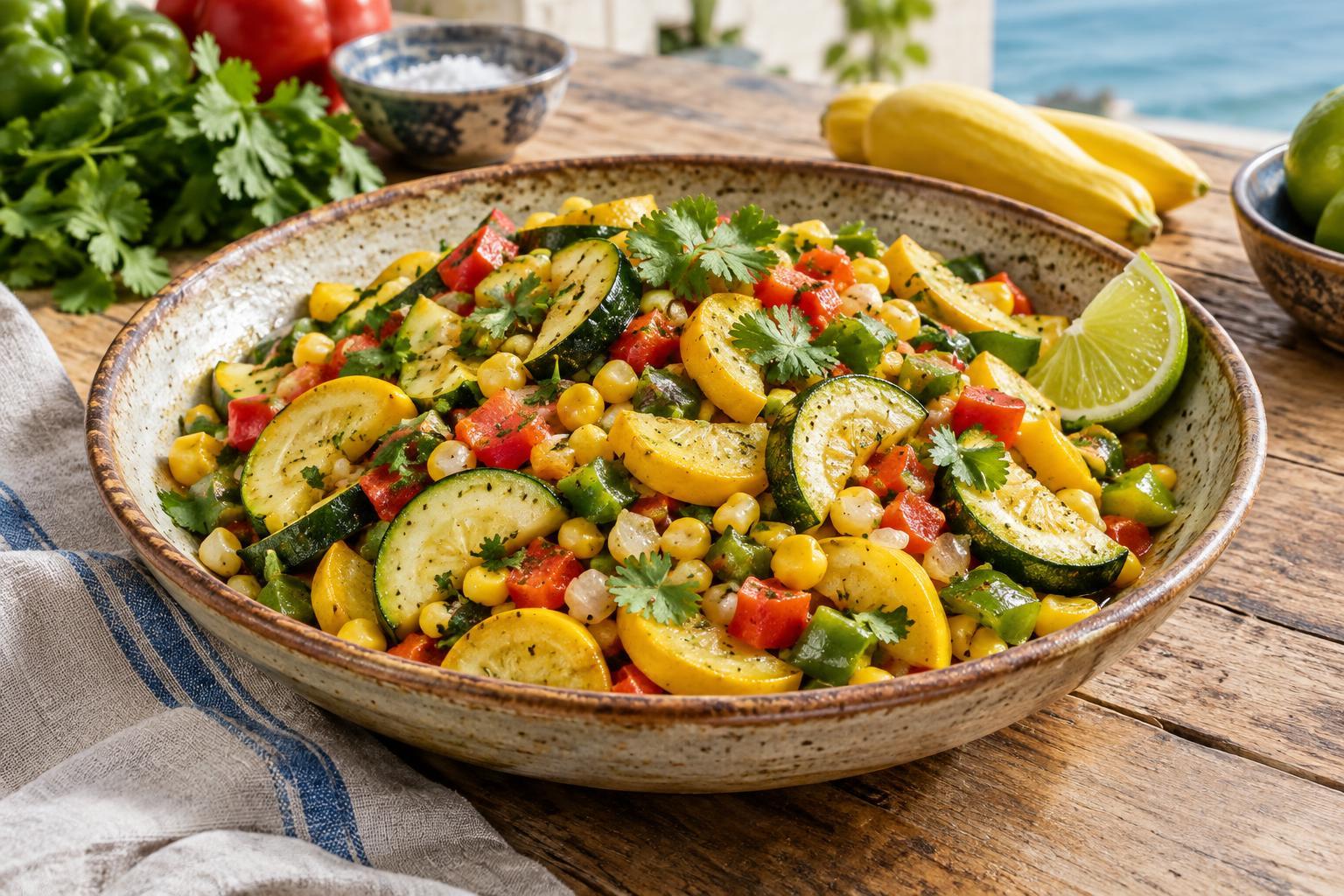
Calabacitas is a flexible Mexican vegetable dish built around squash, often with corn, peppers, onion and tomato. Some versions are brothy, while others are cooked until nearly dry; cheese or cream may be added at the end. For a side dish in which each vegetable remains distinct, aim for tender zucchini, juicy corn and peppers with a slight bite. The key is not a complicated sauce but a sensible cooking order.
For about four side servings, start with two medium zucchini, one bell pepper or a couple of mild green chiles, a small onion and about one and a half cups of corn kernels. A chopped tomato, garlic, fresh chile, cilantro or a little cheese can round out the skillet, but none is required. Use a wide pan if you have one: more surface area helps moisture evaporate instead of trapping it around the squash.
Cut and prepare the vegetables with cooking time in mind
Cut the zucchini into roughly three-quarter-inch pieces. Small dice soften quickly and can disappear into the dish; larger pieces give you more room to cook the corn and peppers without overdoing the squash. If the zucchini is especially large, scoop out any very seedy, spongy center before cutting. There is no need to peel it.
Dice the onion and pepper a little smaller than the zucchini so they can soften first. If using fresh corn, slice the kernels off the cob before heating the pan. Thaw frozen corn if it is clumped together and drain away excess water; drain canned corn well. Patting wet kernels dry can also help prevent a steamy skillet. Keep tomato separate until the final minutes, since it releases liquid as it cooks.
Cook in stages, then stop before the zucchini collapses
Heat a tablespoon or two of oil in a wide skillet over medium-high heat. Add the onion and peppers with a pinch of salt, stirring until the onion begins to soften and the peppers lose their raw edge, about four to six minutes. Add garlic, if using, for the last half-minute so it becomes fragrant without scorching. A fresh hot chile can go in with the peppers; use an amount that suits your table.
Add the corn and spread it across the pan. Let it sit briefly between stirs so some kernels develop a little color. Fresh corn may need a few minutes to turn tender; thawed frozen or canned corn mainly needs to heat through and shed moisture. Then add the zucchini and another small pinch of salt. Toss it with the other vegetables and cook for roughly four to six minutes, stirring occasionally. The pieces should yield to a fork but still hold their shape.
If the pan looks dry before the zucchini is tender, add a spoonful or two of water and let it evaporate. If liquid collects instead, raise the heat slightly and leave the pan uncovered. Add chopped tomato only near the end and cook just until warmed and lightly softened. Taste before adding more salt, especially if you plan to finish with a salty cheese.
Finish for freshness, not extra cooking
Turn off the heat while the zucchini still has a little resistance; it will soften further in the hot skillet. A squeeze of lime can brighten the sweet corn and mild squash, though it is best added just before serving rather than simmered into the vegetables. Scatter on cilantro if you like it. For a richer finish, fold in a modest handful of crumbled cheese or a spoonful of cream after removing the pan from the heat.
Serve calabacitas alongside beans, rice, tortillas or grilled fish. If it accompanies seafood, keep raw seafood and its utensils separate from ready-to-eat vegetables, and cook seafood appropriately; a citrus marinade does not make raw seafood equivalent to cooked seafood. The vegetable skillet also makes a useful filling for warm tortillas, especially when topped with a little cheese or sliced avocado.
Adjust the pan if things turn watery
A crowded pan is the usual reason calabacitas becomes soft and wet. Cook a larger batch in two rounds, or use a bigger skillet. Salt in small stages rather than heavily salting the zucchini in advance, which can draw out water before it reaches the pan. If the vegetables are already tender but liquid remains, transfer them to a serving bowl and reduce the liquid briefly on its own, then spoon over only as much as you want.
Leftovers will be softer than the freshly cooked dish, but they can still be good. Refrigerate them promptly in a covered container and reheat until hot, using a skillet to let extra moisture escape. For the clearest contrast between squash, corn and peppers, though, serve calabacitas soon after cooking.