A simple side built on a fine cut
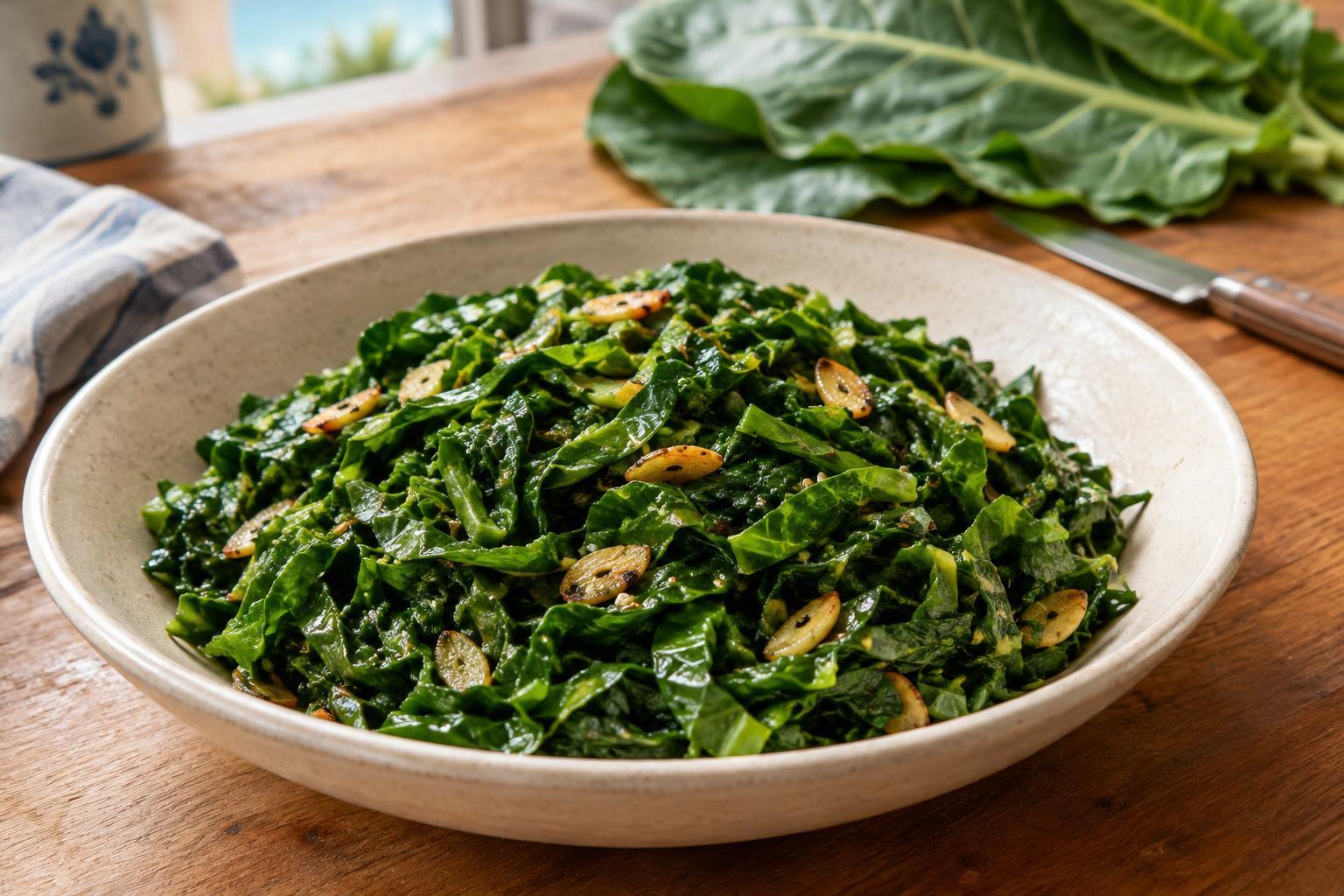
Couve refogada is a Brazilian preparation of sautéed greens that often appears alongside beans, rice and other hearty dishes. Its appeal lies in the contrast between the greens’ delicate ribbons and their robust, pleasantly earthy flavor. You need little more than collards, garlic, oil and salt, but the way you cut the leaves makes a noticeable difference.
Thin ribbons cook quickly and are easy to pick up with a fork. They also give the garlic room to coat the greens rather than collecting in a few large pieces of leaf. This version uses collards, which hold their shape well in the pan. The goal is not to cook them until they collapse, but to soften their raw toughness while leaving a little bite.
Wash, dry and slice the collards
For about four side servings, start with one large bunch of collard greens, roughly 10 to 12 ounces before trimming. You will also need two or three garlic cloves, one to two tablespoons of olive oil or another cooking oil, and salt. A small squeeze of lime at the table is optional.
Separate the leaves and rinse them thoroughly, paying attention to any grit along the stems and folds. Dry them well with a clean towel or salad spinner. Excess water can make the greens steam instead of sauté, and droplets may sputter when they hit hot oil. Use a clean cutting board and knife, especially if you are preparing seafood or meat for the same meal; keep raw animal foods and their juices away from produce.
Fold each leaf lengthwise and cut away the thick central stem. The tenderer upper portion of a stem can be sliced finely and cooked, but the thick base is often too fibrous for a quick sauté. Stack a few trimmed leaves, roll them tightly from one long side into a cylinder, then cut across the roll into narrow ribbons. Aim for slices about one-eighth to one-quarter inch wide. Work in small stacks so the knife stays steady and the ribbons remain fairly even.
Sauté the garlic and greens
Slice or finely chop the garlic. Heat a wide skillet over medium heat, add the oil, then add the garlic. Stir for about 30 seconds, just until fragrant. Do not wait for it to turn dark brown: garlic can become bitter before the collards have a chance to cook. If it begins to color too quickly, lower the heat or briefly move the pan off the burner.
Add the collard ribbons in handfuls, tossing each addition with the garlic oil. The pan may look crowded at first, but the leaves will settle as they soften. Sprinkle with salt and keep turning the greens so they cook evenly. In a wide pan, finely cut collards may be ready in roughly four to seven minutes. Taste a ribbon rather than relying only on the clock: it should be tender enough to chew comfortably, with a little texture left.
If the pan becomes dry before the greens are tender, add a tablespoon or two of water and toss until it evaporates. If the greens release more liquid than you want, raise the heat briefly and keep them moving. Serve promptly, with an optional squeeze of lime. Add citrus after cooking so its brightness stays distinct from the mellow garlic.
How to serve and adjust the dish
Couve refogada fits easily beside rice and beans, roasted vegetables or grilled foods. Its savory edge is particularly welcome next to sweet or starchy sides, such as plantains or squash. For a coastal-inspired plate, pair it with properly cooked fish or shrimp and offer lime wedges separately so everyone can season to taste.
You can adjust the texture without changing the basic method. For softer greens, slice them a little wider and cook them longer with a splash of water. For a lighter, quicker side, cut very fine ribbons and stop cooking as soon as they lose their raw firmness. Add garlic cautiously if using a small bunch: it should support the greens, not overpower them.
If serving the collards with seafood, handle that part of the meal separately and follow appropriate cooking and storage practices. Citrus juice can change the appearance and texture of raw seafood, but citrus curing does not make it equivalent to cooked seafood. The lime in this dish is a finishing flavor, not a food-safety step.