What makes salsa macha different
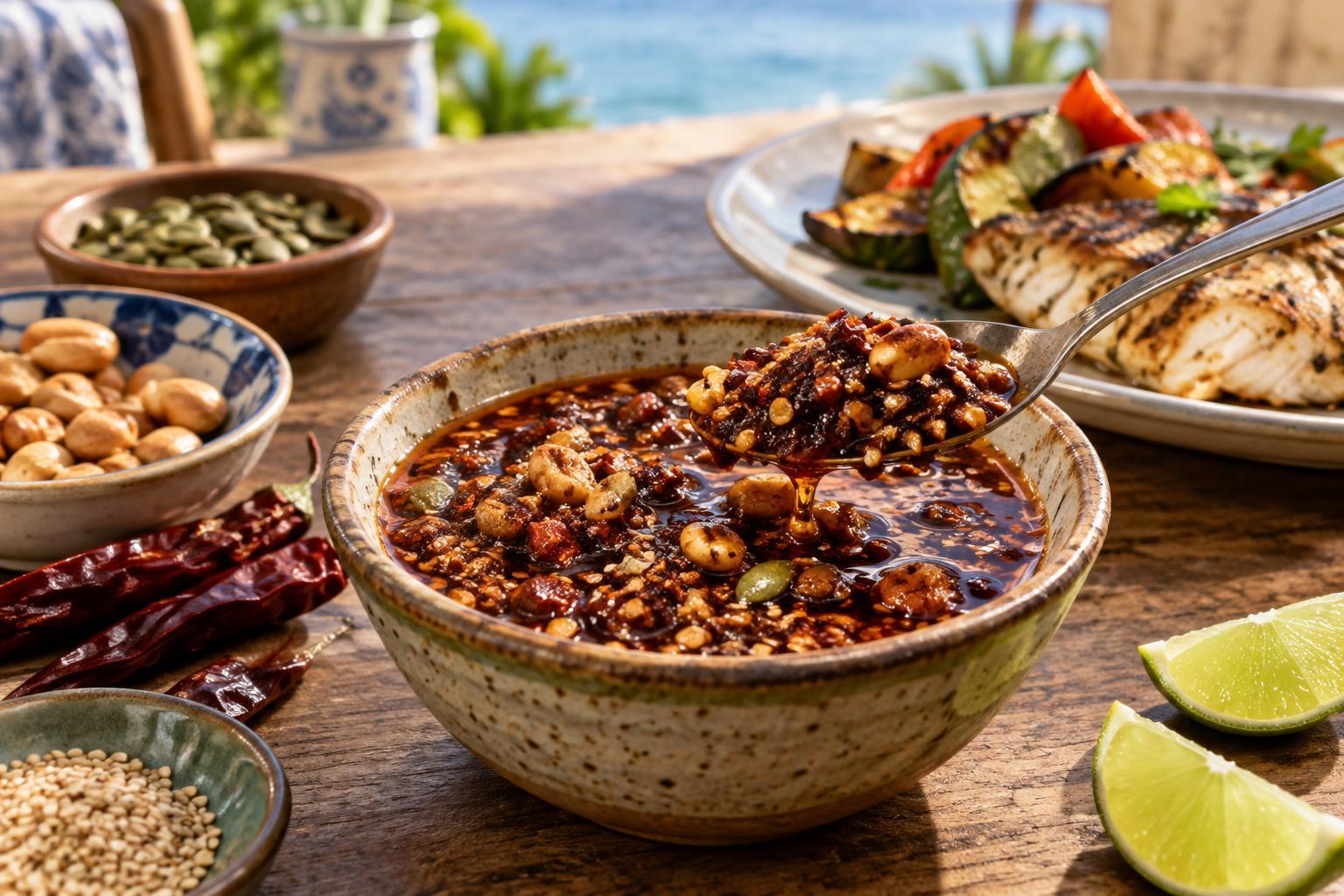
Salsa macha is an oil-based chile condiment with a texture that can range from finely chopped to noticeably crunchy. Unlike a smooth table salsa, it is meant to be stirred and spooned: the flavorful oil coats food while bits of chile, nut and seed add texture. Recipes vary, so there is room to choose the chiles and crunch you enjoy.
For a small batch, gather about four dried guajillo chiles, one or two dried chiles de árbol, one-third cup unsalted peanuts, two tablespoons sesame seeds and three-quarters of a cup of neutral oil. Have salt and a little vinegar ready for seasoning. The guajillos provide mild, fruity depth; the chiles de árbol bring sharper heat. Use fewer of the latter for a gentler condiment.
Toast each ingredient at its own pace
Remove the chile stems and shake out most of the seeds, then wipe the chiles with a dry cloth if needed. Set a dry skillet over medium-low heat. Press each chile briefly against the pan, turning until it smells fragrant and becomes a little more flexible. This may take only seconds per side. Move the chiles to a plate before they darken substantially; burnt chile can make the whole batch bitter.
Toast the peanuts in the same skillet, stirring often until they smell nutty and show a little color. Transfer them to the plate, then toast the sesame seeds separately. The seeds can change color quickly, so keep the pan moving and remove them as soon as they turn lightly golden. Toasting separately gives you a chance to stop each ingredient at the right moment rather than waiting for a mixed handful to finish together.
Let everything cool enough to handle, then tear the chiles into small pieces. For a rougher salsa, leave some peanut pieces whole. For a more even spoonful, chop the nuts before combining them with the chiles and seeds. Either approach works; the goal is texture, not a perfectly smooth purée.
Add oil and build a spoonable texture
Warm the oil gently in a small saucepan over low heat, then take it off the heat. It should not smoke. Add the toasted ingredients to the oil carefully, as any trapped moisture could cause splattering. Let the mixture cool completely before transferring it to a food processor or blender; do not blend hot oil. Pulse in short bursts until the solids are chopped but still distinct. You can also chop them by hand and stir them into the oil.
Season with salt, then add a small splash of vinegar if you want a brighter finish. Taste after stirring well, because the chile pieces and oil can separate as the salsa sits. If it seems too thick to spoon, stir in a little more oil. If it seems too oily, add more toasted nuts or seeds. These adjustments are easier to make gradually than to undo.
Serve thoughtfully and store with care
Spoon salsa macha over grilled vegetables, roasted sweet potatoes, beans or rice. A little can also finish cooked shrimp or flaky cooked fish, where the chile oil adds richness and the toasted bits provide contrast. For a coastal-inspired spread, put it on the table alongside lime wedges so guests can add heat and acidity to taste. Stir before each use to distribute the crunchy ingredients.
Make a batch you can use promptly rather than treating homemade chile oil as shelf-stable. Transfer it with clean utensils to a clean, covered container, refrigerate it promptly and use it within a few days. Do not leave it out for extended periods or add fresh garlic and assume the oil will keep at room temperature. The oil may thicken in the refrigerator; let the portion you plan to serve soften briefly while you prepare the meal, then return the rest to the refrigerator.