Build the salsa around the tomatoes
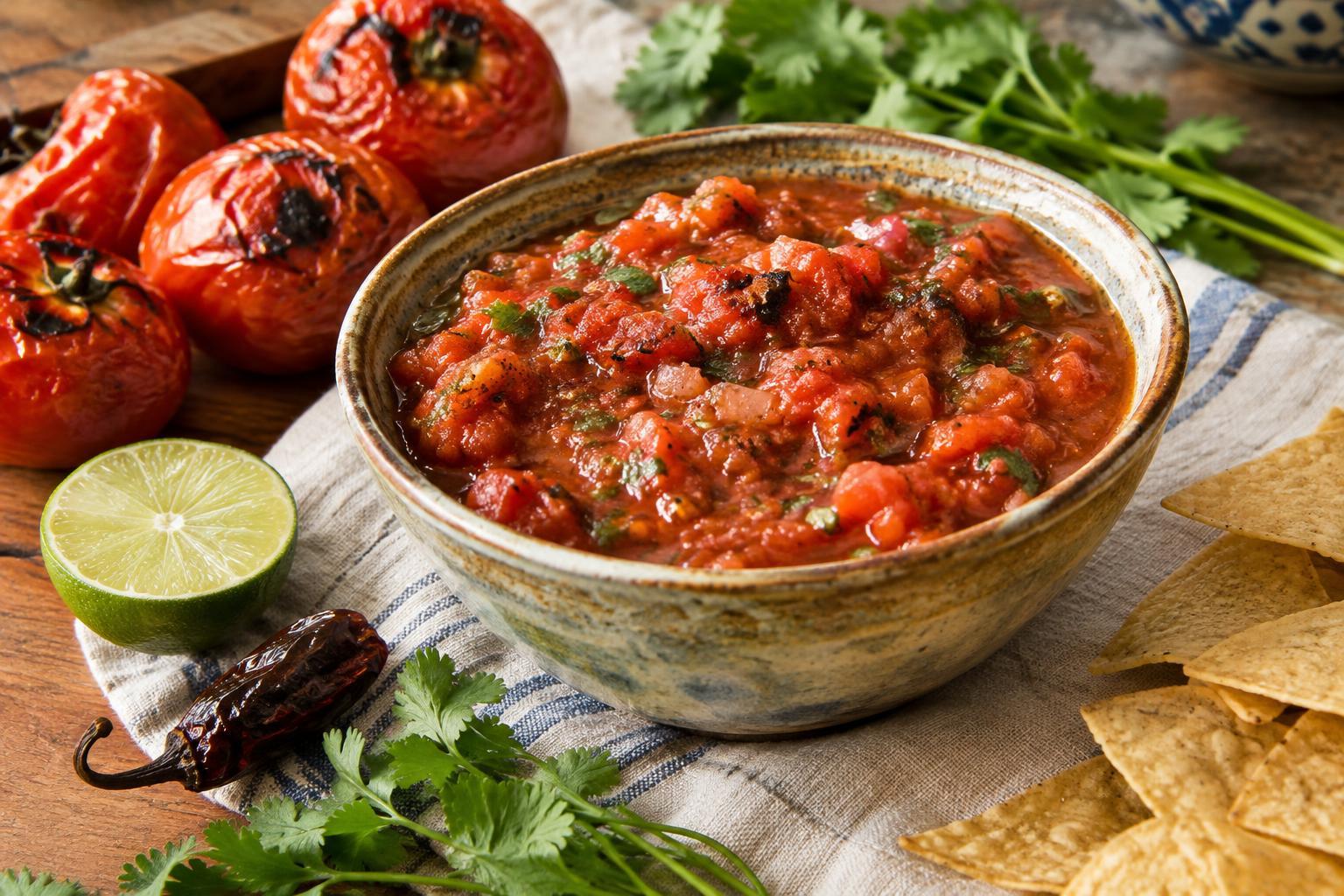
A good roasted tomato-chipotle salsa tastes like tomatoes first. Roasting concentrates their flavor and adds browned edges; chipotle contributes smoke and heat in the background. Because canned chipotles in adobo vary in size and intensity, it is easier to add more than to rescue a batch that starts too smoky.
For a medium bowl of salsa, gather about 1½ pounds of ripe tomatoes, half a small white onion, two unpeeled garlic cloves, one chipotle pepper in adobo, one lime, salt and a small handful of cilantro if you like it. Keep the chipotle and any extra adobo sauce separate at first. You may use only part of the pepper, especially if you want a mild salsa. Roma tomatoes make a thicker result, while juicier varieties may need a little draining.
Roast for depth, not bitterness
Heat a broiler and set a rack far enough below it that the vegetables can brown without scorching immediately. Halve the tomatoes, place them cut side up on a lined baking sheet, and add the onion and garlic. Broil until the tomatoes soften and develop dark spots, turning the onion if needed. Check often: browned patches bring depth, but an entire sheet of blackened tomato skins can make the salsa bitter. If the garlic finishes first, take it off the tray.
Let the vegetables cool enough to handle, then slip the garlic from its skins. Save the juices on the baking sheet; they carry tomato flavor. If the tomatoes released a great deal of liquid, set some aside before blending. You can stir it back in later until the salsa reaches the consistency you want.
Add chipotle in small steps
Start by blending the roasted tomatoes, onion and garlic with a small piece of chipotle, roughly one-quarter of a pepper. Pulse rather than running the blender continuously if you prefer a salsa with texture. Taste, then add another small piece if the tomato flavor still leads. A little adobo sauce can add tang and seasoning, but it also deepens the smoky flavor, so treat it as another adjustment rather than a required ingredient.
Heat and smoke do not rise in exactly the same way. A salsa can taste pleasantly smoky at first and noticeably hotter a few bites later. After each addition, give it a brief pause and taste again. If you overshoot, blending in another roasted tomato is more effective than adding a large amount of lime or sugar, either of which can change the salsa’s character.
Finish with acid, salt and texture
Add a pinch of salt and a squeeze of lime, then taste again. The lime should brighten the roasted tomatoes, not turn the salsa sour. Add more in small amounts, especially if the tomatoes are already tart. Stir in chopped cilantro at the end if using; blending it into the salsa will give a different, greener flavor.
For a spoonable dip, leave the salsa thick and lightly chunky. For a sauce to drizzle over grilled vegetables, tacos or cooked fish, blend it smoother and loosen it with a little reserved tomato juice. Let it sit for 10 to 15 minutes before serving so the flavors can settle, then make a final salt adjustment. Serve it alongside cooked seafood rather than treating the lime in the salsa as a way to make raw seafood safe: citrus curing does not make raw seafood equivalent to cooked seafood.
Store leftovers with care
Transfer leftover salsa to a clean, covered container and refrigerate it promptly. Use a clean spoon each time you serve it, and avoid leaving the bowl out through a long gathering. For the best flavor and texture, plan to enjoy it within a few days; discard it if it develops an off smell, visible mold or other signs of spoilage.
The same measured approach works the next time you make it. Roast the tomatoes until they taste rich, begin with less chipotle than you think you need, and adjust only after tasting. That keeps the salsa flexible enough to suit different tomatoes, meals and appetites for heat.