Start with the tomatillo
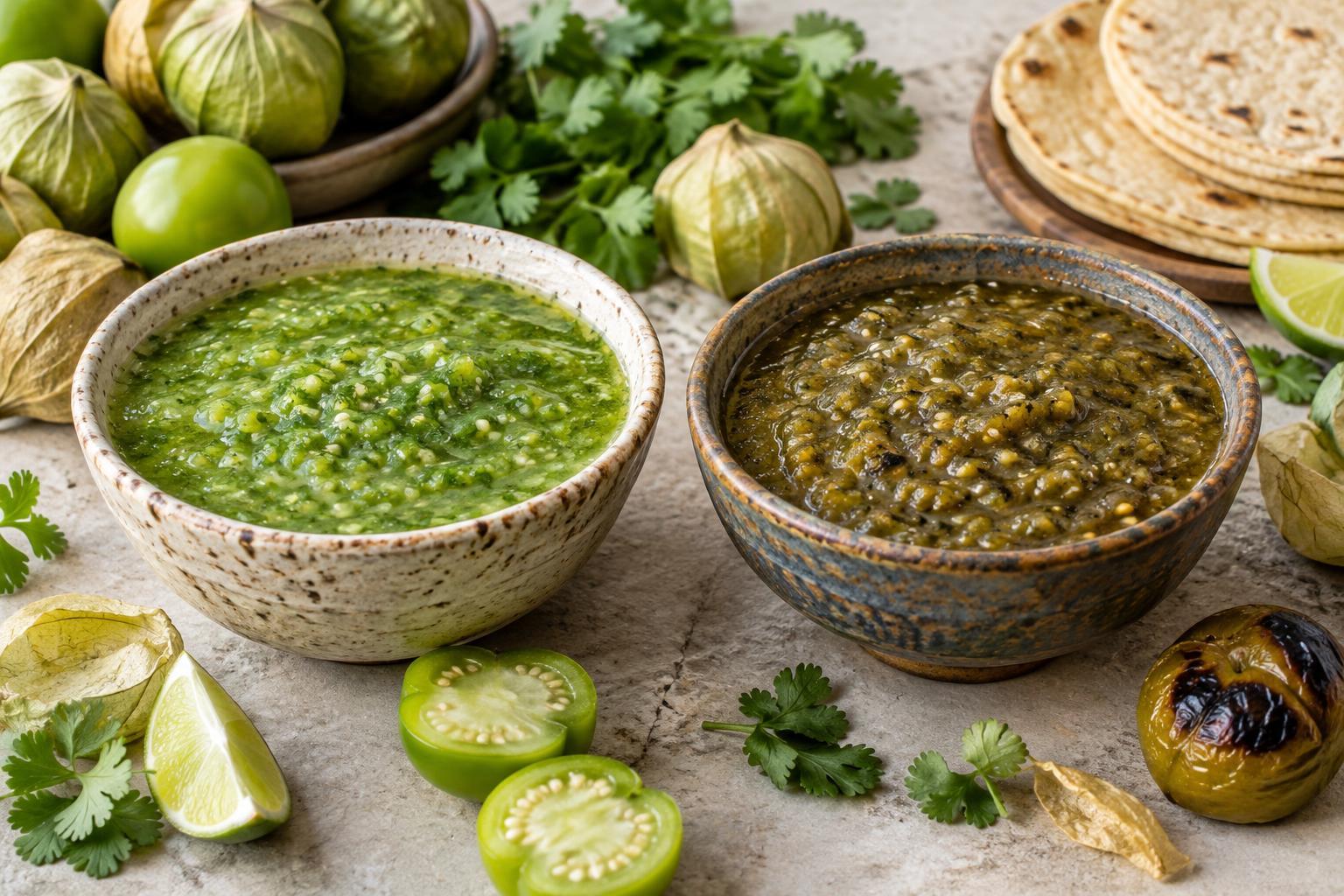
A tomatillo looks like a small green tomato wrapped in a papery husk, but it has its own tart, fruity character. That tartness makes it a useful base for salsa: it can cut through rich fillings, wake up beans and vegetables, or add contrast to grilled food. Raw and roasted versions begin with the same ingredient, yet they land very differently on the plate.
For either method, remove the husks and rinse away the sticky coating. Choose firm tomatillos without obvious soft spots. Their size and ripeness vary, so treat any recipe as a starting point and taste before adding more lime or salt. Tomatillos already bring plenty of tang; extra citrus is a choice, not an automatic requirement.
Raw salsa: bright, sharp and loose
Blending raw tomatillos gives salsa a fresh, assertive edge. Its tartness often feels more immediate because the fruit has not been softened by heat or balanced by browned flavors. Cilantro, onion and fresh chile remain crisp-tasting too. The result suits foods that need a lively finish, such as grilled fish, shrimp tacos, roasted corn or a bowl of beans.
Raw tomatillos contain a lot of water, and blending releases it. Expect a pourable salsa rather than a thick dip, especially if you blend for a long time. For more texture, pulse the ingredients instead of puréeing them smooth. If the salsa seems too thin, let it settle briefly and spoon off a little liquid, or fold in finely diced onion after blending. Add salt gradually: it brings the flavors together without requiring more lime.
For a simple batch, blend husked, rinsed tomatillos with a small piece of onion, chile to taste, cilantro and a pinch of salt. Start with little or no added water. Taste it with the food you plan to serve, not just from a spoon; a salsa that seems quite sharp alone may be just right over a rich taco.
Roasted salsa: mellow, savory and fuller-bodied
Roasting changes the balance without necessarily removing the tomatillo’s acidity. Heat softens the fruit, concentrates some flavors as moisture escapes, and adds browned or lightly charred notes. Those savory flavors can make the same tomatillo taste less sharply tart. Roasting onion, garlic or chile alongside it deepens that impression, though heavy charring can introduce bitterness.
Spread whole, husked tomatillos on a baking sheet and roast until they soften and develop browned patches. Turn them if needed for more even color. A hot pan or broiler can also work; watch closely, since a few dark spots add character while extensive blackening may overwhelm the salsa. Let the ingredients cool enough to handle, then blend or chop them. Add any juices collected on the pan a little at a time so you can control the thickness.
Roasted salsa is often softer and more cohesive, but it is not guaranteed to be thick. Very juicy tomatillos can still produce a loose result. Pulse for a rustic texture, or blend longer for a smooth sauce. If it tastes flat after roasting, try salt first, then a small squeeze of lime. The goal is to sharpen the finish without hiding the roasted flavor.
Choose the version that fits the meal
Use raw salsa when you want contrast: its fresh tang can brighten fried fish, creamy avocado, grilled vegetables or a rich tortilla filling. Use roasted salsa when you want the sauce to sit alongside deeper flavors, such as charred peppers, sautéed mushrooms or grilled chicken. Either can work with seafood. A raw salsa brings snap to simply cooked shrimp; a roasted one offers a gentler partner for smoky grilled fish.
You can also make a blended version of the two. Roast most of the tomatillos, then add one raw tomatillo during blending for a brighter finish. Or keep the tomatillos roasted and stir in fresh cilantro and diced onion afterward. These small adjustments give you more control than adding lime by default. Taste as you go, especially after the salsa has rested and its flavors have come together.
Handle and serve salsa with care
Wash produce and use clean utensils and surfaces, particularly when preparing salsa near raw seafood. Keep raw seafood and its juices separate from ingredients meant to be eaten without further cooking. If salsa will accompany ceviche or another raw seafood dish, remember that citrus curing changes the seafood’s texture and appearance but does not make it equivalent to cooked seafood.
Refrigerate salsa promptly in a covered container rather than leaving it out throughout a long gathering. Use a clean spoon for serving, and avoid returning salsa that has touched raw seafood to the shared bowl. These habits protect the fresh flavor you worked to build and make either style easier to serve confidently.