Start with ingredients that blend easily
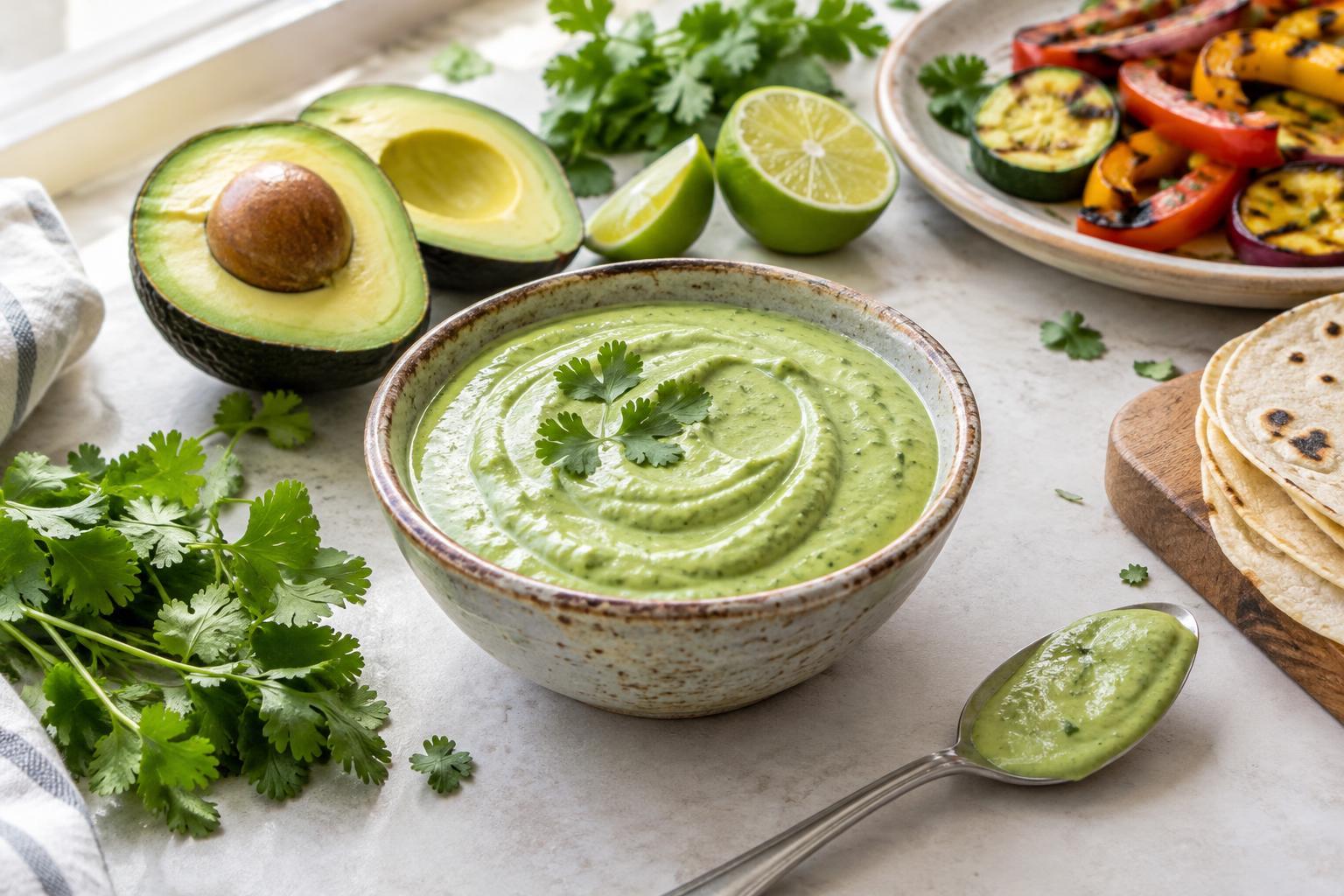
Avocado-cilantro crema is a cool, tangy sauce that can soften the heat of a chile-spiced dish or add richness to a plate of vegetables. Its texture depends as much on the avocado as on the blender. Choose an avocado that yields gently to pressure without feeling mushy. An underripe one may leave firm bits in the sauce, while an overripe one can bring dark spots or an off flavor. Cut it open just before blending and discard any extensively browned flesh.
For a small batch, use one ripe avocado, about half a cup of plain yogurt or sour cream, a loosely packed handful of cilantro leaves and tender stems, one to two tablespoons of lime juice, a small pinch of salt and a little water. This is a flexible starting point rather than a fixed formula. Yogurt makes a lighter-tasting sauce; sour cream gives it a richer finish. If you prefer a dairy-free version, blend the avocado with water and lime juice, adding liquid gradually until it moves freely around the blades.
Blend for silkiness, then adjust the thickness
Put the yogurt or sour cream, lime juice and a tablespoon of water in the blender first. Add the avocado and cilantro on top. Starting with liquid near the blades helps the mixture circulate instead of clinging to the sides. Blend briefly, stop to scrape down the jar, then blend again until no visible pieces of avocado remain. If the blades spin without pulling the sauce downward, add water a teaspoon or two at a time rather than running the motor for a long stretch.
Aim for a texture that suits the meal. A thick crema can be dolloped onto roasted sweet potatoes or grilled corn; a thinner one drizzles more easily over fish tacos or cabbage salad. Taste only after the sauce is smooth, then adjust the salt and lime. More lime can brighten a rich avocado, but adding a great deal to prevent browning may make the crema unpleasantly sharp. If cilantro tastes too strong, blend in a little more yogurt or avocado rather than trying to cover it with extra salt.
Understand what causes browning
Cut avocado darkens when its flesh is exposed to air. Lime juice can help slow that visible change, but it will not stop it completely. Mixing lime throughout the crema is more useful than squeezing it only over the top, because the sauce is exposed to air while you blend and serve it. Keeping the mixture cool and limiting air contact after blending also helps preserve its fresh-looking green color.
Cilantro may introduce darker flecks, especially if the leaves are bruised or blended for a long time. For an even color, use fresh cilantro, remove any wilted or discolored pieces, and blend only until smooth. A little color change does not necessarily mean the sauce has spoiled, but appearance alone cannot tell you whether a stored sauce is safe to eat.
Store it with as little air exposure as practical
Crema looks and tastes best when made close to serving time. If you need to prepare it ahead, transfer it promptly to a clean, small container and smooth the surface. Press food-safe wrap directly against the sauce, or use a container filled nearly to the top with a tight-fitting lid. Refrigerate it promptly rather than leaving it on the counter. Give it a stir before serving; if a thin top layer has darkened, you can remove that layer and check the flavor underneath.
Keep the serving bowl chilled when practical, and put out a modest amount at a time so the rest can stay refrigerated. Use a clean spoon for each refill. Discard crema that has developed an unpleasant smell, mold or an unusual texture, and do not rely on lime juice to make poorly handled food safe.
Serve with fresh flavors and careful handling
This crema works as a dip for crisp vegetables, a dressing for a cabbage-and-radish salad, or a finishing sauce for cooked shrimp, grilled fish or beans. Spoon it on just before serving to keep its color bright and its texture distinct. For a simple variation, blend in a small piece of jalapeño for heat or a little garlic for a sharper edge; add either sparingly so the avocado and cilantro remain the main flavors.
If you serve it alongside ceviche or other seafood, handle the seafood separately with clean utensils and follow appropriate chilling practices. Citrus juice changes the texture of raw seafood, but citrus curing does not make it equivalent to cooked seafood. The crema is a finishing sauce, not a way to make raw seafood safe.