What makes a quick pickle different
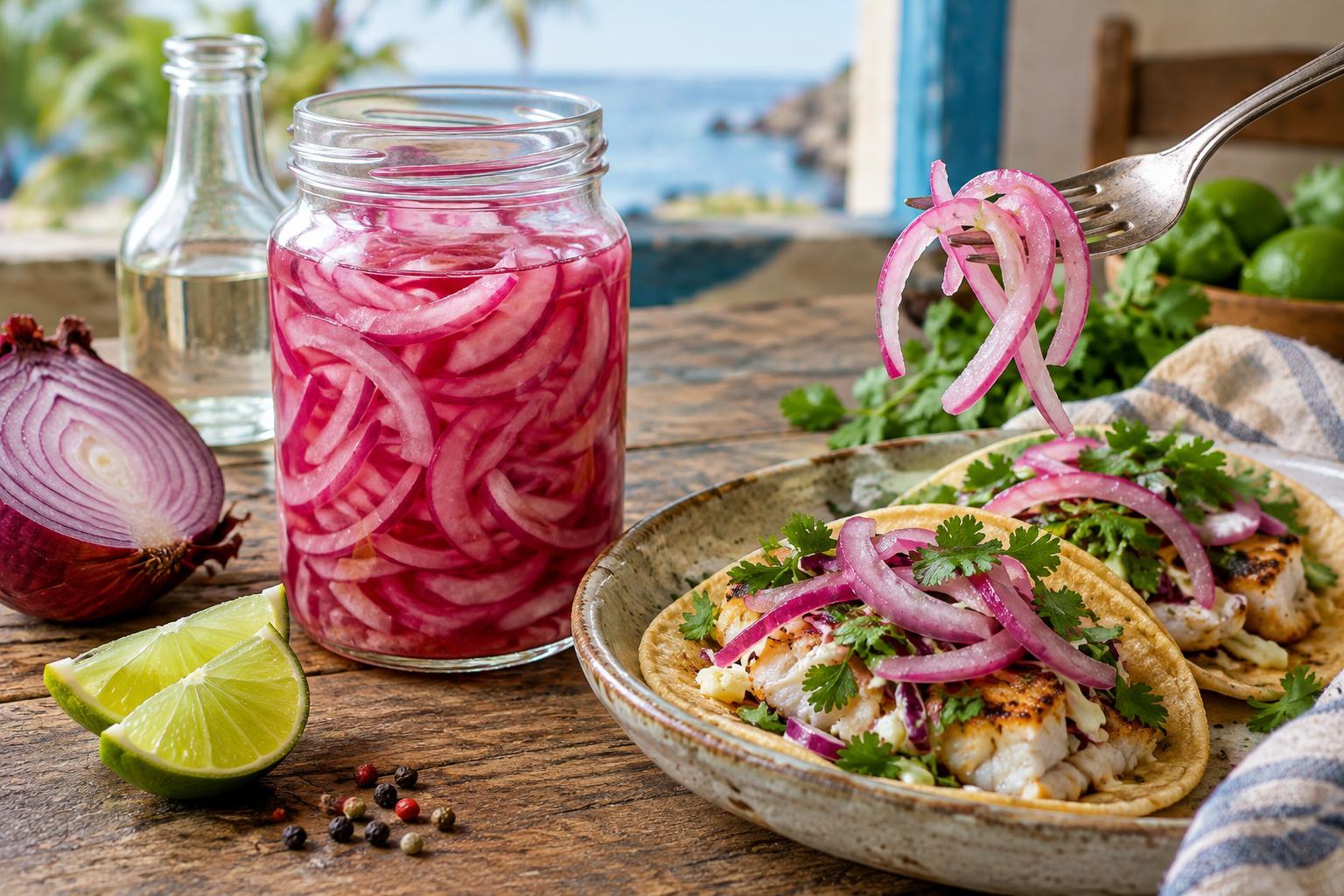
Quick-pickled red onions are a refrigerator condiment, not a shelf-stable preserve. A short soak in vinegar changes their sharp, raw bite into something bright and pleasantly tangy. The onions also soften slightly, which makes them easy to tuck into fish tacos or scatter over beans, rice and roasted vegetables. The goal is tenderness with a little snap—not onions that collapse when lifted from the jar.
Because the brine and storage conditions are different from tested canning methods, keep these onions refrigerated. Do not seal a jar and leave it in the pantry, even if the onions look and smell fine. Make a modest batch that you can use while its flavor and texture are at their best.
Choose vinegar by its label, then balance the bite
Look for vinegar labeled 5% acidity as a dependable starting point. Distilled white vinegar gives a clean, direct tang; apple cider vinegar brings a fruitier note; and white wine vinegar can taste gentler. Rice vinegar varies by product, so check its label rather than assuming it has the same acidity as another bottle. Color and flavor alone do not tell you how strong a vinegar is.
For a balanced refrigerator pickle, start with two parts 5% vinegar to one part water. That dilution softens the vinegar’s edge, but it also reduces the acidity of the brine; it is a flavor choice for a refrigerated condiment, not a canning formula. If you prefer a sharper onion, use a larger share of vinegar next time. A little sugar rounds out the tang, while salt helps season the onion throughout. Taste the brine before pouring it over the slices: it should seem assertive, since the onion will mellow it.
A small batch with plenty of crunch
Thinly slice one medium red onion into even half-moons, roughly 1/8 inch thick. Very thin, uneven shavings pickle quickly but can feel floppy; thick wedges stay firmer yet take longer to lose their raw bite. Separate the slices and place them in a clean, food-safe jar or covered container. In a separate cup, stir together 2/3 cup vinegar labeled 5% acidity, 1/3 cup water, 1/2 teaspoon fine salt and 1 to 2 teaspoons sugar until the seasonings dissolve. Pour over the onion, pressing the slices down so they are covered. If you need more liquid, mix additional brine in the same proportions.
Cover and refrigerate promptly. The onions will begin to taste pickled after about 30 minutes, while a longer chill gives the brine more time to reach the thicker slices. Serve them cold, or take out only what you need for the meal. A cool or room-temperature brine is a good choice when crunch matters: pouring boiling brine over delicate slices can soften them before they have had much time to pickle.
Why onions turn limp—and how to adjust
If a batch loses its snap, check the cut and the temperature first. Paper-thin slices and hot brine both speed softening. Try slightly thicker, uniform slices and a cool brine on the next batch. Avoid packing the onion so tightly that some pieces sit above the liquid; use a wider container or make a little more brine instead. Starting with a firm, fresh onion also helps.
Acidity is mainly a flavor and storage consideration here, not a way to guarantee crispness. Adding more water may make the condiment taste flat without fixing a soft onion. If the vinegar tastes too aggressive, adjust the next batch gradually, or use a small amount of sugar to round out the flavor. Spices, a few peppercorns or a strip of citrus zest can add aroma, but keep additions clean and avoid letting garnish crowd the jar.
Store safely and put the onions to work
Keep the container covered in the refrigerator and use a clean utensil each time you serve from it. These onions are most appealing while they still have some bite; plan to enjoy a small batch within several days. Discard it if you notice mold, an off smell or an unexpectedly slippery texture. If you want pickled onions for pantry storage, follow a tested canning recipe rather than adapting this quick brine.
Try a forkful over grilled fish, cooked shrimp, black beans or a citrusy cabbage salad. Their acidity is especially useful beside rich foods such as avocado or fried plantains. If serving them with ceviche or another raw seafood dish, handle the seafood according to appropriate food-safety guidance: citrus juice may change its texture and appearance, but citrus curing does not make raw seafood equivalent to cooked seafood.