Why split the fish?
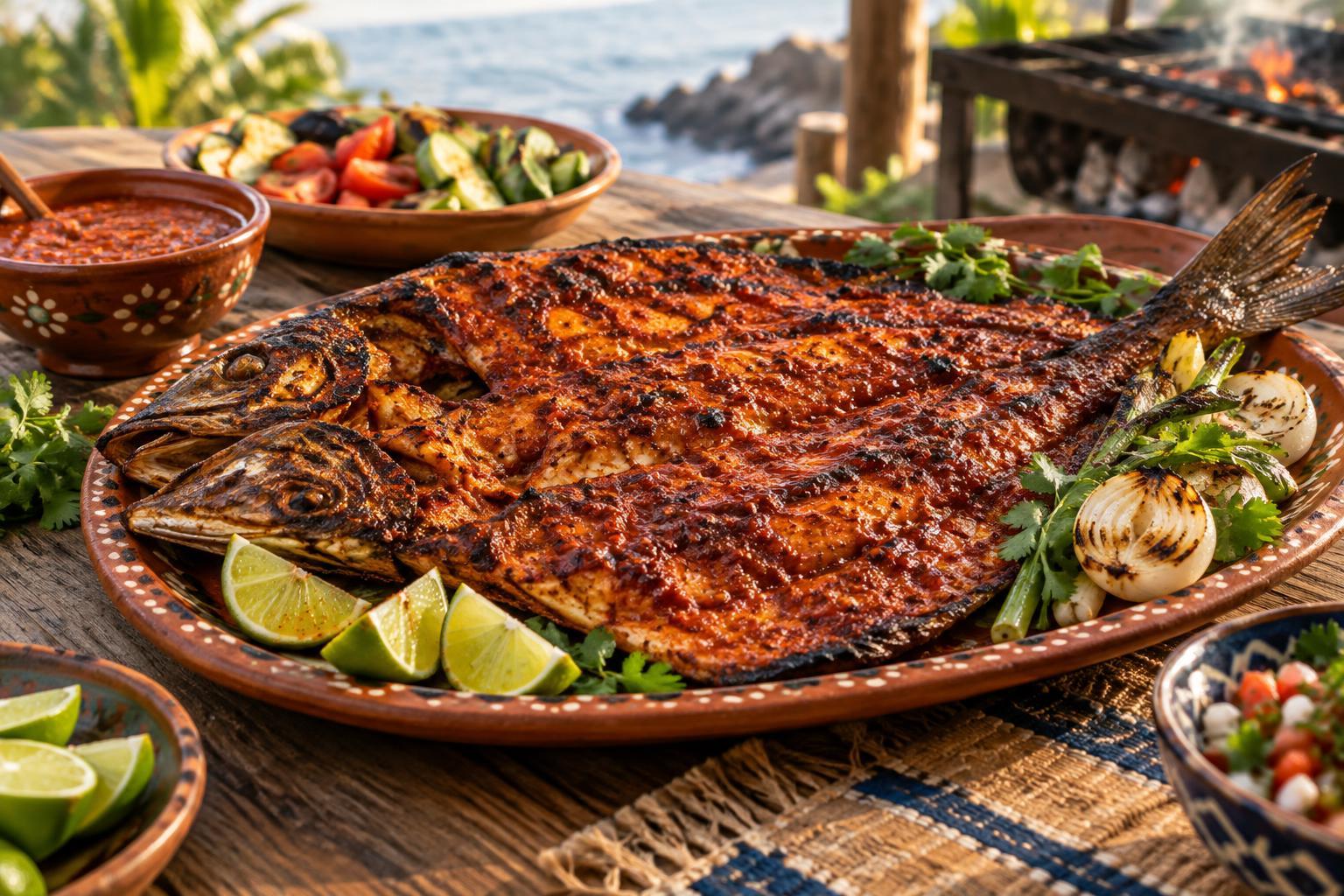
Pescado zarandeado is a coastal Mexican way of grilling fish opened flat and brushed with a flavorful marinade. Recipes vary, but the appeal is consistent: the broad surface catches the heat, the skin helps protect the flesh, and the finished fish is easy to bring to the table for sharing. A hinged grill basket is especially helpful because it lets you turn the fish without breaking it apart.
Choose a fresh, cleaned whole fish of about 2 to 3 pounds that will fit your grill and basket. A firm-fleshed fish such as snapper works well, though other suitable whole fish can be used. Ask the fishmonger to butterfly it, remove the guts and gills, and leave the two sides attached so the fish opens like a book. Ask for the scales to be removed too. At home, check for remaining bones and pat the fish dry with paper towels; a dry surface is easier to grill than a dripping one.
Make a chile-citrus marinade
For one fish, use 2 dried guajillo chiles and 1 dried ancho chile, stemmed and seeded; 2 garlic cloves; 2 tablespoons orange juice; 1 tablespoon lime juice; 2 tablespoons neutral oil; and about 1 teaspoon salt. Briefly toast the chiles in a dry pan over moderate heat until fragrant, taking care not to burn them. Soak them in hot water until pliable, then drain. Blend the chiles with the garlic, juices, oil and salt, adding a spoonful or two of water if needed to make a brushable paste.
This mixture offers gentle heat, acidity and color without burying the taste of the fish. Taste the marinade before it touches the raw fish and adjust the salt or lime if needed. Reserve a small portion in a clean bowl if you want extra sauce for serving. Brush the rest over the flesh, getting into the thicker parts without leaving heavy clumps that could scorch. Refrigerate the fish while it marinates for about 20 to 30 minutes. Citrus adds flavor here; it does not make raw seafood equivalent to cooked seafood.
Grill with steady heat
Set up a grill for medium heat and clean the grate well. Lightly oil the grate and the inside of a fish basket. Place the fish in the basket skin-side down, with the flesh facing up, and close it gently; the basket should hold the fish securely without crushing it. If you do not have a basket, use a wide spatula and turn with extra care. Keep a cooler area of the grill available so you can move the fish if the skin or marinade starts to darken too quickly.
Start skin-side down, cover the grill if it has a lid, and cook until the fish begins to firm and the skin releases more readily, roughly 6 to 10 minutes. Turn the basket and cook the flesh side for another 4 to 8 minutes, watching closely because exposed marinade can char. These times are only a guide: fish thickness and grill heat matter more than the clock. If the surface is browning before the center is done, shift the basket to the cooler area and continue cooking.
Check the thickest part of the fish, away from the bone. Cook it to 145°F (63°C) on a food thermometer. The flesh should also look opaque and separate easily. Use clean utensils and a clean platter for the cooked fish, and discard any marinade that touched the raw fish rather than brushing it on at the table.
Bring it to the table
Let the fish rest briefly, then open the basket and transfer it to a platter. Serve with warm tortillas, lime wedges, sliced radishes and a simple cabbage salad. Those crisp, bright sides balance the smoky chiles and rich grilled skin without competing with the fish.
To serve, lift portions of flesh away from the bones with a spoon or spatula, checking each portion for stray bones. Offer the clean, reserved sauce separately, if you made some. Pescado zarandeado is at its best served soon after grilling, while the edges are still a little crisp and the center is moist.