What makes this ceviche sing
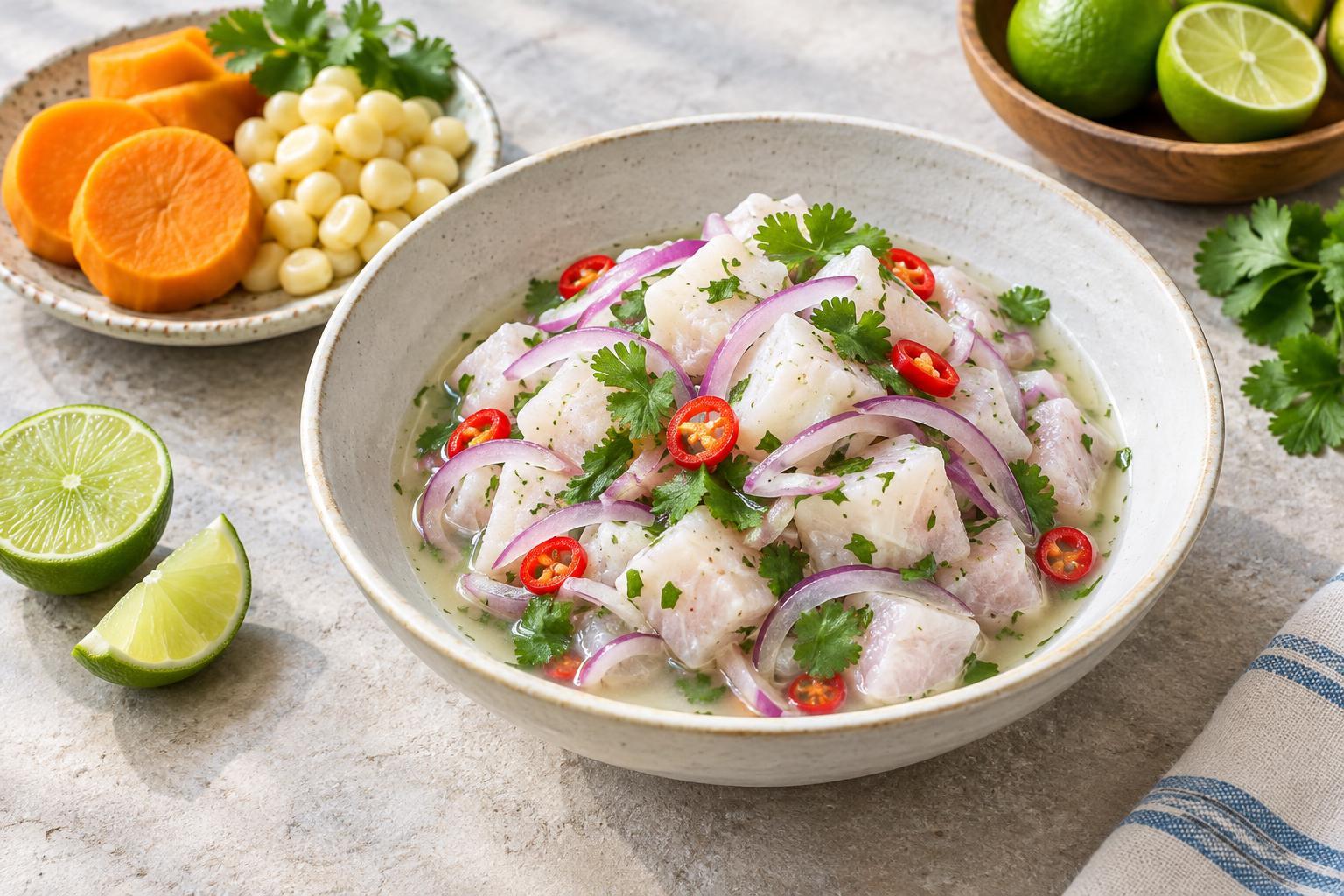
Peruvian-style fish ceviche balances cool, tender fish with sharp lime, sliced red onion, chile, cilantro, and salt. The seasoned citrus juices that gather around the fish are often called leche de tigre. Serve the ceviche with sweet potato, corn, or both for a contrast to its acidity and heat. There is no need to bury the fish under a complicated marinade: a few well-chosen ingredients give each bite room to shine.
This version makes about four small servings. Gather 1 pound of boneless white fish, about 1/2 cup of freshly squeezed lime juice, 1 small red onion, 1 fresh chile, a handful of cilantro, and salt. Choose a mild fish with firm flesh that can be cut into even, bite-size pieces. Adjust the chile and lime to taste; their intensity can vary.
Choose fish with the raw preparation in mind
Because traditional fish ceviche is not heat-cooked, start by telling a knowledgeable seafood seller that you plan to serve the fish raw. Ask what species it is, how it has been handled, and whether it has been frozen for raw service. If the seller cannot answer those questions, choose a cooked-fish version instead. A label such as “sushi-grade” is not, by itself, a dependable safety standard.
Good handling matters as much as appearance. Fish should be kept properly chilled and should not have an unpleasant odor, but smell and looks cannot prove that it is free of harmful microbes or parasites. Freezing under appropriate conditions can address some parasite risks; it does not reliably remove bacteria. Even carefully selected raw fish carries more risk than properly cooked fish.
Keep everything cold and clean
Buy the fish close to the time you plan to make ceviche, transport it cold, and refrigerate it promptly at 40°F (4°C) or below. If using frozen fish, thaw it in the refrigerator, not on the counter. Keep it chilled while you prepare the other ingredients, then cut it with clean hands, a clean knife, and a clean board. Keep raw fish and its juices away from foods that will not be cooked, and wash utensils and surfaces after contact.
Prepare the accompaniments before cutting the fish. Thinly slice the onion, finely chop the chile, and have the cilantro and serving dishes ready. This makes it easier to mix the ceviche and bring it straight to the table rather than leaving it at room temperature. Do not rinse the fish in the sink; splashing can spread raw juices around the kitchen.
Mix, taste, and serve promptly
Cut the cold fish into roughly even cubes and place them in a chilled, nonreactive bowl. Add the onion, chile, a generous pinch of salt, and enough lime juice to coat the fish well. Toss gently, then stir in the cilantro. Let the mixture stand briefly in the refrigerator, about 5 to 10 minutes, until the outside of the fish looks opaque. Taste the juices and adjust the salt or lime. Serve immediately, with some of those juices spooned over each portion.
The short rest is for flavor and texture, not for making the fish safe to eat. A longer soak may make the fish firmer or chalky, but it does not turn the dish into cooked seafood. Keep the ceviche cold until serving and avoid leaving it out during a long meal. If you are preparing food for people who are pregnant, young children, older adults, or anyone with a weakened immune system, offer a fully cooked seafood option instead.
Why lime is not a substitute for heat
Lime juice changes fish proteins, which is why the surface becomes opaque and firmer, much as it appears after cooking. That visible change can be misleading. Citrus juice does not reliably kill the pathogens or parasites that may be present in raw seafood. More lime, a longer marinating time, or a whiter appearance cannot make raw ceviche equivalent to properly cooked fish.
For a lower-risk variation, cook the fish thoroughly first, cool it promptly, and then toss it with the lime, onion, chile, cilantro, and salt just before serving. The result will have a different texture from traditional raw-fish ceviche, but it preserves the bright coastal flavors. Whichever version you choose, careful chilling and clean preparation are part of the recipe—not optional finishing touches.