Three sweeteners, three starting points
A little sweetness can round the sharp edge of lime, lemon or orange without making a dish taste like dessert. Panela, piloncillo and brown sugar can each do that job, but they are not identical ingredients. If you are shopping for a citrus glaze or a pitcher drink, start by thinking about how noticeable you want the sweetener to be.
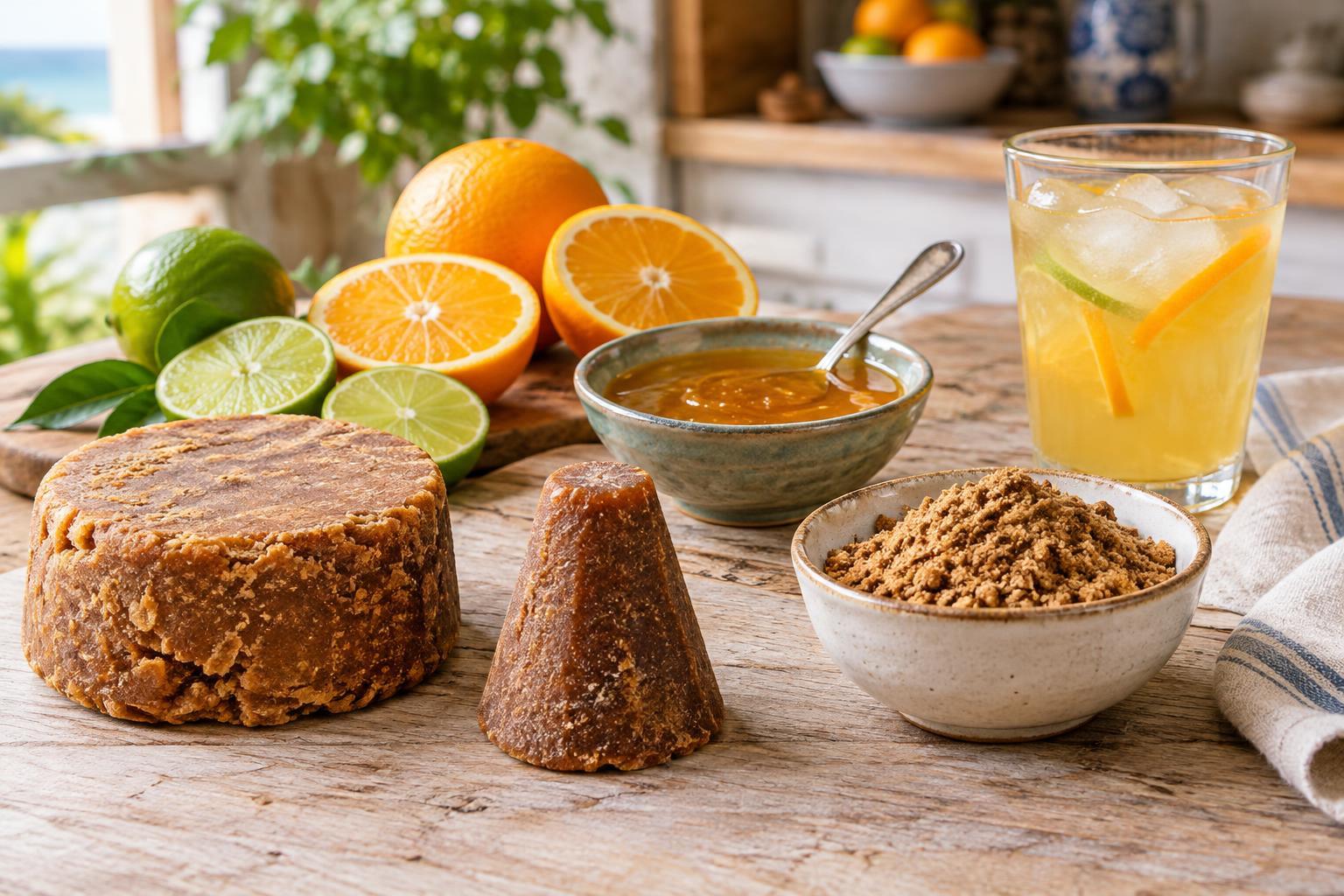
In many Latin American kitchens, panela refers to solid, minimally refined cane sugar made by concentrating cane juice. Piloncillo is a similar cane-sugar product commonly sold in Mexican markets, often in hard cones. Names, shapes and production methods vary by place and maker, so their flavors overlap rather than fitting into strict categories. Brown sugar, as commonly sold in supermarkets, is typically refined sugar with molasses added or retained. It is usually soft and easy to measure, while solid cane sugars need grating, chopping or dissolving.
What each brings to citrus
Panela often lends a rounded cane flavor that may suggest caramel or toasted sugar. Piloncillo can bring similarly deep notes, sometimes with a stronger molasses-like impression. Either can give a simple lime syrup more character, though one block may taste quite different from another. Taste a small piece, if practical, before deciding how much to use.
Light brown sugar offers a milder, familiar sweetness that lets delicate citrus aromas stay in front. Dark brown sugar has more pronounced molasses flavor and can move a glaze toward a richer, slightly bitter-sweet finish. Those differences matter most in recipes with only a few ingredients. Against assertive chile, garlic or spices, the distinctions may be subtler. None is automatically the best choice: use panela or piloncillo when you want cane flavor to be part of the dish, and brown sugar when convenience or a more predictable texture matters.
Building a balanced citrus glaze
For a glaze for cooked fish, shrimp or roasted vegetables, first dissolve the sweetener in a small amount of water over gentle heat. Grate or finely chop hard panela or piloncillo so it melts evenly; stir until no gritty pieces remain. Then add citrus juice and reduce briefly to the consistency you want. Adding zest near the end can give a brighter aroma without needing more juice. A pinch of salt may help bring the sweet and tart elements together.
Start with less sugar than you think you need, especially if the glaze will reduce. Taste as it thickens: reduction concentrates both sweetness and acidity, and a sauce that tastes balanced in the pan may seem sweeter when brushed onto food. If it is too tart, add a little more dissolved sweetener. If it feels heavy, add citrus juice in small amounts. Keep a separate portion of glaze for serving rather than reusing sauce that has touched raw seafood. Cook seafood thoroughly; citrus juice in a sauce or marinade does not make raw seafood equivalent to cooked seafood.
Making drinks without a gritty finish
Cold citrus drinks are an easy place to compare the three. For a limeade, dissolve each sweetener in warm water first, let the syrup cool, then mix it with lime juice and cold water. Hard cane sugars are especially likely to leave bits behind if stirred straight into an iced glass. Brown sugar dissolves more readily, but a quick syrup still makes it easier to sweeten a whole pitcher evenly.
Begin with a modest amount of syrup and adjust after adding ice or sparkling water, which can soften the impression of sweetness. Panela or piloncillo can stand up well to lime, tamarind or warming spices; light brown sugar may suit a drink where you want fresh orange or grapefruit to lead. Strain a syrup if you prefer a clear drink, and chill it promptly if you are preparing it ahead.
Substituting with confidence
You can often swap these sweeteners in a glaze or drink, but treat the first batch as a tasting opportunity rather than assuming equal amounts will taste identical. Finely chopped or grated hard sugar is easier to measure than a whole cone or block. A kitchen scale helps when substituting by weight; if measuring by spoon or cup, differences in chunk size and packing can change the amount you add.
Choose by the role you want the sugar to play. Reach for a flavorful piece of panela or piloncillo when a glaze needs depth alongside tart lime. Use light brown sugar for a quick, softer-tasting syrup, or dark brown sugar when a stronger molasses note sounds appealing. Dissolve fully, taste with the citrus in place and adjust gradually. That simple process matters more than finding a perfect one-to-one substitute.