Start with good mussels
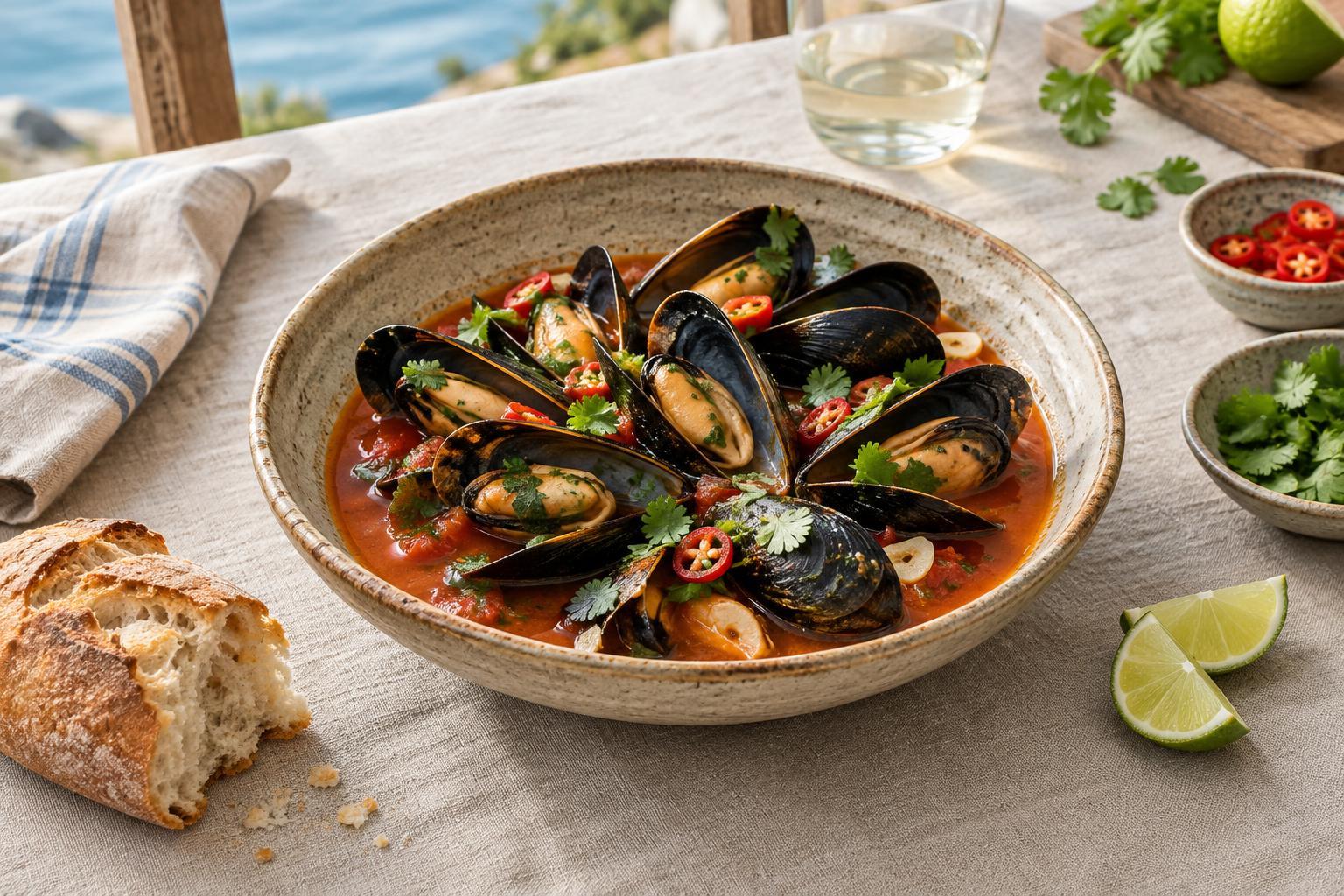
Mussels turn a few pantry ingredients into a meal that feels generous: a pot of fragrant broth, a platter of shells and plenty of bread for dipping. In this coastal-inspired version, tomato gives the broth body, chile adds warmth and lime brightens each bowl. The recipe serves about four as a light main course.
Buy mussels from a reputable seafood seller and keep them cold until you cook them. If they come in a mesh bag, set the bag in a bowl in the refrigerator and cover it loosely with a damp towel. Do not seal live mussels in an airtight container or leave them submerged in water. Plan to cook them promptly, following any storage guidance from the seller.
Before cleaning, discard shells that are broken or badly cracked. If a mussel is open, tap it gently; discard it if it does not close. A strong, unpleasant odor is another reason to discard the affected mussels. These checks help you sort them, but they are not a substitute for buying properly handled seafood.
Clean them just before cooking
Rinse the mussels under cool running water, rubbing or scrubbing away grit on the shells. Pull off any fibrous “beard” protruding from the side of a shell by tugging it toward the hinge; a clean kitchen towel can help you grip it. Some mussels will have little or no beard. Give the cleaned mussels a final rinse, then let them drain.
Avoid a long soak in fresh water. It is unnecessary for most store-bought mussels and can harm live shellfish. Keep the cleaned mussels cold while you prepare the broth, and wash your hands, utensils and work surfaces after handling the raw seafood.
Build a tomato-chile broth
For about 2 pounds of mussels, gather 2 tablespoons olive oil, 1 small diced onion, 3 sliced garlic cloves, 1 finely chopped mild fresh chile or a small pinch of dried chile flakes, a 14-ounce can of crushed tomatoes, and 1 cup water or unsalted seafood stock. Have a lime and a handful of chopped cilantro ready for finishing. If your chile is particularly hot, start with less; the broth should complement the mussels rather than overwhelm them.
In a wide pot with a tight-fitting lid, warm the oil over medium heat. Cook the onion until softened, about 5 minutes. Add the garlic and chile and stir for another minute, without letting the garlic brown. Pour in the tomatoes and water or stock. Simmer for roughly 10 minutes so the onion softens fully and the flavors come together. Taste the broth before adding salt: mussels release a briny liquid as they cook, so it is easier to adjust seasoning afterward.
You want enough liquid to steam the mussels and leave a spoonable broth, not enough to cover them. If the tomato mixture becomes very thick, add a splash of water before the mussels go in.
Steam, check and discard
Bring the broth to a lively simmer, add the drained mussels and cover the pot. Cook over medium-high heat, shaking the pot once or twice so the mussels move through the steam. Begin checking after about 5 minutes; cooking time varies with their size and the pot. Continue cooking until the shells open and the mussel flesh is cooked through, rather than relying on a fixed time alone. Seafood is generally cooked to 145°F (63°C); a food thermometer can help when the flesh is accessible.
Transfer opened mussels to a warm serving bowl as they finish if some are cooking faster than others. Give the remaining mussels a little more time in the simmering pot, then discard any that stay closed. Do not pry them open to serve. A shell opening is a useful cooking cue, but it does not by itself prove that a mussel was safe to eat; careful purchasing, cold storage and thorough cooking matter too.
Spoon the hot broth over the mussels, scatter with cilantro and squeeze lime over the top. Serve immediately with crusty bread or rice. Put an empty bowl on the table for shells, and refrigerate any leftovers promptly in a covered container.