Start with cleaned, fully thawed octopus
Slow-braising is a forgiving way to cook octopus for a salad, a platter with potatoes or a quick finish on the grill. Gentle, moist heat gives its connective tissue time to soften. The goal is a tentacle that yields to a knife but still holds its shape when sliced, not one that has cooked until it falls apart.
If using frozen octopus, thaw it in the refrigerator in a covered container that can catch drips. Keep it chilled until you are ready to cook, and use separate utensils and surfaces for raw seafood and ready-to-eat ingredients. Buy cleaned octopus or ask the fishmonger to clean it; if it is whole, the innards, eyes and hard beak need to be removed before cooking. Pat the octopus dry rather than washing it under a forceful stream, which can splash raw juices around the sink.
There is no need to pound the octopus or add a cork to the pot. What matters more is matching the cooking time to its size and checking its texture as it braises. You can use a whole octopus or separated tentacles, but smaller pieces may become tender sooner.
Keep the braise gentle
Choose a lidded pot that holds the octopus without excessive empty space. Add it with a modest amount of water or unsalted stock, plus optional aromatics such as onion, garlic, bay leaf or a strip of citrus peel. The octopus will release liquid as it cooks, so it does not need to start submerged. Keep enough liquid in the pot to prevent scorching, checking occasionally and adding a splash of water if needed.
Bring the liquid up to heat, then lower the burner and cover the pot. Aim for a quiet braise with only occasional small bubbles, not a rolling boil. If you use a thermometer, a liquid temperature around 180–200°F (82–93°C) is a useful guide to that gentle movement; adjust the heat for your pot rather than treating the number as an exact target. Vigorous boiling can make the tentacles curl tightly and may cook the thinner tips faster than the thick bases.
For small octopus or individual tentacles, begin checking after about 30–45 minutes. A medium whole octopus may take around 1–2 hours, while a large one can take longer. These are planning ranges, not promises: thickness and the steadiness of the braise matter more than the clock. Check periodically instead of leaving the pot unattended for the full estimated time.
Test the thickest part, then rest briefly
Slide a thin knife or skewer into the thickest part of a tentacle near the body. It should enter with little resistance, similar to a knife going into a cooked potato. If the center still feels rubbery or pushes back firmly, cover the pot and continue cooking, checking again in 10–15 minutes. If the tentacle tears easily and feels mushy, it has gone past the best point for neat slices.
Lift the octopus out and let it rest just long enough to handle safely. You can peel away some of the dark outer skin if you prefer a smoother appearance, but it is edible and helps give sliced tentacles their character. For a warm dish, cut across the tentacles into bite-size rounds or longer diagonal slices. Keep thinner tips in larger pieces so they do not disappear among the thicker slices.
If you are preparing octopus for later, do not leave it cooling for hours in a deep pot of warm braising liquid. Transfer it to shallow containers, refrigerate it promptly and keep it chilled until serving. Clean knives, boards and hands before moving from raw-seafood preparation to cooked octopus or garnishes.
Finish for flavor without losing tenderness
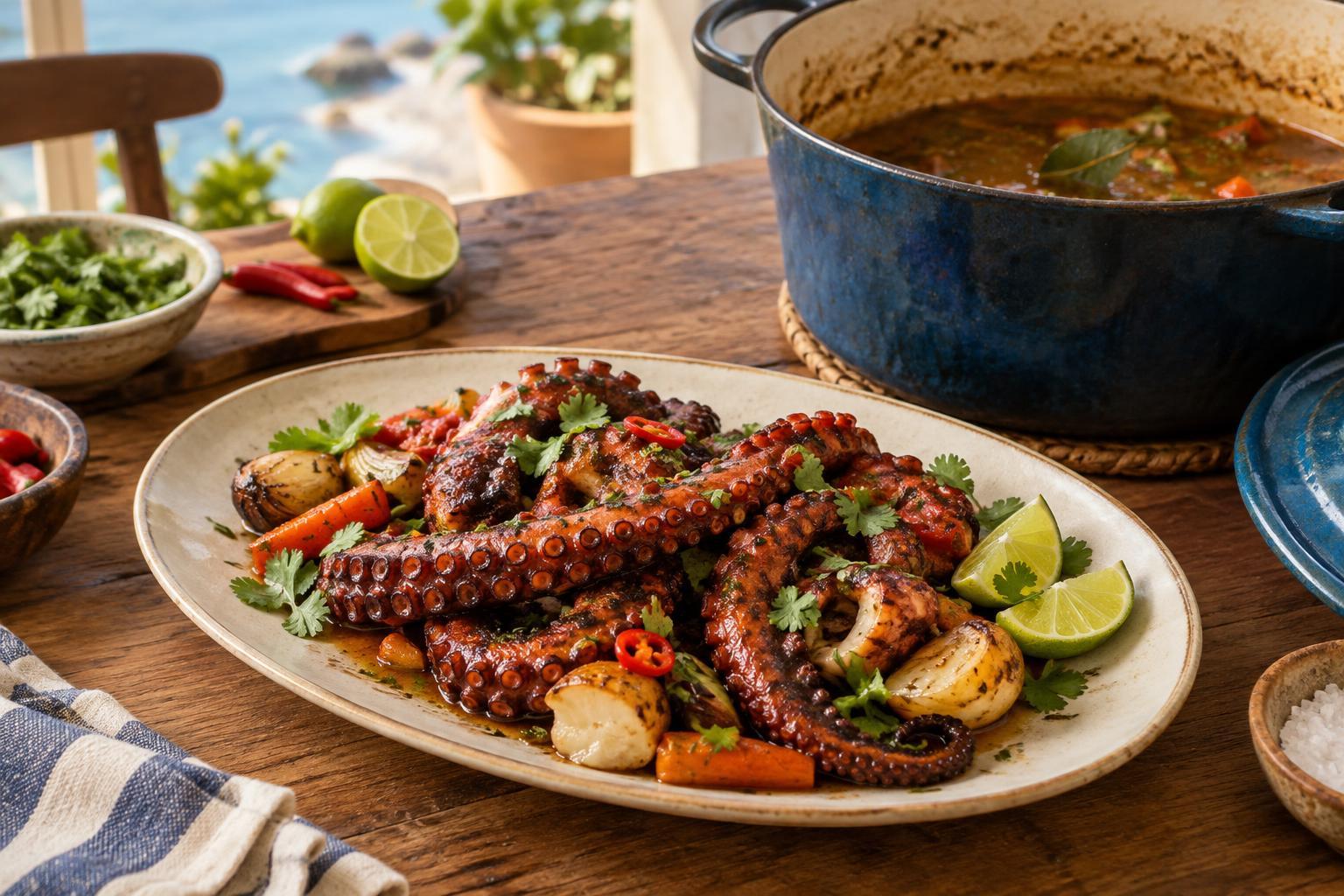
The braise produces tender octopus; a short, hot finish adds contrast. Pat cooked tentacles dry, brush them lightly with oil and sear or grill them just until the edges color. This is a finishing step, not another long cook. Slice afterward, or leave smaller tentacles whole for a platter. Spoon a little braising liquid over warm octopus if it needs moisture, tasting first because the liquid may have a concentrated seafood flavor.
For a coastal-inspired plate, pair the octopus with boiled potatoes, crisp vegetables, herbs and a dressing of olive oil, lime juice and chile. Add the lime close to serving for brightness. Citrus is a seasoning here, not a substitute for cooking: citrus curing does not make raw seafood equivalent to cooked seafood. Starting with properly handled octopus, braising it until tender and keeping the finished dish appropriately chilled or hot are the foundations of a good result.