Start with leaves that can bend
Banana leaves make fragrant wrappers for fish, shrimp and vegetables. They are a familiar cooking material in many coastal Latin American kitchens, but they can be frustrating at first: a leaf that looks sturdy on the counter may split as soon as you fold it. The solution is to give the leaf enough moisture, warmth and room to curve before you build the packet.
Look for banana leaves sold for cooking, often in the freezer section. Choose broad sections with as few large splits as possible. Frozen leaves are convenient, but they can be brittle while cold. Thaw them completely before unfolding, and support the leaf with both hands rather than pulling on one corner. Small tears are not necessarily a problem; you can overlap two pieces to cover them.
Clean and trim the leaves gently
Lay each leaf flat and wipe both sides with a clean, damp cloth or rinse it gently under cool running water. Pat it dry enough that it is not dripping. Even packaged leaves may carry dust or debris from harvesting and handling, so clean them before they touch food. Use a clean work surface and utensils, especially if you will prepare vegetables or a finishing sauce alongside raw seafood.
Cut the leaves into rectangles large enough to surround each portion with generous overlap. Trim away the thick central rib if it prevents the piece from lying flat; do not try to crease the rib into a tight fold. Cut with scissors or a sharp knife rather than tearing by hand. If a leaf has a narrow weak spot, position that spot away from the bottom of the packet, where juices will collect.
Warm the leaves until pliable
Gentle heat relaxes a banana leaf so it bends instead of cracking. Pass each piece briefly over a low stovetop flame, keeping it moving and well clear of the fire so it does not scorch or catch. The leaf may become glossier and slightly darker as it softens. Turn it to warm both sides, then let it cool enough to handle. Never leave a leaf unattended near a flame.
If you prefer not to use an open flame, warm the pieces in a dry skillet over low heat, turning them frequently. You can also place them briefly over steam. Work one piece at a time and test a corner: it should curve smoothly around your fingers without making a sharp crease. If it still feels stiff, warm it a little more. Heat softens the leaf; prolonged heating can dry it out again.
Build a packet with room to fold
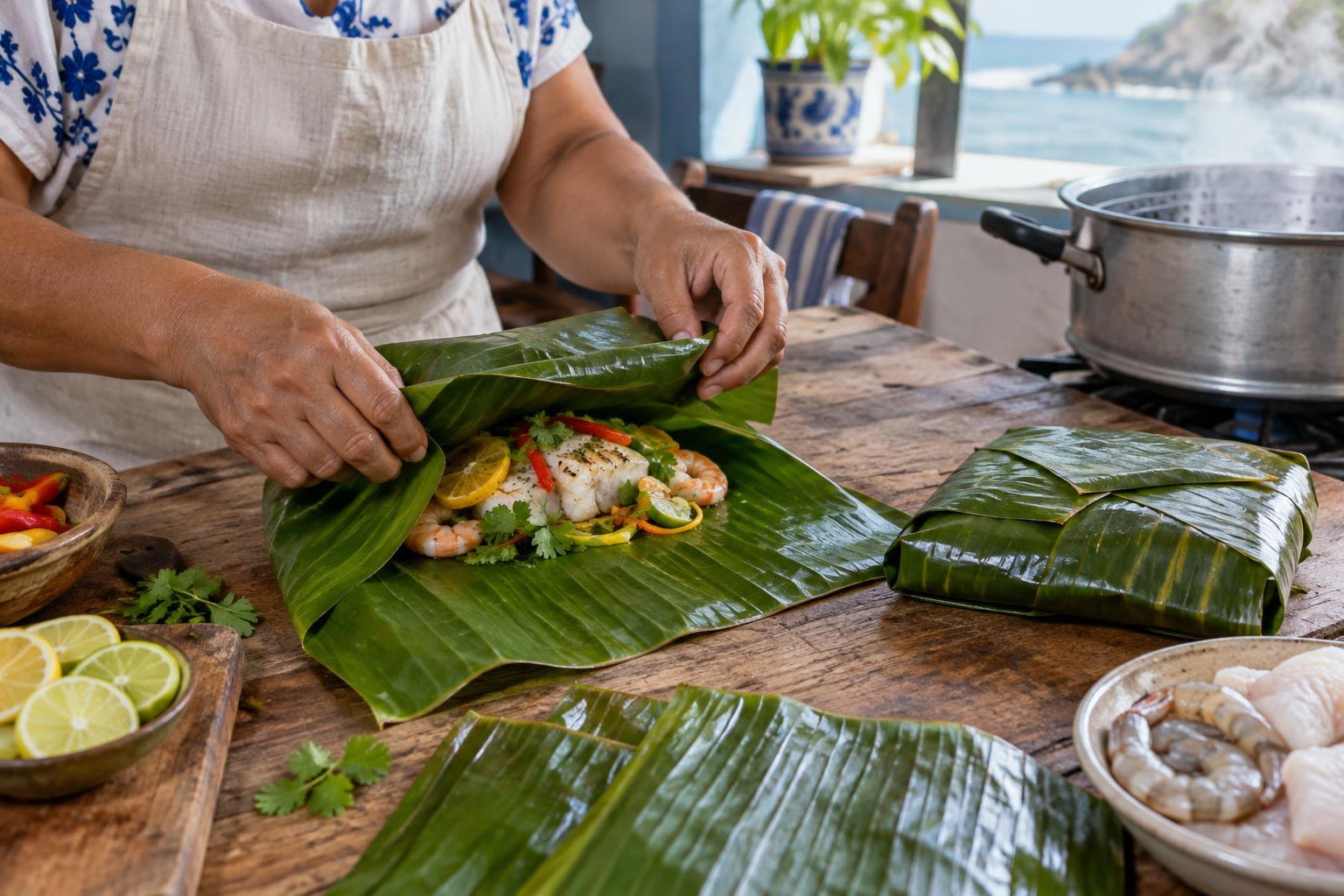
Set the softened leaf with its smoother side facing the filling. For extra protection, cross two pieces or place a smaller piece over a thin area. Put seafood and any sliced vegetables in the center, leaving a wide border. Season with herbs, aromatics or a little citrus juice, but go easy on added liquid: seafood releases moisture as it steams, and an overfilled packet is harder to close.
Bring the long sides over the filling with plenty of overlap, then fold the ends underneath. Aim for broad folds rather than tight, sharp corners. Place each packet seam-side down in the steamer so its own weight helps keep it closed. Kitchen twine can secure a bulky packet, but it should not be pulled so tight that it cuts through the leaf. If a wrapper tears while you work, lay another softened piece around it instead of trying to force the damaged edge together.
Steam safely, then open with care
Keep raw seafood chilled until you are ready to assemble the packets, and wash hands, boards and utensils after they touch it. Arrange packets in a steamer with space for steam to circulate, above rather than in the simmering water. Steam time depends on the size and thickness of the filling, so do not rely on the leaf’s color or a fixed number of minutes to judge doneness. For fish, check the thickest part with a food thermometer and cook it to 145°F (63°C). Shrimp should be opaque and firm when cooked.
Lift finished packets with tongs and open them away from your face; trapped steam can burn. Banana leaves are wrappers, not something to eat. A squeeze of citrus after cooking can brighten the dish, but citrus juice does not make raw seafood equivalent to cooked seafood. If you want a fully cooked packet, let the steamer’s heat do that work before serving.