Why broiling needs a little planning
A broiler directs intense heat at the top of a fish fillet. That makes it useful when you want a browned surface without turning a delicate piece of fish in a pan. It also means the top can darken before the center is cooked, particularly if the fillet is thick or coated with a sugary sauce. The best approach is to prepare everything before switching on the broiler, then stay nearby.
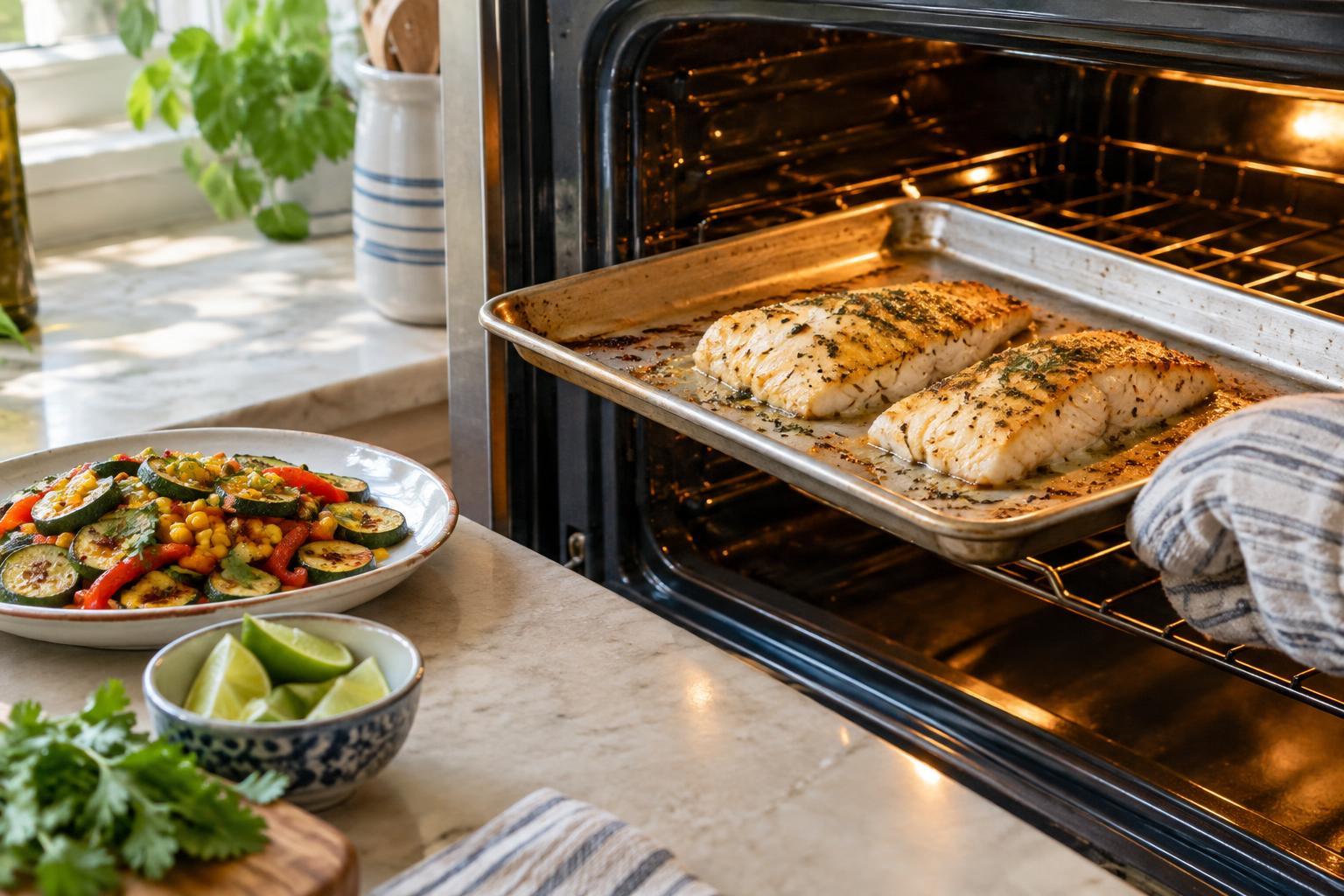
Choose fillets of similar thickness so they finish at roughly the same time. Pat them dry with paper towels: excess surface moisture slows browning and can make a glaze slide off. Lightly oil the fish and season it with salt. Set it on an oven-safe, lightly oiled pan or a broiler-safe rack over a pan, leaving a little space between pieces. Check that your pan is rated for broiler use; some nonstick coatings and glass dishes are not.
Set the rack for the thickness of the fish
Rack position controls how quickly the surface browns. For an average fillet, a useful starting point is roughly 6 to 8 inches between the fish and the heating element or flame. Move thin fillets farther away if they color too fast. A thick fillet may also benefit from a more distant rack: that gives heat more time to reach the center before the top scorches. Broilers differ, so treat the distance as a starting point rather than a fixed rule.
Preheat the broiler according to your oven’s instructions. If it has high and low settings, low can be easier to manage for delicate fish or a first attempt. Slide the pan in only when you are ready to watch it. If the surface is browning rapidly while the middle is still underdone, lower the rack or switch to a moderate oven temperature to finish cooking more gently.
Use time as a reminder, not a guarantee
Broiling often takes only several minutes, but thickness, starting temperature, pan material and broiler strength all affect the result. Begin checking a thin fillet after about 3 minutes and a thicker one after about 5 minutes. Look through the oven window if you can, opening the door briefly when you need a closer look. Rotate the pan if one side is browning faster. Most fillets can cook from one side without flipping, which helps keep them intact.
For a reliable doneness check, insert an instant-read thermometer sideways into the thickest part of the fish. Cook fin fish to 145°F (63°C). The flesh should also have changed from translucent toward opaque and separate easily when tested with a fork, though appearance alone is less precise than temperature. Remove the pan carefully and remember that its handle will be hot.
Keep citrus and seasonings bright, not burnt
Coastal flavors work beautifully with broiled fish, but timing matters. A thin coating of oil, salt and a modest amount of ground spice is easier to control than a thick marinade. Sugar, honey and sweet bottled sauces can scorch under direct heat. If you want a sweet glaze, brush on a small amount near the end and watch closely. Save fresh herbs, delicate chile slices and citrus zest for after cooking, when their flavors will stay vivid.
Try finishing cooked fish with lime juice, a spoonful of cilantro sauce or a quick mixture of finely chopped tomato and onion. Add acidic toppings just before serving rather than leaving the raw fillets in citrus juice as a substitute for cooking. Citrus can change the texture and appearance of raw fish, but citrus curing does not make raw seafood equivalent to cooked seafood.
Handle and serve fish safely
Keep fish refrigerated until you are ready to prepare it, and thaw frozen fillets in the refrigerator rather than on the counter. Wash your hands after handling raw fish, and use clean utensils and a clean plate for the cooked portions. Do not reuse a marinade that touched raw fish as a finishing sauce unless you bring it to a full boil first.
Serve the fillets soon after broiling, with something that balances their rich, browned edges: a citrusy cabbage salad, warm beans or simply dressed vegetables. Once you learn how your broiler behaves, note the rack position and approximate cooking time that worked for a particular thickness of fish. The next batch will still need watching, but you will have a much better place to start.