Set up before you start
Peeling shrimp is easier when the shrimp are cold and your work area is organized. Set out a bowl for the cleaned shrimp and another for shells, plus a small, sharp knife or kitchen shears. If the shrimp are frozen, thaw them in the refrigerator, or in a sealed bag submerged in cold water. Avoid leaving them on the counter to thaw. Keep shrimp refrigerated until you are ready to prep them, and return the cleaned shrimp to the refrigerator if you are not cooking them right away.
Decide whether the dish calls for tails on or off. Tails can make cooked shrimp easier to pick up on a platter, but removing them is more convenient for tacos, rice dishes, and salads. You can also save clean shells for a seafood stock; refrigerate them promptly or freeze them if you will not use them soon.
Loosen the shell, not the shrimp
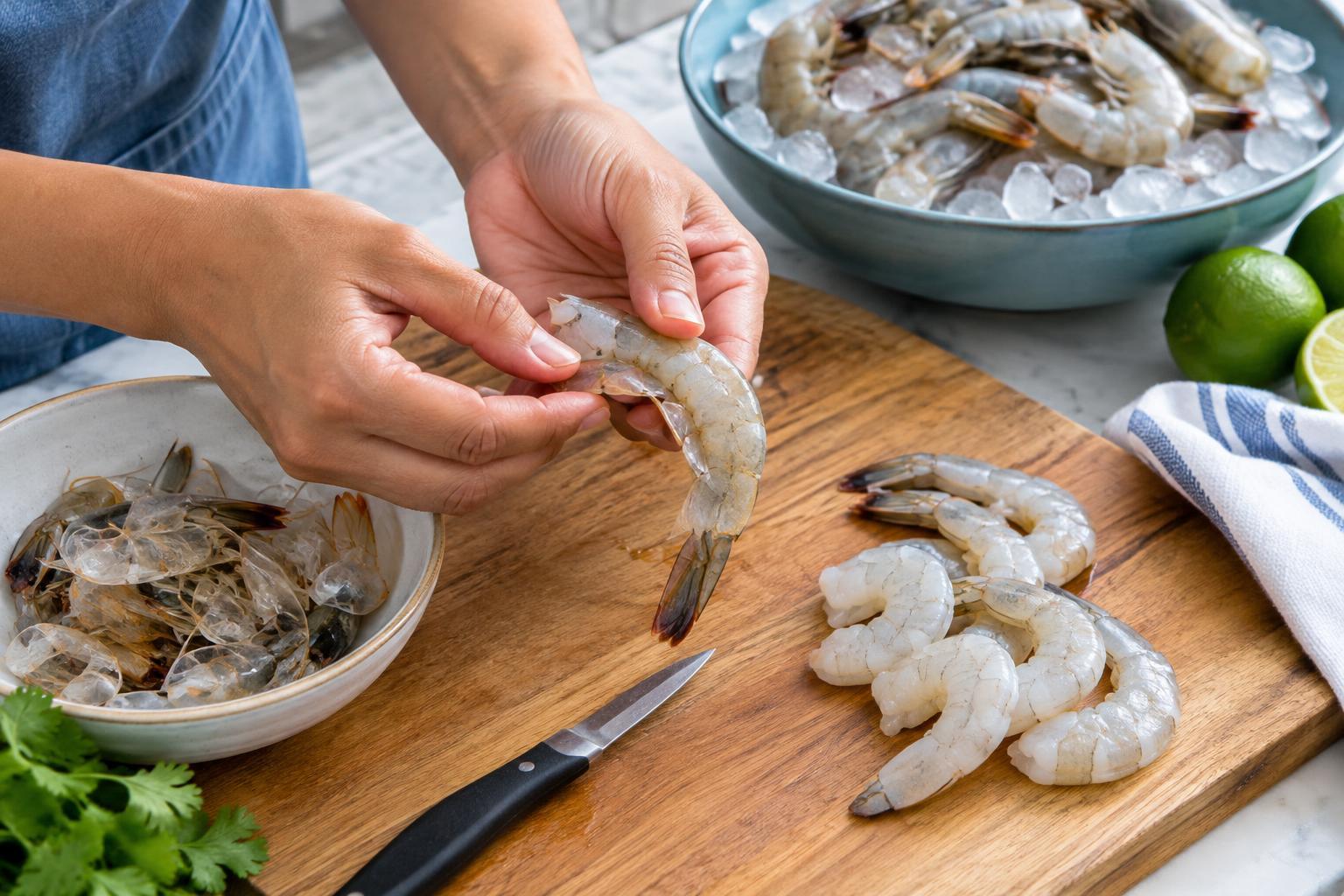
Start at the underside, where the little legs attach. Hold the shrimp gently in one hand and use your thumb to lift a section of shell near the legs. Once it loosens, peel around the body in segments rather than pulling the entire shell away in one hard motion. A firm yank can take a chunk of meat with it, especially on small shrimp or shrimp that have been handled roughly during thawing.
For tail-off shrimp, peel the body first. Then pinch the tail shell at its base while gently pulling the meat free with your other hand. Try not to squeeze the tail tip into the flesh; that pressure can tear off the narrow end. If a bit of meat stays inside the shell, ease it out with your fingertip. For tail-on shrimp, stop peeling at the last shell segment and leave that segment and the tail fan attached.
Make a shallow cut to devein
The dark line that sometimes runs along the shrimp’s back is its digestive tract. It is not always visible, but removing it can improve the appearance and texture of the finished dish. Lay the peeled shrimp on a board with its back facing up. With the tip of a small knife, make a shallow slit along the back, following the curve of the shrimp. Cut only deep enough to expose the line; a deep cut wastes meat and can make the shrimp split apart during cooking.
Lift the line with the knife tip or a fingertip and pull it away gently. If it breaks, pick up the remaining piece where you can see it. Kitchen shears are another option: snip through the shell along the back before peeling, then open the shell and lift out the line. That approach can be handy when preparing a large batch. A pale line on the underside is generally left alone; there is no need to cut into the shrimp to remove it.
Clean up without soaking the shrimp
After deveining, remove any visible bits of shell or tract. If needed, give the shrimp a brief rinse under cold running water, then drain and pat them dry with clean paper towels. Do not leave peeled shrimp soaking in a bowl of water: they can become waterlogged, which makes it harder to get a good sear or to keep a marinade from tasting diluted.
Wash your hands, knife, board, and nearby surfaces after handling raw shrimp, and keep raw seafood separate from ready-to-eat ingredients. That matters when you are preparing a coastal-style meal with fresh herbs, sliced vegetables, or a citrusy sauce. Prep those ingredients on a clean surface rather than on the board you used for raw shrimp.
Choose the finish that suits your dish
Once the shrimp are peeled and deveined, keep them chilled until you are ready to cook. Pat them dry again before they go into a hot pan, onto a grill, or into a simmering broth. For a simple citrus-forward dish, cook the shrimp first, then toss them with lime juice, herbs, and vegetables. Adding citrus after cooking gives you bright flavor without relying on the juice to make raw seafood safe.
Citrus juice can change the color and texture of raw shrimp, but citrus curing does not make raw seafood equivalent to cooked seafood. If you are making a ceviche-style preparation and want to avoid serving raw shrimp, cook the shrimp thoroughly first and chill it before mixing it with the other ingredients. However you plan to serve it, careful peeling pays off: the shrimp stay intact, cook more evenly, and look inviting on the plate.