Know what needs removing
Scaling and pin-bone removal solve different problems. Scales cover the outside of many fish and can be unpleasant to eat, especially when you want crisp skin. Pin bones are small bones embedded in the flesh of some fillets. A fish may need one step, both steps, or neither: a skinless fillet has no scales to remove, while a scaled fillet may still contain pin bones. Ask the fishmonger what has already been done, then check the fish yourself before cooking.
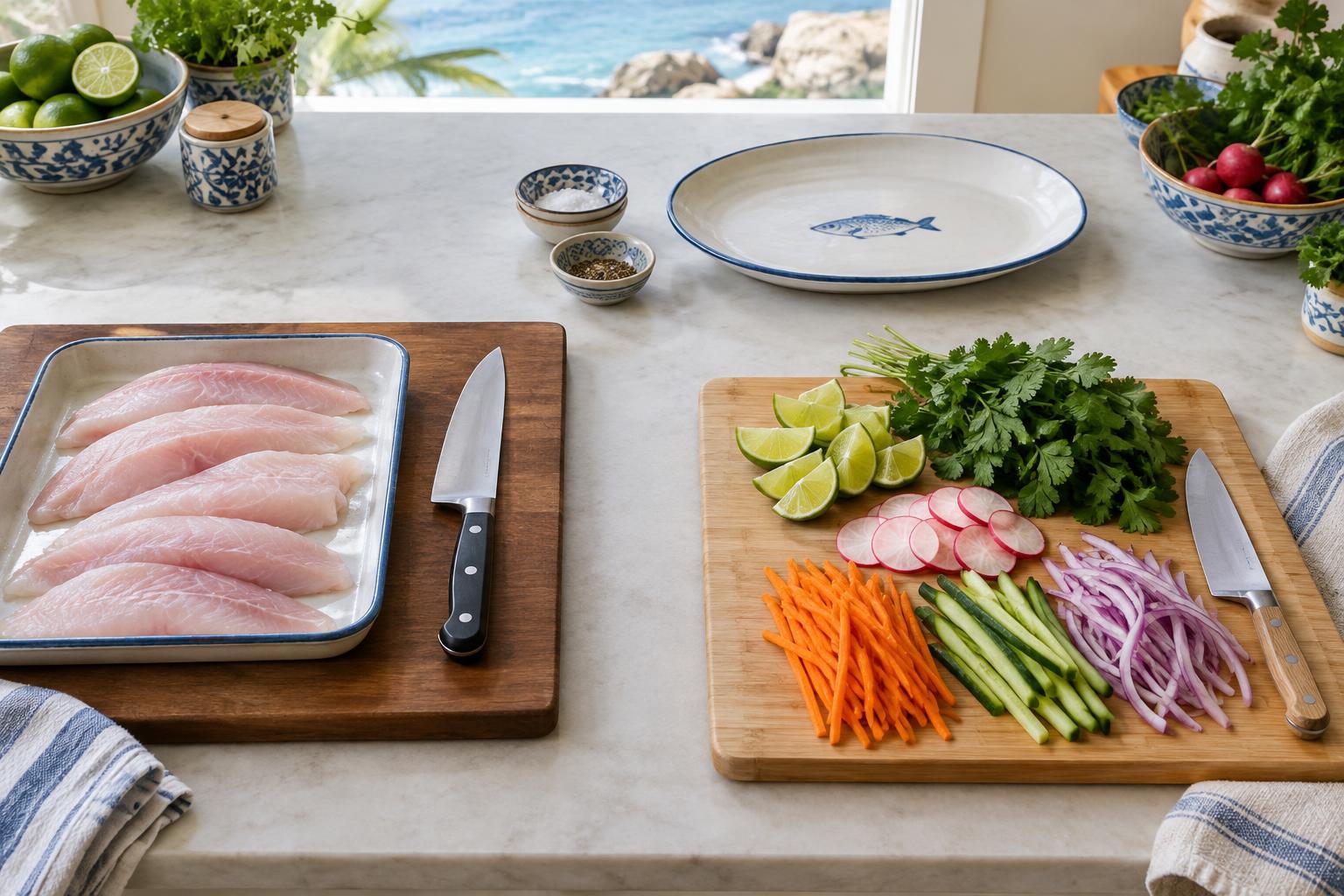
Set out a fish scaler or the dull edge of a sturdy knife, fish-bone tweezers or clean needle-nose pliers reserved for food, paper towels, and a board that is easy to wash. Keep the fish cold until you are ready to work. Clear nearby dishes and produce from the counter; scaling can send small scales farther than you expect.
Scale the fish without scattering scales
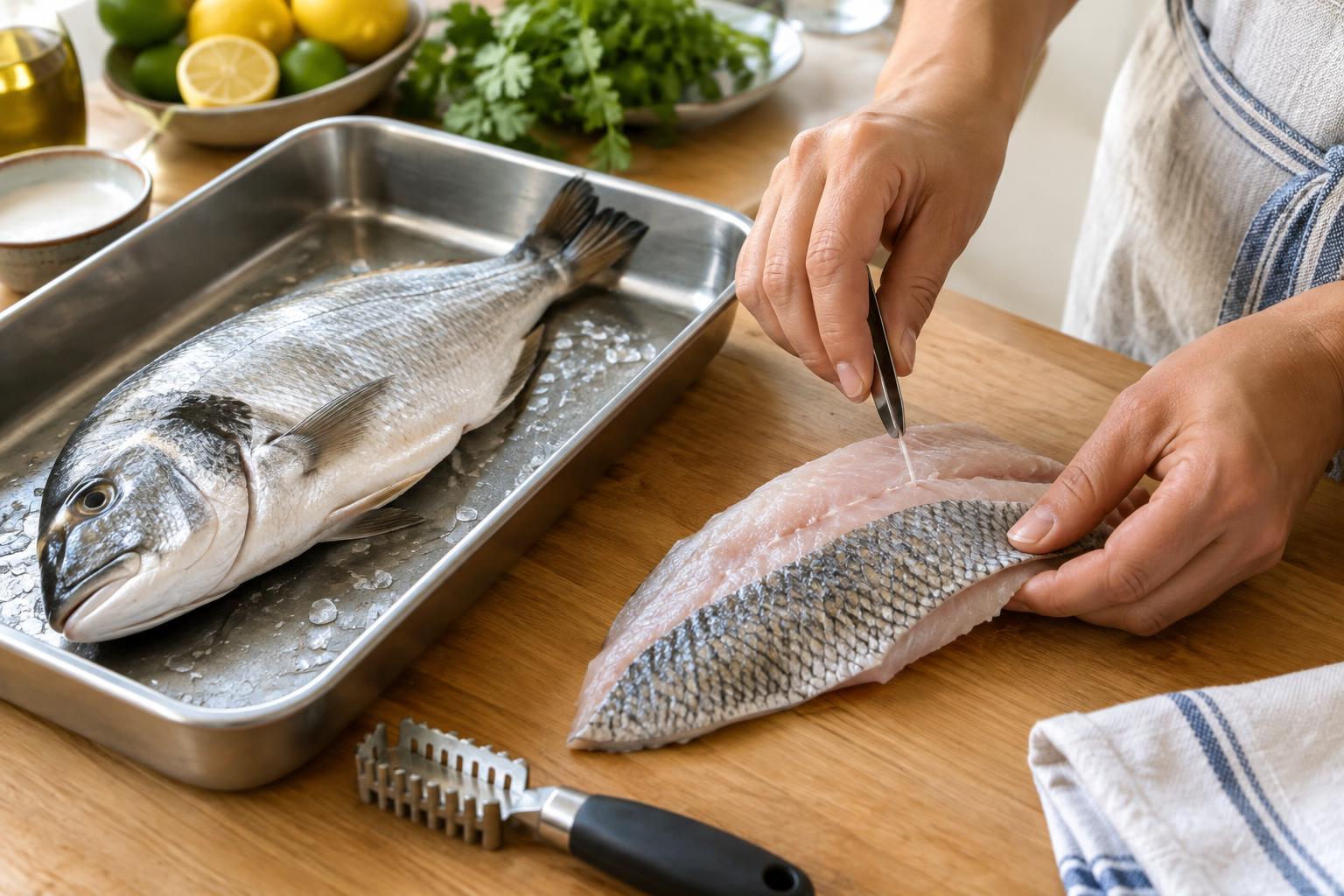
If the skin still has scales, place the fish on a board inside a clean sink or a large rimmed tray. A damp paper towel under the fish can help stop it from slipping. Hold it firmly by the tail, using a towel for grip if needed. Working from tail toward head, scrape against the direction in which the scales lie. Use short, controlled strokes with moderate pressure rather than digging into the skin.
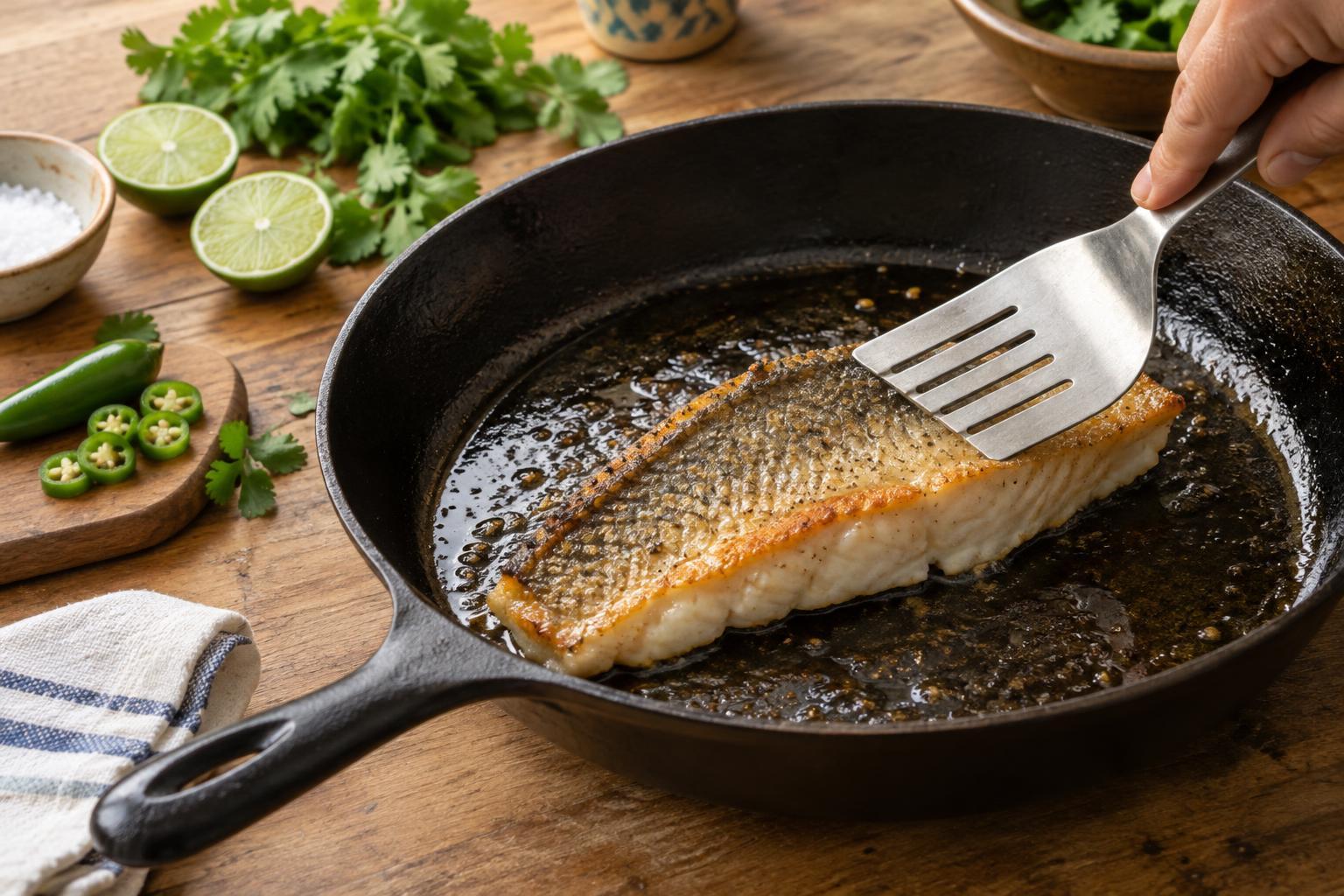
Cover the fish loosely with a large clear bag or work partly inside it if you want to contain flying scales; keep the opening wide enough to see and move your hands safely. Pay attention to the belly, the area near the fins, and the edges of a fillet, where scales are easy to miss. Run your fingers lightly from tail toward head to check for rough patches, taking care around fins and any sharp edges. Rinse away loose scales briefly if necessary, then dry the fish thoroughly. Dry skin is easier to handle and browns better in the pan.
Find the pin bones by touch
Lay a fillet skin-side down on a clean board. Gently sweep your fingertips across the thickest part of the flesh, moving from the head end toward the tail end. Pin bones, when present, often form a line near the center of the fillet and feel like tiny, firm tips against your fingers. Their position varies with the fish and the way it was cut, so feel along the full length rather than assuming they stop halfway.
Good light helps, but touch is usually more reliable than sight. Pat the flesh dry if it is slippery. If you are preparing several fillets, inspect each one separately, even if they came from the same fish. Some small fish or prepared fillets have few or no pin bones; do not pull at the flesh unless you have found one.
Pull each bone in its own direction
Grip the exposed tip of a pin bone with tweezers or food-safe pliers. With your other hand, press the flesh gently around it. Pull slowly in the direction the bone runs, rather than straight up. This helps it slide out with less tearing. If a tip breaks or slips back into the flesh, feel for it again and take a fresh grip; avoid gouging the fillet to chase a bone you cannot locate.
Work along the line of bones, then sweep your fingertips over the fillet once more. Check the edges as well as the center. Removing pin bones improves the eating experience, but no hand check can guarantee that a piece of fish is entirely boneless. Encourage diners to eat with reasonable care, particularly when serving children.
Clean up and get ready to cook
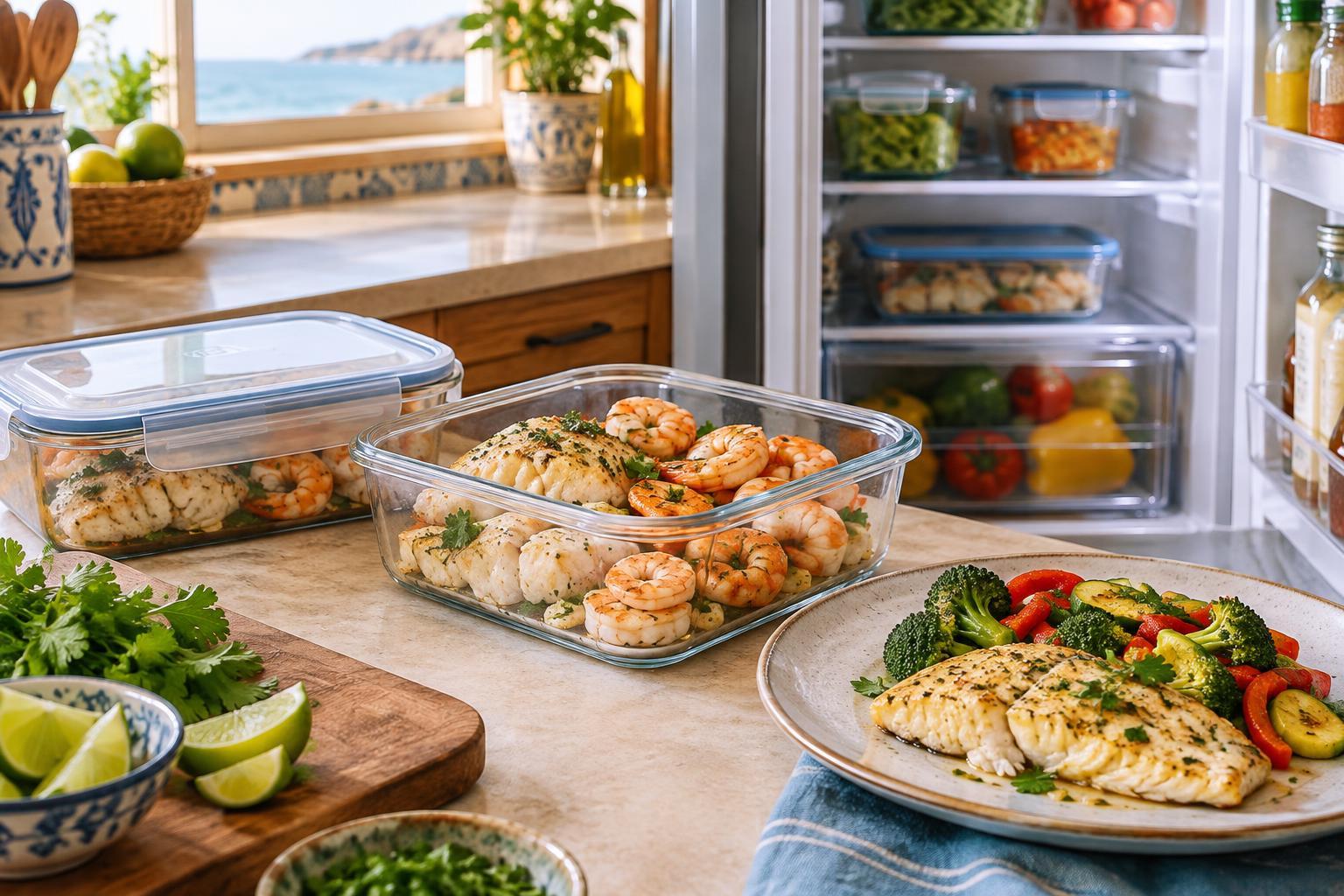
Discard scales and bones, then wash the board, tools, sink, and any surfaces touched by raw fish with hot, soapy water. Wash your hands before handling citrus, herbs, vegetables, or cooked food. If you plan to season the fish with lime, chili, or garlic, prepare those ingredients on a clean surface after the raw-fish cleanup. Keep the prepared fish refrigerated until it is time to cook, rather than leaving it out while you assemble the rest of the meal.
Scaling and deboning work just as well before a simple pan-seared fillet as before a citrus-and-herb coastal-style dinner. These steps make fish more pleasant to eat; they do not change whether it is raw or cooked. Citrus juice can alter the texture of raw seafood, but citrus curing does not make it equivalent to cooking. Cook fish thoroughly when serving people who need to avoid raw or undercooked seafood.