Put leftovers away promptly
A platter of grilled fish or a pot of shrimp can make a welcome lunch the next day, but safe leftovers begin before the meal is over. Refrigerate cooked seafood within two hours of cooking or serving. If the surrounding temperature is above 90°F (32°C), such as at a hot outdoor gathering, shorten that window to one hour. Count time spent on the counter, at the table and in transit together; putting a dish back in the refrigerator does not reset the clock.
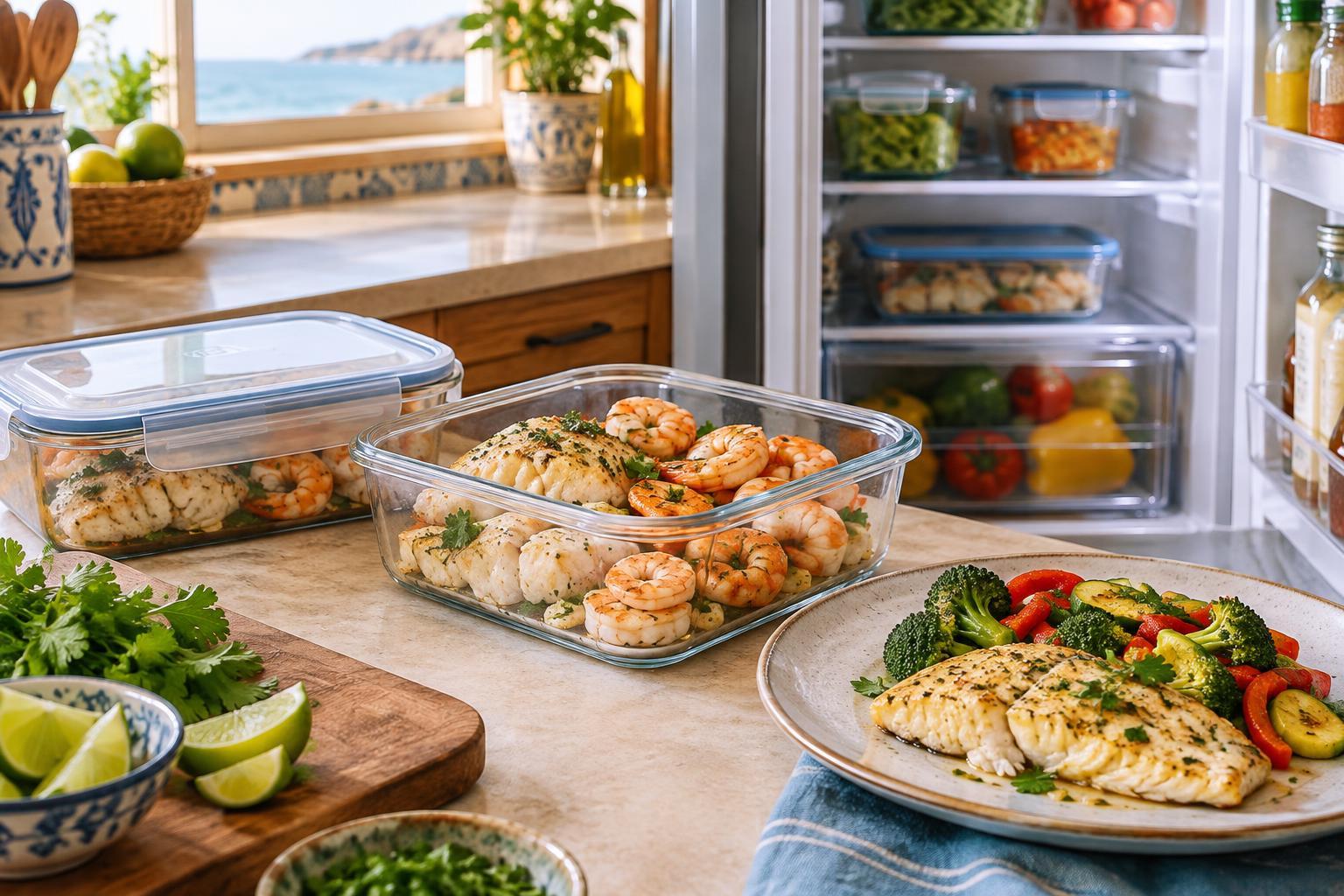
Move leftovers into clean, shallow containers so they cool more quickly. Divide a large batch of seafood rather than packing it into one deep container, and refrigerate it promptly instead of waiting for it to reach room temperature. Keep cooked seafood separate from raw seafood and its juices, including on utensils and cutting boards. If a serving platter held raw fish before cooking, use a clean platter for the cooked food.
Keep the refrigerator cold and label the container
Store cooked fish and shellfish in a refrigerator set to 40°F (4°C) or below. Cover containers to protect the food from drips and odors, and place them where the temperature stays reliably cold rather than in the refrigerator door. Labeling the container with the day it was cooked makes it easier to decide what to eat first.
Plan to eat refrigerated cooked seafood within three to four days. That time frame assumes it was handled and chilled promptly; it is not a way to rescue seafood that sat out too long. If you are unlikely to use it in time, freeze it in a well-sealed, freezer-safe container. Freezing may change the texture of delicate fish or shellfish, but it offers more flexibility than leaving leftovers in the refrigerator past their useful window. Thaw frozen leftovers in the refrigerator, not on the counter.
Decide what is worth keeping
A clean smell is not proof that seafood is safe, and an off smell is a reason to discard it. Also look for obvious changes such as unusual slime or discoloration. When you do not know how long a dish sat out, or you are unsure whether it stayed cold during a trip home, the safer choice is to throw it away. Reheating cannot reliably make spoiled or improperly stored seafood safe.
Think about the other ingredients in a mixed dish, too. A seafood rice bowl, creamy chowder or cooked-fish taco filling should be cooled and stored promptly as a whole dish. Keep fresh garnishes such as herbs, sliced vegetables and lime wedges separate when possible; add them just before serving for better texture. Lime juice can brighten cooked leftovers, but citrus juice is not a substitute for proper refrigeration or thorough cooking. Citrus curing does not make raw seafood equivalent to cooked seafood.
Reheat thoroughly without drying seafood out
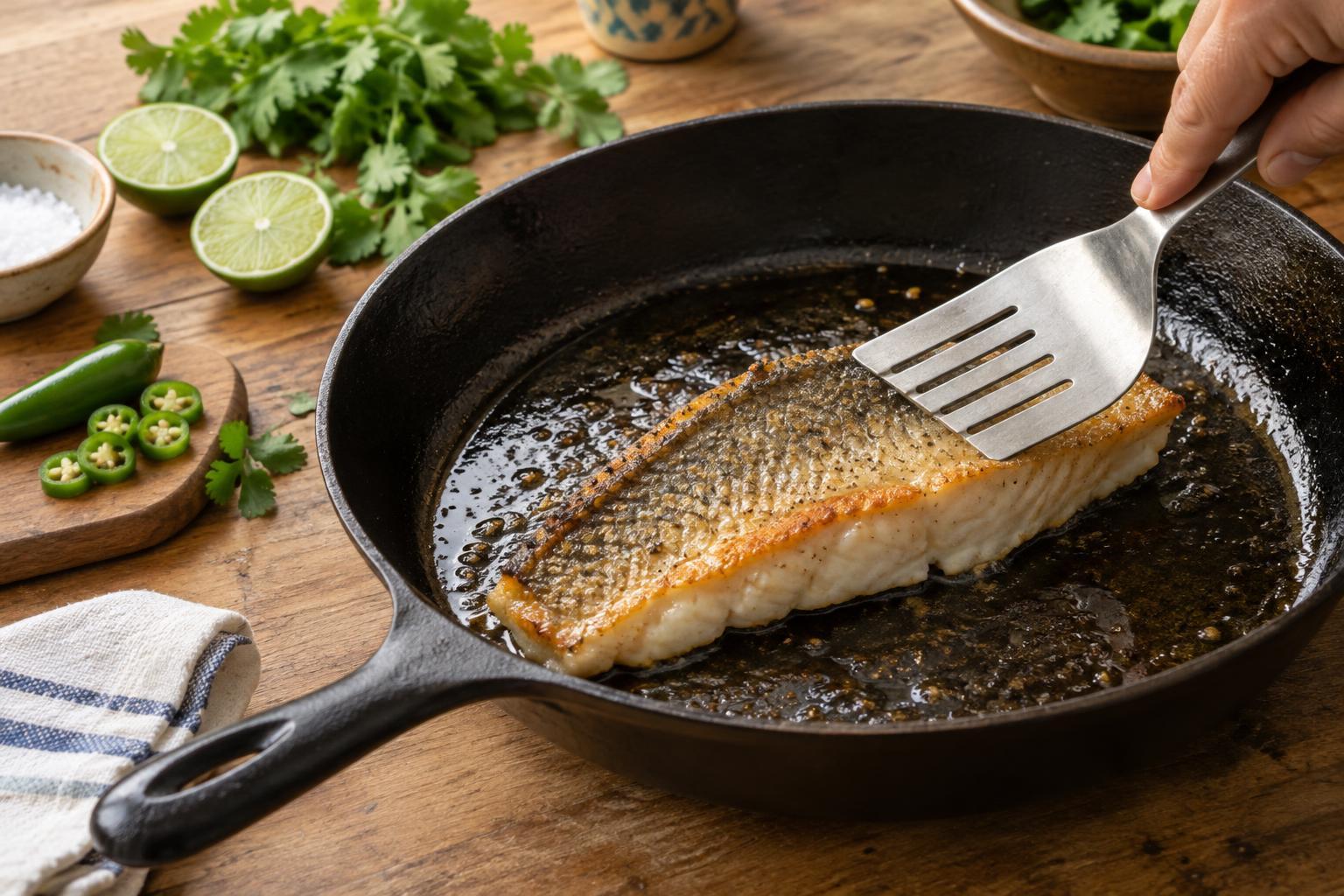
Reheat cooked seafood leftovers to 165°F (74°C) throughout, checking the thickest piece or the center of a mixed dish with a food thermometer. Gentle heat can help preserve texture, but it should not come at the expense of reaching a safe temperature. For fish fillets, try a covered skillet over low to medium heat with a small splash of water or broth. Turn or rearrange pieces as needed and check their temperature before serving.
For shrimp, scallops or a seafood stew, stir gently while reheating so the center warms as well as the edges. In a microwave, cover the dish, use short heating intervals, and stir or rotate it between intervals; allow it to stand briefly, then check several spots. Microwaves can leave cool pockets even when part of a dish feels hot. Avoid reheating the entire container when you need only one serving. Portion out what you will eat and leave the rest refrigerated.
Make the next meal easy to enjoy
Leftover seafood works well in simple meals that do not require prolonged heating. Warm cooked fish gently and serve it with rice, sautéed vegetables and a squeeze of lime. Add reheated shrimp to a bowl of beans and grains, then finish with a fresh salsa. For soup, bring the broth and vegetables up to temperature, add the seafood, and continue heating until the seafood itself reaches 165°F (74°C).
If serving leftovers cold, use only seafood that was promptly refrigerated and is still within the three-to-four-day window. Keep it chilled until serving and return unused portions to the refrigerator promptly. The central habit is straightforward: limit time at room temperature, keep storage cold, and use a thermometer when reheating. That leaves you free to focus on the flavors that made the original meal worth saving.