Set up a clean path from raw to ready-to-eat
When a dish brings together fish, lime, herbs and sliced vegetables, the ingredients may sit close together on the counter even though they need different handling. Raw seafood and its juices can transfer harmful microbes to foods that will not be cooked. Cross-contamination can happen through hands, knives, boards, towels, plates or a stray splash—not just through direct contact.
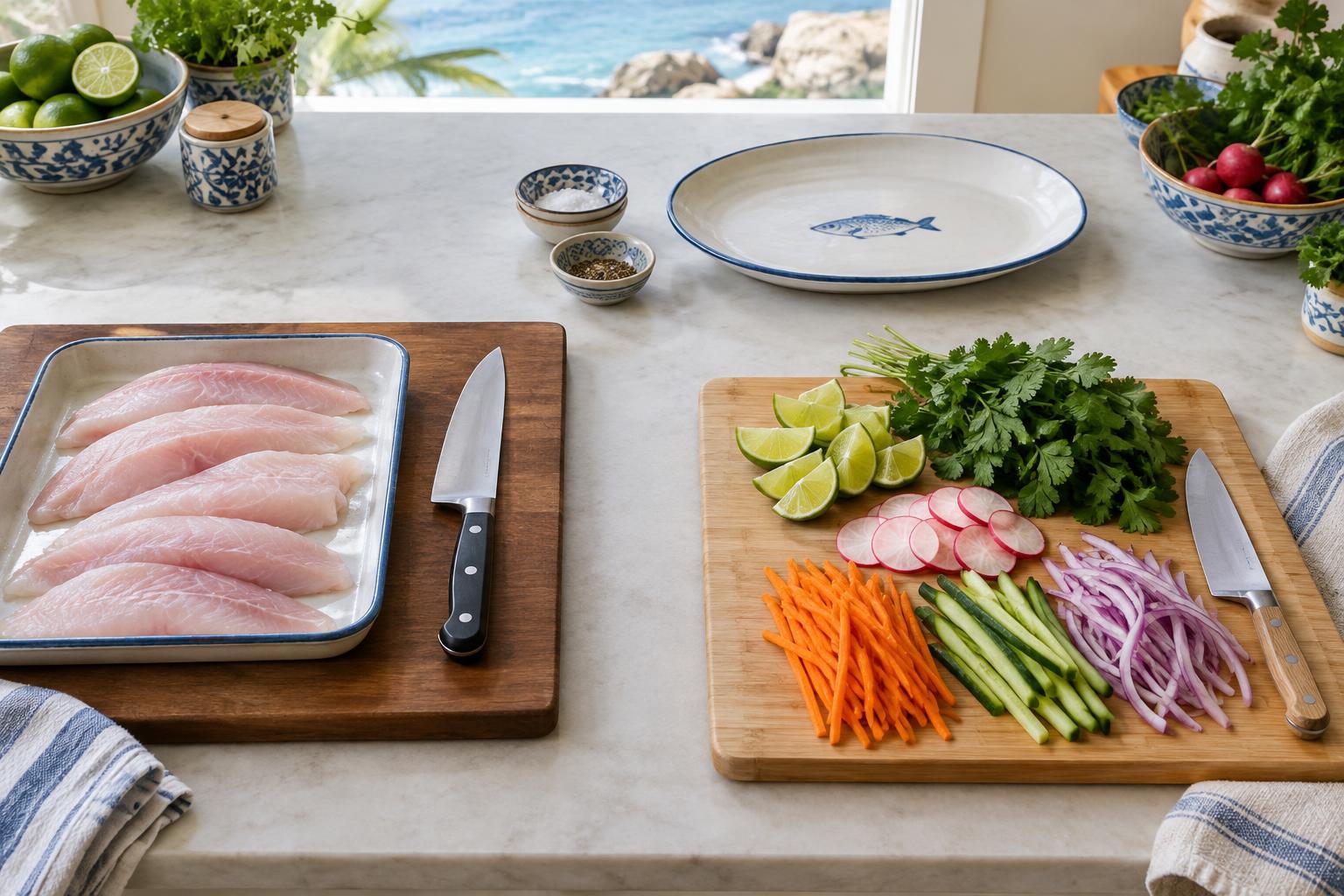
Before you start, clear the work area and decide where each task will happen. Reserve one space and set of tools for raw seafood and another for garnishes. If you have only one cutting board or knife, prepare the ready-to-eat ingredients first, move them to a clean covered container, and then handle the seafood. Wash and sanitize equipment and food-contact surfaces before using them for another task. Keep a clean serving platter out of the raw-prep area so the finished dish has a safe place to land.
Keep ingredients separated while shopping and storing
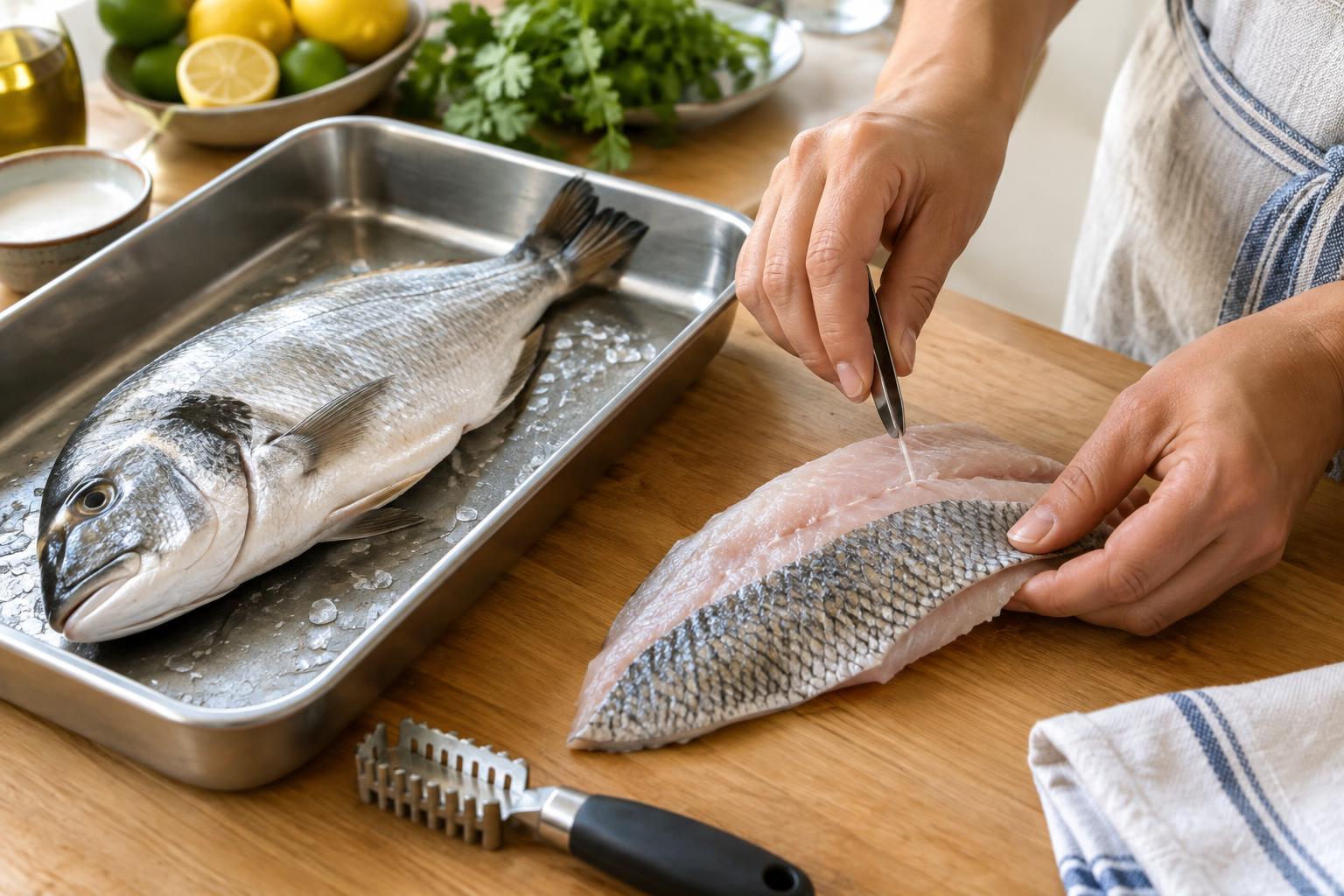
Good separation begins before the cutting board comes out. Put raw seafood in its own bag or leakproof container so liquid cannot reach herbs, produce, bread or other foods eaten without further cooking. At home, refrigerate it promptly and place it in a sealed container on a lower shelf, where a leak is less likely to drip onto other food.
If seafood is frozen, thaw it in the refrigerator in a container that catches liquid, rather than leaving it on the counter. Keep produce and prepared garnishes covered and apart from raw seafood. These steps make the next stage of cooking easier: you can take out what you need without setting a package of raw fish beside a bowl of chopped cilantro or sliced avocado.
Prep garnishes before handling seafood
Wash your hands with soap and water before preparing food and again after touching raw seafood, its packaging or anything contaminated by its juices. Wash whole produce under running water before cutting it, including citrus you plan to slice or squeeze. There is no need to wash seafood; splashing water around the sink can spread contamination to nearby surfaces.
Chop onions, herbs, chiles and other ready-to-eat toppings with clean tools, then cover and set them aside. Handle raw seafood afterward, using dedicated utensils and a separate board when possible. A spoon used to stir raw seafood should not go into a garnish bowl or touch the finished platter. The same rule applies to hands: pause to wash them before reaching for a lime wedge, salt container or serving utensil. Keeping frequently used items away from the raw-prep zone helps prevent accidental transfers.
Understand what citrus can—and cannot—do
Citrus juice changes the texture and appearance of fish in dishes such as ceviche, making it look firmer and more opaque. That change is not the same as cooking seafood with heat. Citrus curing does not reliably eliminate harmful microbes, so citrus-cured raw seafood should not be treated as equivalent to cooked seafood.
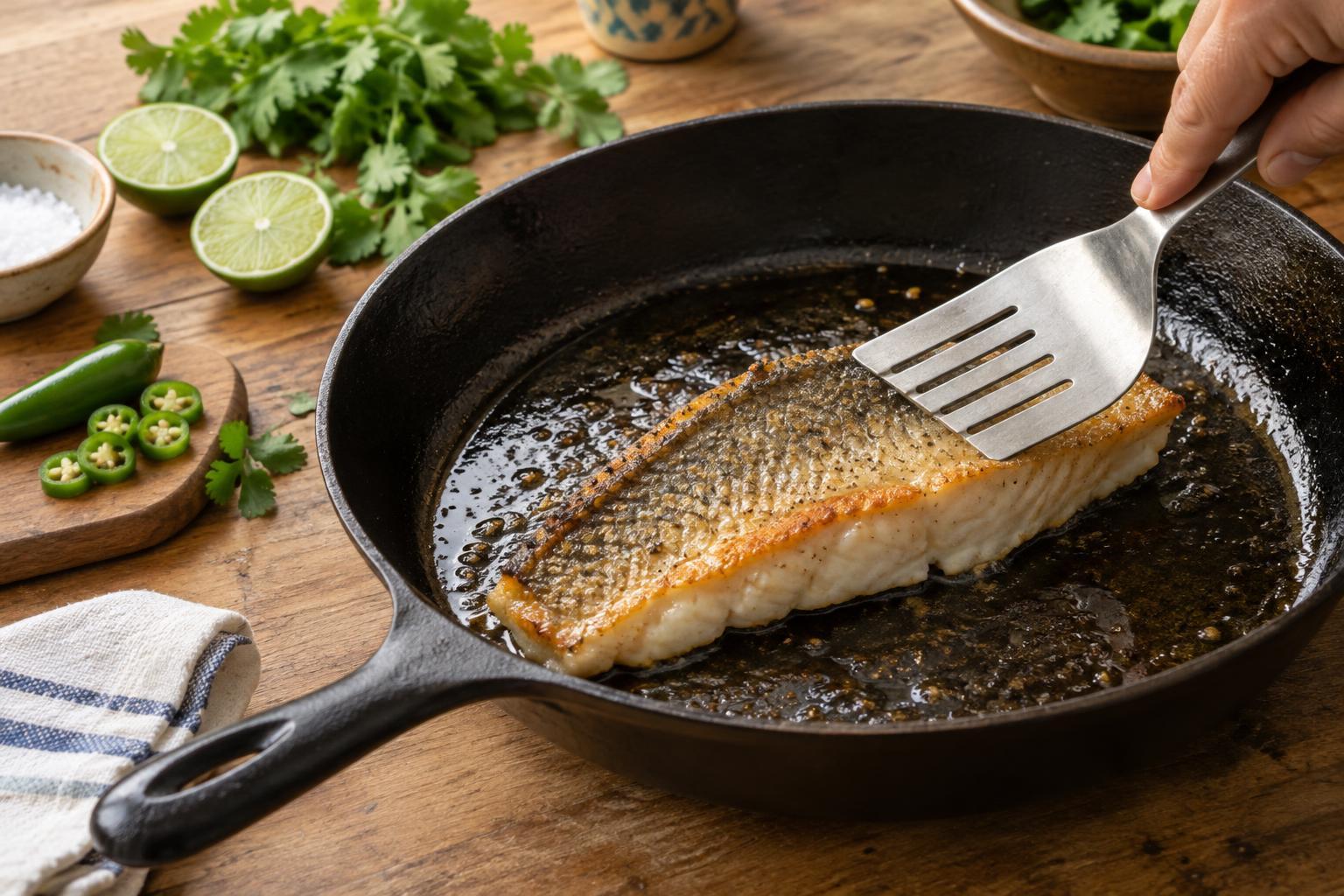
If you want a cooked seafood dish with a citrus-forward flavor, cook the seafood appropriately, then use clean utensils to add it to freshly prepared citrus, vegetables and herbs. Do not pour marinade that has held raw seafood over cooked seafood or ready-to-eat garnishes unless it has been thoroughly cooked first. When serving a dish made with raw or citrus-cured seafood, be clear about how it was prepared so guests can make their own choices.
Serve cleanly and finish with a thorough cleanup
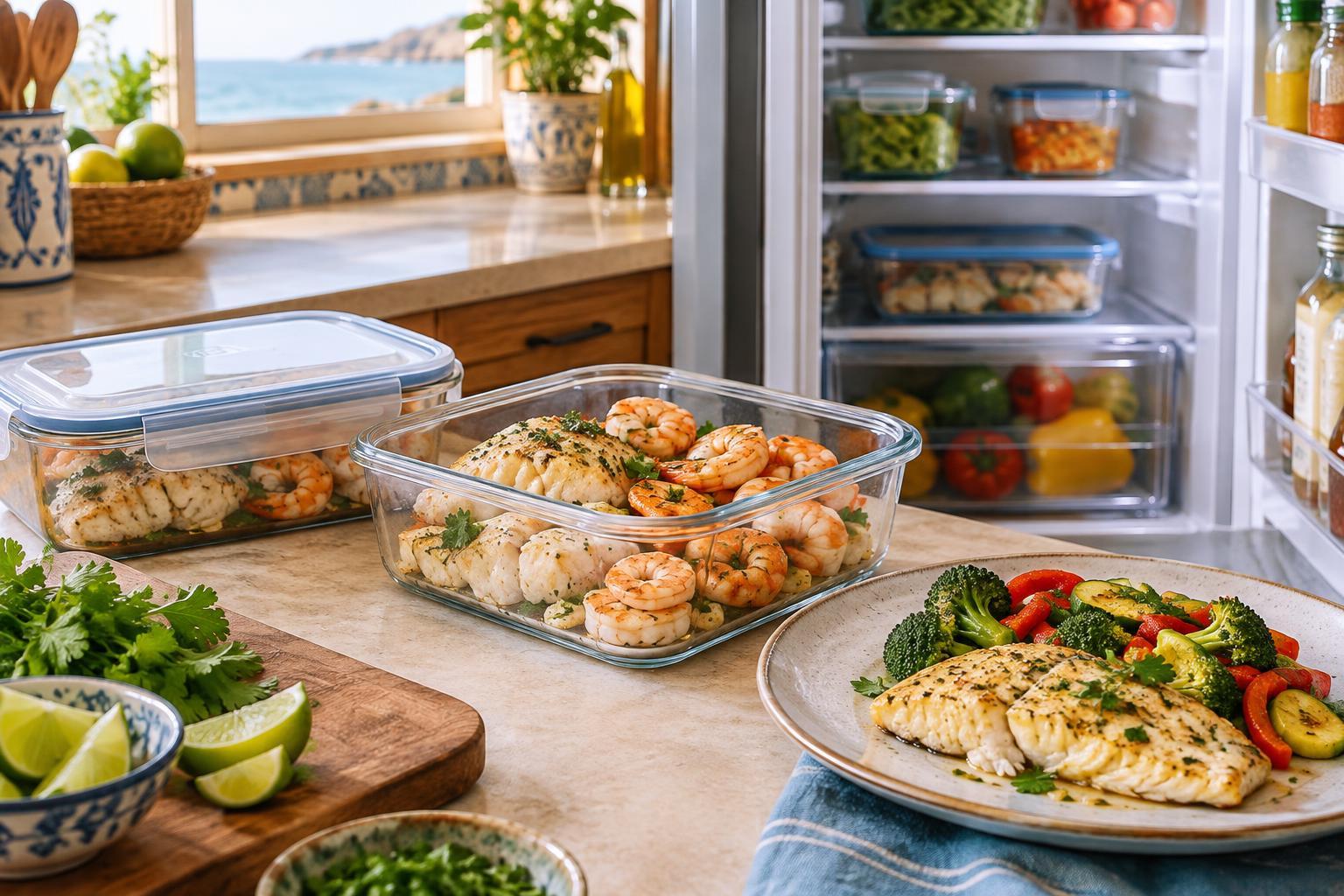
Transfer finished food to a clean plate, not one that previously held raw seafood. Give the dish a fresh serving spoon and keep raw-prep utensils away from the table. Refrigerate perishable ingredients and prepared dishes promptly rather than leaving them out while you finish other cooking. For a relaxed meal, prepare garnishes ahead and bring out only what you are ready to serve.
Once prep is done, wash knives, boards, bowls and utensils that touched raw seafood with hot, soapy water, and clean and sanitize affected counters and sink surfaces. Replace or wash towels that may have picked up raw juices, and wash your hands again. A consistent order—garnishes first, seafood second, clean serving tools last—lets citrus and coastal flavors take center stage without losing track of food handling.